Taylor Swift
The documentation impulse as wound response. Someone who writes everything down before it can be taken from her, and has built one of the most metatextually aware bodies of work alive.
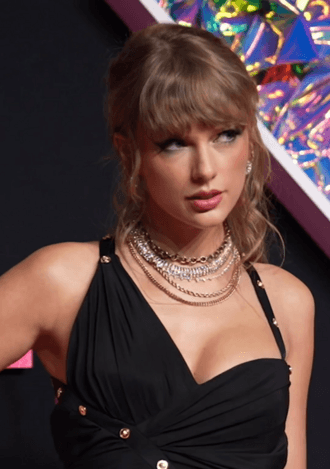
Documentation as defense
Epistemic wound - account of events disbelieved, rewritten, or taken
Recording everything before it can be rewritten
Relatability architecture as intimacy-foreclosing
Vindication arc: exile, endurance, return, proof
Hendersonville, Tennessee
Taylor Alison Swift was born in 1989 in West Reading, Pennsylvania, but the formative geography is Hendersonville, Tennessee, where the family moved when she was fourteen so she could pursue a Nashville music career. Her parents, Scott and Andrea Swift, made the decision together: Scott would commute to his financial industry job in Pennsylvania, Andrea would manage Taylor's career full time in Nashville. The family reorganized itself around her talent and her ambition.
What that reorganization communicated, before any record deal, before any chart position, was that her worth was the reason the family moved. That is not a hostile message. It is not even an unusual message for the family of an unusually talented child in a competitive industry. But it installs a specific architecture: my value to the people who love me is conditional on what I produce. The love is real and present, and it is organized around the career. The two are not separable.
She arrived in Nashville at fourteen with guitar skills, songwriting notebooks, and a mother who was now her manager. She signed a development deal with RCA Records and was dropped. She signed with Sony/ATV as a songwriter at fourteen -- the youngest songwriter the company had signed. She was in rooms full of adult professionals evaluating her output before she had formed an adult sense of self to protect.
The Exposure at Eleven
Before Nashville, the family visited annually for music industry showcases. Swift began attending them at eleven, performing in front of scouts and producers. The Nashville music industry in the early 2000s was not structured around nurturing adolescent artists. It was structured around evaluating commercial prospects.
The specific psychological effect of sustained adult evaluation of your creative output during early adolescence is worth examining. It produces, at minimum, a hyperawareness of audience response as a metric of value. It can produce an inability to distinguish between internal satisfaction and external approval. And it trains the documentation impulse early -- if your output is being evaluated, you learn to track it, to manage it, to make sure your own account of what you made and why is preserved before someone else's account supersedes it.
The Primary Wound: Whose Story Is It
The throughline in Swift's public record is not heartbreak. Heartbreak is the surface. The underlying structure is the experience of having your account of events disbelieved, rewritten, or taken from you.
The Scooter Braun acquisition of her masters in 2019 is the most legible instance. Braun's company Ithaca Holdings acquired Scott Borchetta's Big Machine Label Group, which held the masters to Swift's first six albums, without her knowledge or the opportunity to bid. She described the acquisition in a Tumblr statement as her "worst case scenario." She said: "For years I asked, pleaded for a chance to own my work. Instead I was given an opportunity to sign back up to Big Machine Records and 'earn' one album back at a time, one for every new one I turned in."
"Across two decades and thirteen albums she has produced a near-continuous record of her interior life, not as confession but as proof. The documentation impulse is the wound's answer. The archive is the evidence."
But the pattern began earlier: the Kanye West interruption at the 2009 VMAs, which she later described as the moment she understood that her credibility could be taken in a single public act. The Kim Kardashian phone call recording in 2016, which purported to prove she had approved the lyric in "Famous" that referred to her, and which was edited in ways she contested. The media coverage of her romantic history that reduced her to a punchline -- the implication that her heartbreak songs were evidence of a character defect rather than a creative practice. In each case, the specific experience was: someone else's account of Taylor Swift displaced her own.
The Documentation Impulse
She writes everything down. Before it can be rewritten. Before the other person can offer a different account. Before memory degrades. Before the industry can claim ownership. This is not ordinary songwriting discipline. It is an epistemological defense strategy.
The metacognitive dimension of her work is unusually legible. She has always been aware that she will turn experiences into songs -- that the event and its documentation happen almost simultaneously. This creates a specific kind of double consciousness: living something while already observing it with the archivist's eye. She described this to Time magazine in 2023: "I've been doing this since I was a little girl. The way I process emotions is by writing songs. It's how I survive difficult things."
The strength and the cost are the same structure. The person who documents everything from the inside cannot be fully inside the thing being documented. The archivist is never entirely present. This is a specific kind of loneliness dressed as productivity.
The Reputation Era
The 2017 Reputation album represented something specific in her psychological history: a deliberate murder of the public persona she had built. The snake imagery that had been weaponized against her -- Kardashian fans had flooded her social media with snake emojis following the phone call controversy -- became the album's iconography. She adopted it. She killed Taylor Swift and replaced her with a harder, darker version who acknowledged the narrative game and refused to pretend she wasn't playing it.
In the song "Look What You Made Me Do" she sang: "I don't like your little games / Don't like your tilted stage / The role you made me play / Of the fool, no, I don't like you." And later: "The old Taylor can't come to the phone right now. Why? Oh, 'cause she's dead."
The snake imagery and the persona murder were acts of psychological reclamation. Rather than continue to argue that the public narrative was wrong, she absorbed it and turned it into art. That is a sophisticated response. It is also a defensive one. Taking control of the wound by aestheticizing it does not mean the wound has resolved.
Folklore and the Pivot to Fiction
Folklore, released in 2020, represented a different kind of psychological move. After years of documentary songwriting -- songs explicitly about specific people, specific relationships, specific events in her own life -- she wrote an album of characters. Betty, James, Augustine: invented people in invented triangles, observed from outside.
This shift required something from her that the documentary mode did not. To write convincingly in a fictional mode she had to develop the ability to inhabit a perspective that was not her own vindication. James is wrong. James knows he is wrong. Swift writes him with enough interiority that his wrongness is legible rather than condemned. That requires the capacity to exist in someone else's story rather than only in your own. After the Reputation era's explicit self-defense, Folklore represents the first evidence that the wound had been metabolized enough to make space for characters who were not her.
Taylor's Version: Documentation Applied to the Wound
The re-recording of her first six albums, executed beginning in 2021, is the documentation impulse applied to the wound itself. She rebuilt what was taken so precisely that the originals became commercially disadvantaged. She told her fans to stream the new versions, urged media to use only Taylor's Versions, and organized a cultural campaign to make the originals radioactively associated with the men who had profited from them without her consent.
The campaign worked. It was also, in psychological terms, a massive investment of creative energy in proving a point about the past rather than building something new. Both things can be true simultaneously. The vindication arc -- exile, endurance, return, proof -- is real and genuinely earned. It is also a closed loop. The documentation impulse that proves you were right does not free you from the requirement of being proved right. It extends the project.
References
- Swift, Taylor. Fearless. Big Machine Records, 2008. - Swift, Taylor. Reputation. Big Machine Records, 2017. - Swift, Taylor. Folklore. Republic Records, 2020. - Swift, Taylor. Midnights. Republic Records, 2022. - Swift, Taylor. Tumblr statement on Scooter Braun acquisition, June 2019. - Miss Americana. Directed by Lana Wilson. Netflix, 2020. - "Person of the Year: Taylor Swift." TIME, December 2023. - Willman, Chris. "Taylor Swift on Sexism, Scrutiny, and Standing Her Ground." Variety, November 2023. - Caramanica, Jon. "Taylor Swift's Musical Evolution." The New York Times, October 2022. - Dowd, Maureen. "Taylor Swift: The Long Game." The New York Times, November 2023.
---
Interpretive opinion based on the public record. Not a clinical assessment or diagnosis of any individual.