Works
26 mapsFilms, albums, and books as psychological objects. What the work carries that its creator could not say directly.
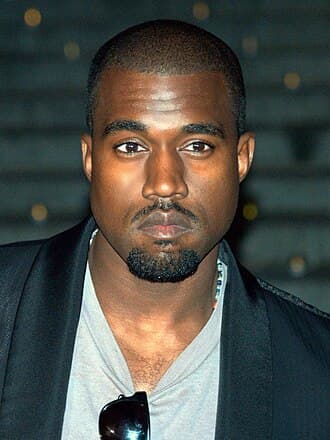
808s & Heartbreak
His mother died in November 2007. His engagement ended. He made an album entirely in Auto-Tune, with almost no rapping, that sounds like someone who cannot speak in their own voice because their own voice is no longer available to them.

All Too Well (10 Minute Version)
The scarf cannot be argued with. A terrain reading of the most precise documentation of relational injury in contemporary pop - and what it reveals about the person who wrote it.
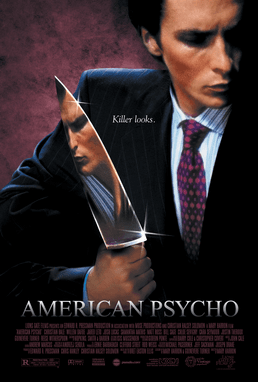
American Psycho
Bret Easton Ellis set out to write a satire about a culture that had substituted identity for consumption, and ended up writing the most precise psychological portrait of a self constructed entirely from surfaces. Patrick Bateman is not a monster. He is a logical endpoint.

Bane vs. Batman - The Pit Fight
Batman is led underground by a man who has been waiting for him. Everything that happens in this scene was prepared before Batman arrived. The back breaking is not the defeat. It is the confirmation of a defeat that was already complete.
Black Swan (2010)
Nina Sayers does not lose her mind. She completes a process that was always underway: the evacuation of a self that was never permitted to exist. The film's horror is not supernatural. It is the ordinary horror of a person who has been shaped, from the earliest possible moment, into a vessel for someone else's unlived life.

Breaking Bad
In the final episode, Walter White tells his wife the truth he has been lying about for two years: he did not do it for the family. He did it for himself. Because he was good at it. Because it made him feel alive. The transformation that the show appeared to track, from decent man to monster, was not a transformation. It was a disclosure. Heisenberg was always in the room. He just needed permission to stand up.
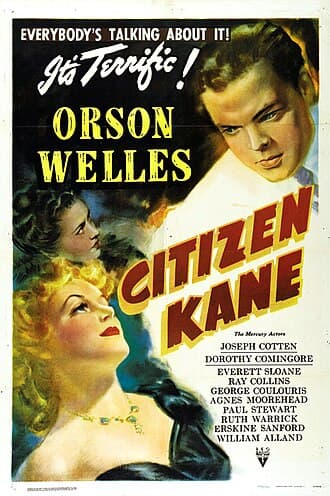
Citizen Kane
Rosebud is not a sentimental detail. It is the film's central argument: that the entire architecture of Charles Foster Kane's life, every acquisition, every betrayal, every newspaper and opera house and castle, was organized around the recovery of something lost in childhood. The external accumulation is real. The internal recovery it was meant to produce never arrived. That gap is what the film is about.
Closer
Almost universally misread. What gets heard as provocation is, on terrain reading, a map of someone trying to make contact with another person and having no available language for it except violation.
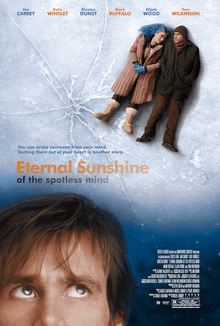
Eternal Sunshine of the Spotless Mind
The film's central argument is not about romance. It is about something harder: that the desire to erase is itself the proof of how much it mattered, that grief is not the opposite of love but its most precise measurement, and that we would, given the option, choose our pain back.

Fight Club
A man who has built an identity entirely from what he owns discovers he has no self beneath the ownership. Tyler Durden is not a character. Tyler Durden is the question: what would you be if everything you use to avoid yourself were taken away?

Fleabag (BBC, 2016-2019)
Fleabag does not break the fourth wall for laughs. She breaks it because the audience is the only relationship she has constructed to be safe: we cannot leave, we cannot be disappointed by her in the way people are disappointed, and we cannot know her well enough to see the thing she is most afraid of being seen. The direct address is not a comedic device. It is the architecture of avoidance.
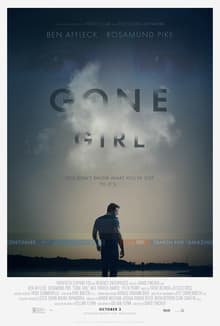
Gone Girl
Gillian Flynn's novel and David Fincher's film adaptation gave a name to something millions of women already knew from the inside: the performance of a self designed to be loved rather than a self that actually exists. The psychology of Gone Girl is not a thriller. It is a precise map.

Joker (2019)
Todd Phillips's Joker asks the audience to inhabit the wound of a person who becomes dangerous, and the controversy it generated revealed more about the audience's discomfort with that request than about the film itself. Arthur Fleck is not a portrait of evil. He is a portrait of abandonment.
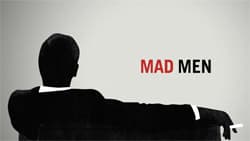
Mad Men
Don Draper did not steal another man's identity to escape his past. He stole it because Dick Whitman had no framework for becoming anyone at all, and identity theft was the only architecture for selfhood he could find.
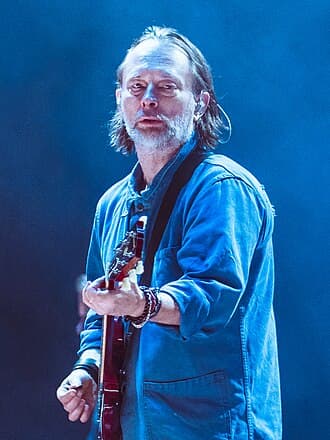
OK Computer
1997. The internet is arriving. Globalization is accelerating. And Radiohead makes an album about what it feels like to be a person inside systems that do not notice you are a person. It was early. It was accurate.
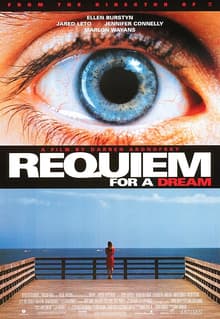
Requiem for a Dream
The film does not show you what addiction looks like from the outside. It reproduces the neurological structure of craving inside the viewer, and forces you to feel it rather than observe it.

Succession
Logan Roy raised four children inside a system designed to need him without being able to reach him. He gave them money, proximity, and the perpetual possibility of his approval, and then withheld the approval. They spent their entire adult lives trying to get the thing he never gave. This is not incidentally what Succession is about. It is precisely what Succession is about.
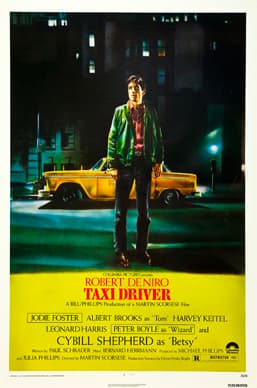
Taxi Driver (Martin Scorsese, 1976)
Travis Bickle is not a monster. He is a map of what happens when extreme social isolation meets a psychology that cannot tolerate the absence of meaning - and what that combination produces when it encounters a specific landscape and finds a role to inhabit.
The Road
The world has ended. Everything has burned. What remains is a man, a boy, and the question of whether love is enough of a reason to keep going when there is no other reason left.

The Shining
The Overlook Hotel does not make Jack Torrance violent. It finds the violence already present and removes the last obstacles between Jack and what he has always been capable of. That distinction is what makes The Shining one of the most precise maps of domestic violence in the American canon.
The Sopranos
Tony Soprano goes to therapy. He is intelligent, self-aware, occasionally insightful about his own psychology. He changes nothing. The show is the most precise depiction ever made of what it looks like when insight cannot reach the wound.
The Truman Show
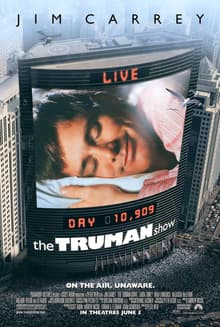
What the film is actually mapping is the psychology of a person raised inside a constructed reality who begins to sense the seams, and what it costs, after a lifetime inside the comfortable lie, to choose the terrifying and genuinely unknown door.
The Wire
The Wire is not a crime show. It is a systematic investigation of how institutions , police departments, drug organizations, dock unions, city governments, schools, newspapers , survive by prioritizing their own continuation over the purposes they were created to serve. Season by season, it makes the same argument from a different angle: the institution is the antagonist, and every individual who enters one with genuine intentions will either be converted or destroyed.
There Will Be Blood
Daniel Plainview is not the villain of There Will Be Blood. He is the endpoint. The film traces what instrumental attachment produces when it runs its full course without interruption: a man who has extracted everything available from every relationship he entered, is now alone with the extraction, and is genuinely unable to understand what people wanted from him all along. Paul Thomas Anderson made the film in near-silence for its first fifteen minutes. That silence is the argument.