Fleabag (BBC, 2016-2019)
Fleabag does not break the fourth wall for laughs. She breaks it because the audience is the only relationship she has constructed to be safe: we cannot leave, we cannot be disappointed by her in the way people are disappointed, and we cannot know her well enough to see the thing she is most afraid of being seen. The direct address is not a comedic device. It is the architecture of avoidance.
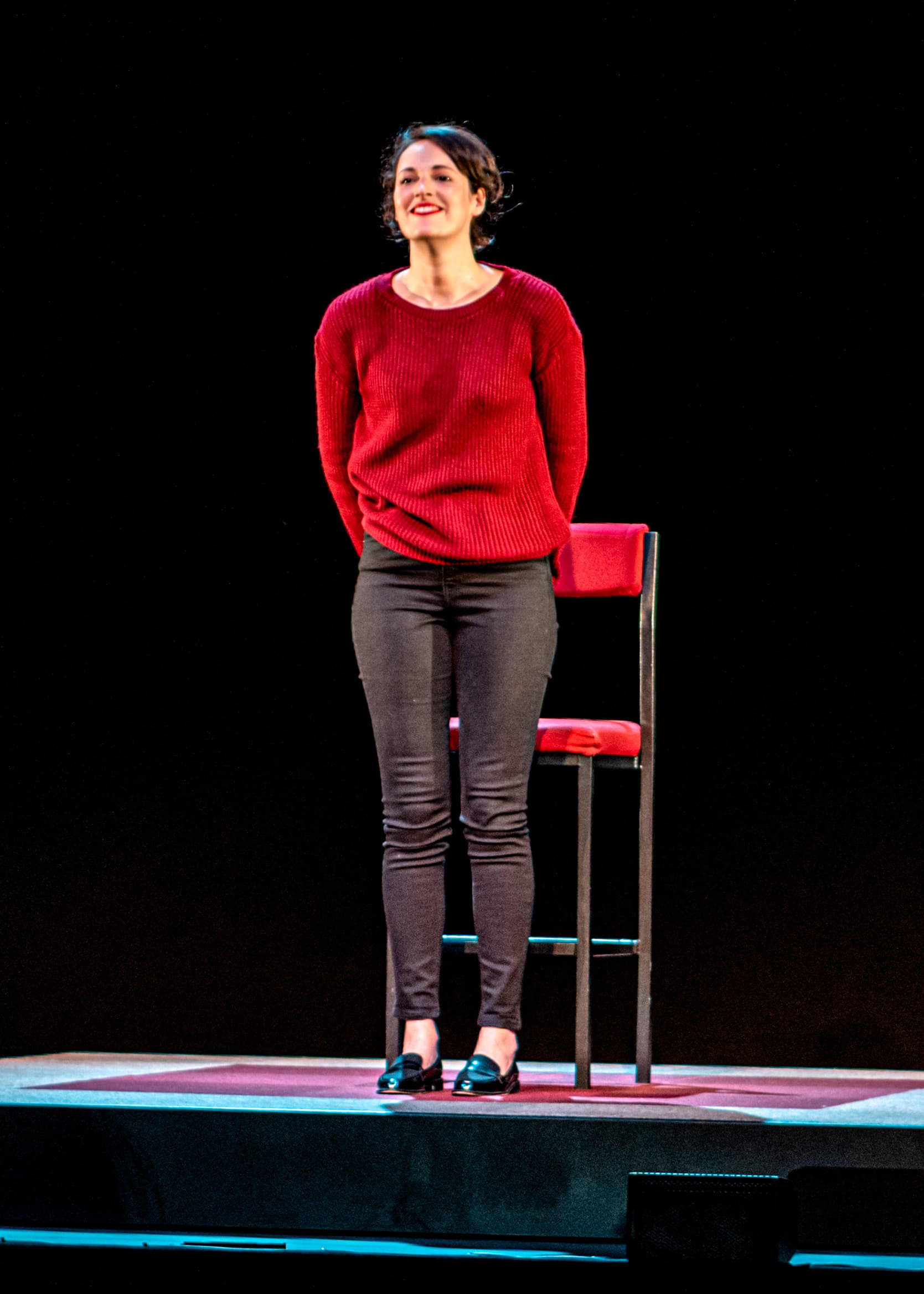
Confession as intimacy substitute - the performance of transparency deployed to prevent actual exposure
Boo: the friend whose death Fleabag caused, whose name she cannot say aloud, whose absence is the organizing silence in everything she does
The audience as managed relationship - the one attachment she has designed to receive her but never return the gaze in a way that costs her anything
Strategic self-disclosure: she tells everything that is painful and nothing that is true; the confession is the armor
Sexuality as regulation - not pleasure but management, deployed to control the emotional temperature of every encounter before it can reach something she cannot handle
The Camera Is Not Breaking
When Fleabag turns to the camera for the first time, the conventional reading is that Phoebe Waller-Bridge is deploying a theatrical device to establish ironic distance. She will comment on what is happening. She will be funny about it. The audience will be positioned as co-conspirators in a performance of irreverence.
This reading is available and it is wrong, or rather, it is accurate at the surface level and misleading about what is actually being constructed.
Fleabag turns to the camera because she needs somewhere to put what is happening inside her that is not the actual room she is in, not the actual people she is with. The direct address is not comedic technique. It is the behavioral expression of a specific relational wound: the inability to be in a relationship that is real enough to actually reach her, combined with the desperate need to be witnessed by something.
The audience is the solution she has found. We are always there. We cannot be disappointed in her in the way people are disappointed - we have already paid, we have already arrived, our attention is structurally guaranteed. We cannot know her well enough to see the thing she is most afraid of being seen. And crucially, we cannot speak back. The relationship flows in one direction only. This is not accidental. It is the precise design of a person who has been hurt by relationships that went in two directions.
Boo and the Unnamed Wound
The name Boo is spoken carefully, obliquely, in fragments throughout the first series. The audience assembles the information slowly: Boo was Fleabag's best friend. They started a business together - the guinea pig cafe that Fleabag is now running alone. Boo died. The manner of Boo's death involves self-harm that was meant as a bid for attention in a relationship and went wrong.
Fleabag knew about the relationship. Fleabag slept with the man involved.
This is the wound. Everything else in the series is either a symptom or a management strategy.
What is striking, and what constitutes the series' most precise psychological observation, is that Fleabag never says this directly. She never names what she did in a sentence that has a clear subject and verb and consequence. She circulates around it through the first series, providing enough information for the audience to reconstruct it, but never performing the act of stating it. The closest she comes is in a scene late in the first series where she is describing the business and the friendship and then simply stops, and what follows the stopping is the most important silence in the show.
The absence architecture of Fleabag is built around Boo's name and around the specific sentence Fleabag cannot say. Everything she does - the sexual chaos, the family dysfunction, the performances of comedy in the face of catastrophe - is organized around not saying that sentence. The audience, who is receiving everything, is receiving everything except this.
This is the first demonstration that the direct address, the total transparency, is not transparency at all. She tells us everything that is vivid and almost nothing that is load-bearing.
The Two Sisters
Claire and Fleabag are daughters of the same loss - their mother died before the series begins - and they have processed it in precisely opposite directions.
Claire moved toward structure. She has a high-status career, controlled appearance, a marriage that is performing competence rather than intimacy. She manages. She is relentlessly functional. Her relationship to emotion is instrumental: it is something that has to be accounted for and contained so that the things that matter - the job, the performance, the surface - can continue.
Fleabag moved toward chaos. She drinks too much, sleeps with people she does not want to sleep with, sabotages relationships before they can become real enough to cost her anything, runs a failing business that is actually a monument to a dead friend she cannot grieve properly.
What they share, which the series gradually reveals, is the same underneath: neither of them has found a way to be with the fact of their mother. Claire performs the not-having-lost. Fleabag performs the having-survived-it. Both performances are running constantly. Neither is adequate.
Key Insight: The sisters are not opposites. They are the same wound expressed through different defense structures - one contracting, one expanding, both organized around the same unprocessed center.
The mother's portrait that appears in series two - the bust that Claire has been given, that Fleabag helps her transport, that keeps turning up and causing havoc - is the material form of the thing neither of them can carry properly or put down.
The Father and the Stepmother
The father is a study in a specific kind of well-meaning absence: a man who is present, who loves his daughters in a functional way, who has remarried a woman who is openly hostile to both of them, and who has not found a way to acknowledge that any of this is happening. He is in the room and nowhere near it.
The Godmother - the stepmother played with serene, weaponized pleasantness by Olivia Colman - operates through a particular form of social aggression: the consistent assertion of warmth in the face of behavior that is anything but. She makes art about Fleabag and Claire's grief and sells it. She is building a studio in the family garden without asking. She competes, invisibly but relentlessly, for the father's attention and emotional resources.
What the family system provides, in aggregate, is a demonstration of how Fleabag learned to navigate: by being vivid enough to take up space, by being funny enough to defuse anything before it becomes confrontational, by making herself the most interesting person in the room as a way of never being the most vulnerable person in the room.
The direct address was already happening before she had an audience. She was already performing her life to the room. The camera just made it explicit.
The Priest
The Priest - deliberately unnamed, played by Andrew Scott - is the hinge character of the second series and the most structurally important figure in the whole map.
He is interesting to Fleabag first because he is off-limits, and off-limits is where she locates desire habitually - it is a management technique, not a romantic pattern. If the object is unavailable, the desire stays at the level of longing and never arrives at the level of actual relationship, which is where it could damage her.
But what happens between them is not what she planned.
The Priest is the first person in the series who notices the camera. There is a scene in the second episode of series two where he pauses mid-conversation, looks in the direction she has just looked, and says, effectively: what are you doing? He cannot see what she sees. But he can see that she is doing something - that she is routing part of herself somewhere else, that there is an audience she is playing to that he is not part of.
His noticing this is the most destabilizing thing anyone has done to her in the show's runtime. She has been discovered in the act of avoidance by the person she is avoiding being seen by. The armor does not work in his presence, which is why she falls in love with him.
The dynamic between them across series two is the first genuine relational encounter in the series: two people who are both managed, both defended, both professionally committed to versions of themselves that leave something out, finding each other's defenses legible. He sees through the performance of spontaneity and she sees through the performance of priestly equanimity and they are briefly, in the space between those two seeing-throughs, actually with each other.
“I think you know how to love better than any of us. That's why you find it all so painful.”
The Priest to Fleabag, series 2, episode 5. Written by Phoebe Waller-Bridge.
This line is the most direct statement of the show's psychological argument, and it is delivered by the character who has actually seen her, which is the only condition under which it could land.
Why She Cannot Take What He Offers
The Priest offers Fleabag a real relationship. He is clear about the cost - he will choose God, he will not leave the priesthood, the relationship has a structural limit - and he is clear that within that limit, what he is offering is genuine. He loves her. He can see her. He is not going to perform not seeing her to make her comfortable.
She cannot take it.
The reason the series gives is the structural incompatibility: he is a priest. But the psychological reading is more precise. What he is offering is exactly what she cannot receive. To accept love that is genuinely offered from someone who can actually see her would require her to be the person she has spent the whole series not being: someone who can be seen without the audience, without the commentary track, without the performed transparency that reveals nothing.
Her wound structure requires the relationship to be either unavailable or managed. The Priest made himself available and refused to be managed. That combination is unbearable for the specific psychology she has assembled.
When she looks at the camera in the final scene and he has already left, the look says everything the series has been working toward: she knows, now, that the camera is the symptom. She knows that the relationship with the audience is the structure she built when the real relationships became too costly. And she does not know what to do with that knowledge yet.
The Audience as Symptom
Phoebe Waller-Bridge has said in various interviews that she wanted the audience to feel complicit by the end of the series - not just entertained but implicated. The formal structure of the show achieves this.
By accepting the position of Fleabag's confidant, by being the relationship she trusts, by receiving everything she gives us without turning back and asking what she is not saying, we have participated in the avoidance. We are the symptom she uses to stay functional. We are, in this sense, as responsible for her remaining stuck as any of the other relationships in her life - more so, because we are the one she chose and we never asked anything of her.
“I'm not sure I've mastered the art of grieving, and I think that came through in the character, which is why the grief and the humor are so bound up together for her.”
Phoebe Waller-Bridge, interview with *The New Yorker*, 2019.
This is the formal argument the series is making through its structure: comedy as grief management is not a solution. It is a deferral. The deferral is funny. The deferral is survivable. But it is not the same as arriving at the grief itself.
Fleabag ends the second series having arrived at something. She has been in a real relationship, briefly. She has said something that was true rather than performed. She has looked at the camera with knowledge of what the camera is, which is different from looking at the camera believing that the camera is enough.
Whether that arrival will persist is not the series' concern. Its concern is that it happened once.
The Formal Argument in the Final Turn
The last moment of the series is Fleabag, alone, walking away, looking back at the camera one more time, and then turning forward and not looking back again.
It is being read in most accounts as an ending, which is correct. But the psychological reading of what kind of ending it is is more specific: it is not resolution. It is the first moment in the series where Fleabag has the choice to continue using the camera and chooses not to.
She has not healed. She has not processed Boo's death, not reconciled with her sister in any lasting structural way, not rebuilt the part of herself that was damaged by the things she did and the things that were done. She has had one genuine encounter with another person who was willing to see her, and she could not sustain it, and she let it go, and she is walking forward into a life that does not yet have the tools she needs.
But she is not looking at the camera. That is the minimum viable change the series is willing to offer, and it is enough. The first step away from a defense is not the end of the defense. It is the beginning of the possibility of not needing it.
Minimum Viable Truth
Fleabag's direct address is not intimacy but its precise structural opposite: a relationship designed to receive her completely while costing her nothing, which means it cannot reach the wound it was built to manage.
References
- Fleabag. Phoebe Waller-Bridge, writer. BBC Three / Amazon Prime Video. Series 1, 2016; Series 2, 2019. - Waller-Bridge, Phoebe. Interview with The New Yorker, June 2019. - Waller-Bridge, Phoebe. Interview with The Guardian, September 2019. - Waller-Bridge, Phoebe. BAFTA Fellowship acceptance speech and interview, 2019. - Bowlby, John. A Secure Base: Parent-Child Attachment and Healthy Human Development. Basic Books, 1988. - Fonagy, Peter, and Mary Target. "Attachment and Reflective Function: Their Role in Self-Organization." Development and Psychopathology, vol. 9, no. 4, 1997. - Winnicott, D.W. "The Capacity to Be Alone." International Journal of Psycho-Analysis, vol. 39, 1958. - Herman, Judith Lewis. Trauma and Recovery. Basic Books, 1992. (On the relationship between trauma, confession, and genuine witness.) - Tangney, June Price, and Ronda L. Dearing. Shame and Guilt. Guilford Press, 2002.
---
Interpretive opinion based on the public record. Not a clinical assessment or diagnosis of any individual.