The Wounded Healer
The therapist who survived addiction understands the addict's interior in a way the textbook cannot provide. The doctor who nearly died knows something about the patient's fear that the healthy doctor does not. The wound is not an obstacle to the helping. Under certain conditions, it is the qualification. Under others, it is the problem that has been renamed a calling.
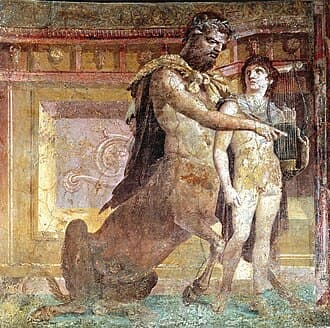
The healer's wound as both credential and liability - the source of genuine understanding and, when unprocessed, the source of helping gone wrong
Variable by instance - but the archetype is activated when the wound is the reason for the helping, whether that reason is integrated or not
The helping relationship as both genuine service and covert wound-management - the two are not mutually exclusive and often coexist
The wounded healer is often most comfortable giving, least comfortable receiving - the helping role provides structure and dignity that the vulnerable self cannot access directly
The helper who cannot be helped - the role reversal that happens when the healer's own wound requires attention and the healer cannot allow it
The Origin
Jung drew the archetype of the wounded healer from the Greek myth of Chiron: the centaur who was the greatest healer in the ancient world, who trained Achilles and Asclepius and numerous heroes in the arts of medicine, and who carried in his own leg an incurable wound that he could heal in others but not in himself.
The myth is precise. Chiron's wound does not prevent him from healing. It does not disqualify him from teaching medicine or training heroes. He remains the greatest healer despite the wound, or perhaps because of it. But he cannot apply his gift to himself. The wound that gives him understanding of suffering cannot be reached by the understanding it produced.
This is the archetype's essential structure: the gift and the limitation come from the same source. They are not separable.
How the Wound Becomes the Calling
The routes into healing work are multiple. Some people are drawn to medicine or therapy or teaching or pastoral care through ordinary professional interest: the subject matter is interesting, the work is meaningful, the skills are ones they have.
But a significant portion of people in the helping professions arrived there through a more specific route: the wound. The person who survived an eating disorder becomes a therapist specializing in eating disorders. The person who grew up with an alcoholic parent becomes an addiction counselor. The person who experienced early loss becomes a grief counselor. The person who was treated cruelly by their parents becomes a child advocate.
This is not suspicious. It is often exactly the right outcome. The wound creates access. The therapist who knows the eating disorder from the inside knows things the textbook and the supervision cannot teach. The person who sat with their own depression at three in the morning knows what to say to the patient who is sitting with theirs, in a way that requires no translation.
The wound is a credential. This is the gift side of the archetype.
The Liability
The liability side requires a different question: is the helper helping from the wound, or helping to manage it?
These are not always distinguishable from the outside, and are not always distinguishable from the inside either. The addiction counselor who is genuinely in recovery and has done the work to understand the wound has something real to offer. The addiction counselor who has been sober for five years but has never addressed the original wound that the addiction was managing has a different relationship to the work, and that relationship will show up in the room.
"The unprocessed wound does not prevent helping. But it does redirect it. The healer who is still running from the wound will organize the helping relationship around the wound's requirements, not the patient's. This is usually invisible to both parties. It shows up as countertransference: the healer's strong reactions to certain patients, certain presentations, certain moments in the work that have more to do with the healer's interior than with what is actually happening in the room."
The most common form this takes is vicarious repair: the healer attempting to resolve their own wound through the patient's healing. The therapist whose childhood was not witnessed becomes most invested in the patients who are not seen. The counselor who could not leave a damaging relationship becomes most activated by the patient who will not leave. The help is real. But the help is also the healer managing their own material through the helping relationship.
This is not malpractice, in most cases. It is the common, human, somewhat inevitable bleed between the healer's interior and the work. It becomes a problem when it is unexamined and when it begins to organize the helping relationship around the healer's needs rather than the patient's.
The Helper Who Cannot Receive
The most consistent feature of the wounded healer archetype in its unintegrated form is the difficulty receiving help. The helper who cannot be helped.
This appears in specific ways. The therapist who does not have their own therapist. The pastor who counsels everyone and confides in no one. The doctor who does not see a doctor. The friend who is always the one called in the crisis and never the one who makes the call.
The helping role provides something that the vulnerable position does not: dignity, agency, competence, the experience of being needed and useful. The wound that organized the life around the helping role was, in many cases, a wound of helplessness: the child who could not help the parent who was in trouble, the adolescent who could not stop what was happening, the person who was powerless in the face of something large. The helping role is the solution to the helplessness. It is also the structure that makes it very difficult to be in the position of needing help.
Being helped requires being seen in need. The healer's wound often includes a deep association between need and danger: need was not safe in the original environment. The helping role allows the healer to remain permanently outside the position of visible need. The role protects the wound and is also the wound's best expression.
Integration: The Difference Between the Gift and the Trap
The Chiron myth ends with Chiron trading his immortality for Prometheus's freedom. He chooses to be mortal and to die, which releases him from carrying the incurable wound forever. In psychological terms, this is the integration moment: the healer becomes willing to be the patient. The wound is finally turned toward rather than away from.
Integration in the wounded healer does not mean resolution of the wound. Chiron does not heal the wound. He releases his grip on the structure built around it. This is the distinction that matters therapeutically: the healer who has integrated the wound does not arrive at sessions without wounds. They arrive at sessions without the wound running the session.
The integrated wounded healer is the best version of the archetype: the understanding that only the wound could produce, in the hands of a healer who has been honest enough about the wound to know when it is present in the room and when it is theirs rather than the patient's. The access remains. The unconscious channeling of the wound through the helping relationship is reduced.
This requires the healer to have done, to some significant degree, the thing they are asking their patients to do: turn toward the wound, be seen in it, allow someone else to witness it without immediately returning to the expert role.
The Person in the Role
If you are in a helping profession and feel some recognition in this map, the most useful single question is not "am I a wounded healer?" Most people drawn to helping work carry some version of the archetype. The more useful question is: do I know what my wound is, and do I know when it is active in the room?
You cannot eliminate the wound from the room. You can know it well enough to track it, and to notice when your reactions belong to the patient and when they belong to your history.
References
- Jung, C.G. "Fundamental Questions of Psychotherapy." In The Practice of Psychotherapy, Collected Works, Vol. 16. Princeton University Press, 1954. - Groesbeck, C. Jess. "The Archetypal Image of the Wounded Healer." Journal of Analytical Psychology 20, no. 2 (1975): 122-145. - Nouwen, Henri J.M. The Wounded Healer: Ministry in Contemporary Society. Doubleday, 1972. - Sedgwick, David. The Wounded Healer: Countertransference from a Jungian Perspective. Routledge, 1994. - Searles, Harold F. Countertransference and Related Subjects. International Universities Press, 1979. - Miller, Alice. The Drama of the Gifted Child: The Search for the True Self. Basic Books, 1981. - Maté, Gabor. When the Body Says No: The Cost of Hidden Stress. Knopf Canada, 2003.
---
Interpretive opinion based on the public record. Not a clinical assessment or diagnosis of any individual.