The Exile
To be cast out of a group is one of the oldest human threats. For most of our evolutionary history, exile meant death. What the archetype maps is what exile produces in the person who survives it: a specific kind of clarity that is only available from outside the walls.
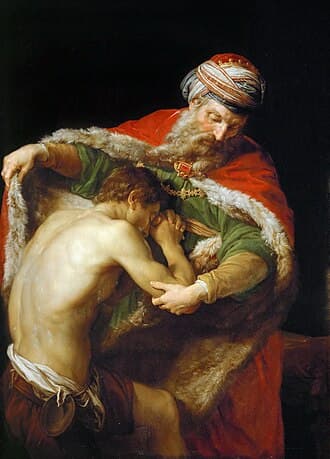
Loss of belonging as the price and the source of independent sight
Not applicable - this is an archetypal map of a condition and its effects
The exile sees the group clearly because they are no longer inside it - the cost and the gift are the same thing
Permanent partial outsider - able to observe belonging without fully participating in it
The return of the exile is rarely straightforward - the group often cannot receive what they now carry
The Oldest Punishment
Before prisons, before fines, before most of the apparatus of institutional justice, human groups had one primary punishment for serious transgression: removal. Exile. Banishment from the community.
For most of human evolutionary history, this was effectively a death sentence. Alone, outside the group, a human being could not survive the cold, the predators, the difficulty of finding food. The group was life. Exile was death with extra steps.
This is why the threat of social exclusion registers, in the human nervous system, as existentially serious long after the actual material threat has changed. The body that reacts to social rejection as if it were a physical threat is not being irrational. It is running hardware calibrated to an environment where the reaction was appropriate.
What the Exile Develops
The person who survives exile develops something that people inside the group cannot access from within: an outside view.
Groups maintain themselves partly through shared assumptions that function as invisible water - the things everyone knows and no one names because naming them would require standing outside them. The person inside the group cannot easily see the water they swim in. The person who has been outside can.
This is why exiled figures across traditions tend to return with a specific form of knowledge. Moses in the wilderness. Dante in the Inferno. Odysseus across twenty years of sea. The exile is an education. What it teaches is not available in the schoolroom. It is only available in the place the school expelled you to.
"The exile's clarity is not superior to the insider's knowledge. It is perpendicular to it. The exile sees what the group cannot see about itself. The insider knows what the exile has forgotten about belonging. Neither view is complete. Both are necessary."
The Prophet in Their Hometown
The return of the exile is one of the most recurring and most tragic patterns in the archetype. The exile returns carrying something real - the outside view, the knowledge available only from having been away - and finds that the group cannot receive it.
This is not always a failure of the group. The knowledge the exile carries is, by definition, knowledge of what the group does not see. Receiving it would require the group to look directly at the thing it has organized itself around not seeing. Most groups, most of the time, are not capable of that.
The exile who returns expecting gratitude for what they bring back is working from a misunderstanding of what the exile actually produces. What it produces is clarity, not welcome. These are different goods.
The Condition in Living People
The archetype maps recognizable conditions in contemporary experience. The person who grew up in a family system and became the truth-teller is often effectively exiled from that family - not through a formal ceremony of banishment, but through the gradual withdrawal of welcome that follows from naming what the family has agreed not to name.
The professional who dissented publicly and found their career path closed. The person whose identity - race, sexuality, religious departure, political position - placed them outside the community they grew up in. The whistleblower. These are not metaphorical exiles. They are people experiencing the actual mechanism the archetype describes.
What distinguishes the people who are transformed by exile from the people who are broken by it is not resilience in the generic sense. It is the capacity to use the outside position as a vantage point rather than experiencing it only as a wound. This is harder than it sounds. The wound is real. The vantage point is real too. Both things are true at the same time.
The Gift That Cannot Be Given Back
The clearest marker of the exile's condition is this: what they learn outside the walls cannot be un-learned. The person who has had the outside view cannot return to the inside fully. They carry the memory of the outside even when they are back within.
This is both the burden and the capability. The exile who has integrated their experience becomes the person who can move between inside and outside - who can participate in belonging without being fully captured by it, who can see the group clearly without being contemptuous of it, who has paid the price of the education and can offer what it produced.
This is the archetype at its most functional: not the exile as martyr, not the exile as prophet ignored, but the exile who came back carrying something real and found the particular people who were ready to receive it.
References
- Campbell, Joseph. The Hero with a Thousand Faces. Pantheon Books, 1949. - Said, Edward W. Reflections on Exile and Other Essays. Harvard University Press, 2000. - Girard, Rene. The Scapegoat. 1982. Translated by Yvonne Freccero. Johns Hopkins University Press, 1986. - Dante Alighieri. The Divine Comedy. c. 1320. Translated by Robert Hollander. Doubleday, 2000. - Kristeva, Julia. Strangers to Ourselves. 1988. Translated by Leon S. Roudiez. Columbia University Press, 1991. - Rushdie, Salman. "Imaginary Homelands." In Imaginary Homelands: Essays and Criticism 1981-1991. Granta Books, 1991.
---
Interpretive opinion based on the public record. Not a clinical assessment or diagnosis of any individual.