The Trickster
The figure who breaks the rules is not the enemy of order. The figure who breaks the rules is the mechanism by which order discovers what it has calcified around. Every tradition that endures has a Trickster built into it.
Disruption as revelation - the boundary-crosser who exposes what the boundary was protecting
Not applicable - this is an archetypal map, not a terrain map of a person
Theft, inversion, and misdirection as tools for delivering what direct approach cannot
Outside the hierarchy - operates between categories, neither fully mortal nor divine
The Trickster is often punished, often humiliated, and keeps moving anyway
The Archetype Across Traditions
Hermes, in the Greek tradition, is the messenger god - but also the god of thieves, travelers, and liminal spaces. He is the figure who moves between the world of the living and the world of the dead, between gods and humans, between the known and the unknown. He is born in a cave and steals Apollo's cattle on his first day of life. He invents the lyre from a tortoise shell and trades it for the cattle he stole. By the end of his first day, he has already established the pattern: transgression followed by negotiation followed by gift.
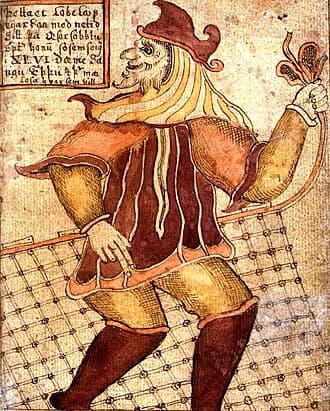
Loki, in the Norse tradition, occupies a similar position - sometimes ally, sometimes adversary, always the one who sees what the gods refuse to see about themselves. His most dangerous quality is not his malice. It is his accuracy.
Coyote in many Native American traditions, Anansi the spider in West African and Caribbean traditions - across cultures that had no contact with each other, the same figure keeps appearing. This is the cartographic signal.
When an archetype appears independently across unconnected traditions, it is mapping something real about human psychology and human society.
What the Trickster Is Actually For
Systems calcify. Rules designed to serve a function gradually become the function itself. The map becomes the territory. The institution forgets what the institution was built for and begins serving its own maintenance.
The Trickster is the mechanism that prevents permanent calcification. By violating the rules - by sneaking through the boundary, by saying the unsayable, by demonstrating that the sacred cow can be stolen - the Trickster forces the system to ask the question it had stopped asking: why is this rule here?
"The Trickster does not destroy order. The Trickster reveals which parts of order are load-bearing and which parts are just habit dressed up as necessity. This is uncomfortable. It is also essential. Traditions that expel their Tricksters tend to calcify into something that can no longer adapt."
The Position in the Hierarchy
The Trickster is never fully inside the hierarchy. Hermes is an Olympian but operates in the spaces between realms. Loki is counted among the Aesir but is a giant's son. Anansi is a spider - small, overlooked, able to be anywhere.
This position is not incidental. It is functional. The figure who is fully inside the hierarchy cannot see the hierarchy clearly, because the hierarchy is the water they swim in. The figure who is outside it has the perspective but not the access. The Trickster's specific position - inside enough to be trusted, outside enough to see - is what makes the function possible.
This is also why Trickster figures are often coded as marginal: as animals, as jesters, as fools, as the smallest or weakest. The status inversion is part of the map. The one who seems least powerful is the one who can see most clearly.
The Trickster in Living People
The archetype does not live only in mythology. It is recognizable in contemporary terrain.
The person who asks the question in the meeting that no one else will ask. The comedian who names the social reality that polite discourse cannot touch. The child who says in front of company what the family has agreed not to say. The whistleblower. The artist who makes work that the culture finds uncomfortable before it finds it necessary.
These people are not interchangeable with the mythological Trickster. But they are living the same structural position: on the boundary, crossing when needed, delivering what the direct path cannot carry, and frequently experiencing the punishment that boundary-crossing invites.
The Cost
Trickster figures are often punished. Loki is eventually bound beneath a mountain with a serpent dripping venom onto his face. Prometheus, whose theft of fire has Trickster characteristics, is chained to a rock. Coyote dies repeatedly in the stories and keeps returning.
The punishment is not the same as the function being wrong. It is the system's response to having its calcification disrupted. The system pushes back. The Trickster, in the mythological frame, keeps moving. In the human frame, this is considerably harder.
References
- Hyde, Lewis. Trickster Makes This World: Mischief, Myth, and Art. Farrar, Straus and Giroux, 1998. - Radin, Paul. The Trickster: A Study in American Indian Mythology. Schocken Books, 1956. - Jung, C.G. "On the Psychology of the Trickster-Figure." In The Archetypes and the Collective Unconscious. Collected Works, Vol. 9i. Princeton University Press, 1959. - Burkert, Walter. The Homeric Hymns. Translated and with commentary. 1974. - Pelton, Robert D. The Trickster in West Africa: A Study of Mythic Irony and Sacred Delight. University of California Press, 1980. - Campbell, Joseph. The Masks of God: Primitive Mythology. Viking, 1959.
---
Interpretive opinion based on the public record. Not a clinical assessment or diagnosis of any individual.