The People Pleaser
People pleasing is not kindness. It is fear wearing kindness's clothing, built in an early environment where other people's emotional states determined whether the person was safe. The yes that cannot be withdrawn, the need that cannot be stated, the anger that accumulates for years before it arrives all at once: these are not character flaws. They are the logical output of a specific survival architecture.
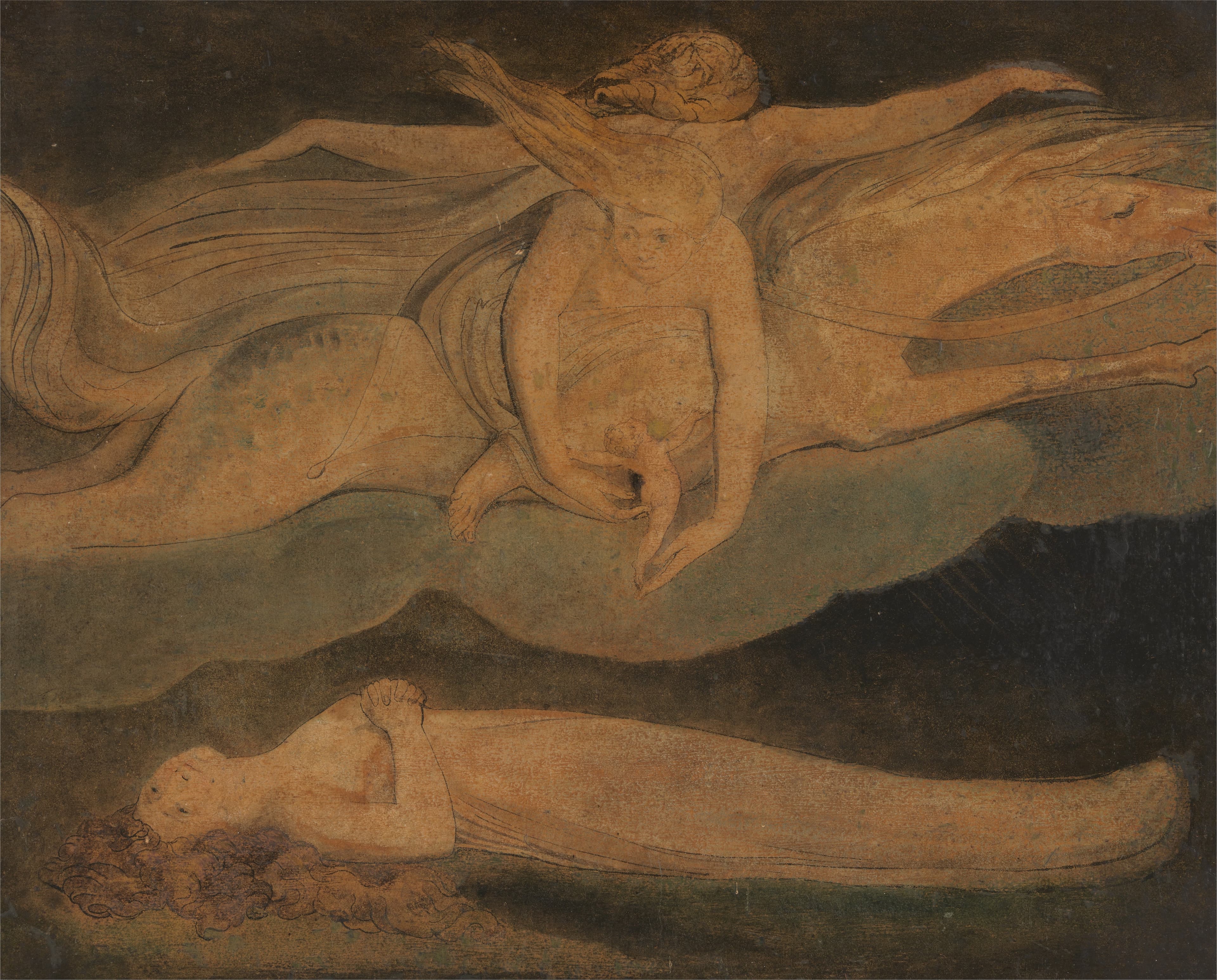
Compulsive accommodation as a survival strategy , the person manages the environment by managing other people's emotional states, because their own safety was originally contingent on those states
Early caregiving environments in which the child's safety, approval, or relational continuity depended on successfully reading and managing an adult's emotional state , the child learned to organize themselves around the other rather than from the self
The invisible transaction , the People Pleaser gives without appearing to expect return, but the giving is organized around a deep requirement for safety and approval, and when that requirement is not met the invisible debt becomes available as resentment
Other-oriented at the expense of self , the People Pleaser reads every room with high accuracy, responds to every signal, and maintains almost no legible interior of their own in relational contexts, which produces relationships that are asymmetric in ways that damage both parties
The resentment accumulation , the anger that cannot be expressed in real time does not disappear. It accumulates, compressed, until it arrives in a form disproportionate to the immediate trigger
What People Pleasing Actually Is
People pleasing presents as generosity. The person accommodates, agrees, helps, and adjusts. They are easy to be around, easy to make plans with, rarely the source of friction. People who know them often describe them as warm, caring, and reliable. These descriptions are not inaccurate. They are incomplete.
The incompleteness is in what is not visible: the exhaustion of continuous monitoring, the absence of any reliable interior indicator of what the person actually wants, the resentment that is not expressed and therefore not resolved, the needs that are never named and therefore never met. The warmth is real. The generosity is real. The fear underneath them is also real, and the fear is doing significant organizational work that neither the People Pleaser nor the people they are pleasing can usually see.
The distinction between genuine generosity and compulsive accommodation is the quality of the choice. Genuine generosity arises from a self that is secure enough to give without requiring anything in return, because the giving comes from surplus. Compulsive accommodation arises from a self that is not secure, and that is giving in order to maintain a relational environment that feels safe. The actions can look identical from the outside. The interior experience is completely different. One comes from fullness. The other comes from the management of an underlying fear.
The Developmental Origin
The People Pleaser's architecture was built by a child who learned a specific and reliable lesson about how the world works: other people's emotional states determine whether I am safe.
This lesson arrives in various forms. In some families, a parent's moods were unpredictable and the child's best available strategy was to scan continuously for early signs of a mood shift and respond preemptively, managing the parent's emotional state before it became dangerous. In other families, love was expressed conditionally, withdrawn when the child displeased or disagreed, returned when the child adjusted their behavior back toward what the parent needed. In others still, a parent's distress was so visible and so overwhelming that the child organized themselves around managing it, subordinating their own needs because the parent's were so much more prominent.
In all of these environments, the child was receiving the same formative lesson: my feelings, my needs, and my authentic reactions are less important than the emotional state of the adult I depend on. The child who learns this lesson learns it as a survival skill. They become extraordinarily good at reading other people's emotional states, at anticipating needs, at calibrating responses to produce positive reactions. These skills are real. In childhood, they were adaptive. In adulthood, operating in contexts that do not require them, they have become the architecture through which the person relates to everyone.
The Hypervigilance Cost
People Pleasers are, almost universally, excellent readers of other people. They notice the micro-shift in a colleague's tone that signals something is wrong. They feel the tension in a room before anyone names it. They know, before the conversation begins, whether the other person is pleased or displeased. This is not a skill they chose to develop. It is a skill they were required to develop, and it runs continuously, regardless of whether the current environment requires it.
The cost of this continuous monitoring is significant. The mental bandwidth that the People Pleaser allocates to tracking other people's states is bandwidth not available for tracking their own. Over time, this produces a characteristic interior blankness: the People Pleaser, when asked what they want, genuinely does not know. Not because they have no preferences, but because the preference-detection system was never given the same resources as the other-monitoring system. The question "what do you want?" can produce a real and disorienting blankness, because the neural infrastructure for answering it clearly was never built out in the way that the infrastructure for "what does the other person need?" was.
This is not performance and it is not evasion. It is a genuine developmental gap. The self was organized outward from the earliest age, and the interior, the place from which authentic preferences and needs could be known and communicated, received only residual investment.
The Invisible Transaction
People pleasing is not simply giving without receiving. It is giving within an invisible transactional frame that the People Pleaser is often not consciously aware of. The giving is organized, at a structural level below conscious thought, around a requirement: give enough, accommodate enough, never cause enough friction, and the environment will remain safe. The giving is not free. It is purchased safety.
This is the invisible transaction, and it produces one of the People Pleaser's most confusing relational dynamics: the experience of giving generously to people who then, eventually, have no idea they owed anything. The People Pleaser gave. The giving felt generous and uncomplicated from the outside. But there was a requirement embedded in the giving, an implicit expectation of safety and approval, and when that requirement is not met, a debt has been incurred that the other party does not know exists.
This is not manipulation in the intentional sense. The People Pleaser is not consciously engineering a debt. They are operating from a survival architecture that converts giving into a management strategy for the environment, and when the environment fails to respond as expected, the architecture registers it as a betrayal. The resulting resentment feels entirely justified to the People Pleaser and entirely inexplicable to the person who is its target.
The No That Cannot Be Said
The most functionally costly feature of the People Pleaser pattern is the inability to decline. The no is experienced not as a choice but as a danger. Saying no risks the other person's displeasure. The other person's displeasure is not experienced as ordinary social friction. It is experienced through the nervous system of the child who learned that other people's displeasure had consequences for safety. The body responds to the prospect of saying no with something that resembles the physiological signature of threat.
So the yes comes out, often before the person has evaluated whether they want to say it. The yes is automatic, a reflex rather than a decision. And because the yes was not freely chosen, it accumulates differently than a genuine agreement does. The genuine agreement produces either the satisfaction of having helped or the manageable frustration of a task that was more work than expected. The compulsive yes produces resentment, because the yes cost something that was not voluntarily offered.
Over time, the accumulation of unvoluntary yeses produces a resentment load that the People Pleaser has no sanctioned way to discharge, because the system that produced the resentment is the same system that prevents its direct expression. You cannot say no to protect yourself from resentment if saying no was the source of the fear that produced the compulsive yes in the first place. The resentment has nowhere to go. It compresses.
The Eventual Eruption
People Pleasers are frequently described by the people who know them as suddenly and inexplicably angry. Someone who has been consistently agreeable, consistently generous, consistently easy to be with, arrives one day in a state of sustained fury that seems to have no proportionate cause. The partner is bewildered. The colleague is shocked. The People Pleaser themselves may not fully understand where it came from.
It came from the entire preceding period of compressed resentment, released by a trigger that was in itself minor but that was the last item the system could contain. The eruption is not about the trigger. It is about the six months, or two years, or ten years of unspoken nos, unacknowledged needs, and invisible transactions that were never settled. The anger is not disproportionate to the total history. It is disproportionate only to the immediate event, and it feels that way because the immediate event is not what the anger is actually about.
This is one of the most painful relationship dynamics the pattern produces: the People Pleaser's anger arrives in the wrong form, at the wrong time, aimed at the wrong specific event, in a way that is almost impossible for the other party to engage with productively. The other party cannot address the actual grievance because the actual grievance was never named. What is named is the trigger. The trigger is the least important thing.
The Path Through
The movement out of the People Pleaser pattern is not primarily a matter of learning to say no, though that is part of it. It is a matter of revising the foundational belief that other people's emotional states are the People Pleaser's responsibility to manage. That belief was installed in a context where it was operationally accurate. In most adult relationships, it is not accurate. Other people's emotional states belong to them. They are not the People Pleaser's emergency to resolve.
This revision does not happen intellectually. The People Pleaser can understand the argument easily. The nervous system does not update based on the understanding. It updates based on repeated experiences of declining, or stating a need, or allowing someone to be displeased, and surviving the discomfort without the feared consequences arriving. Each repetition is a small renegotiation with the original lesson. The renegotiations accumulate. The architecture gradually becomes less rigid. The person gradually becomes more available to themselves.
The Minimum Viable Truth
The minimum viable truth about the People Pleaser is this: the kindness that cannot be withheld is not kindness. It is fear that has learned kindness's language, and what it most requires is not more appreciation but the sustained experience that its authentic reactions, including the ones that displease people, will not end the world.
References
- Lerner, Harriet. The Dance of Anger: A Woman's Guide to Changing the Patterns of Intimate Relationships. Harper & Row, 1985. - Lerner, Harriet. The Dance of Connection: How to Talk to Someone When You're Mad, Hurt, Scared, Frustrated, Insulted, Betrayed, or Desperate. HarperCollins, 2001. - Brown, Brené. The Gifts of Imperfection: Let Go of Who You Think You're Supposed to Be and Embrace Who You Are. Hazelden, 2010. - Mellody, Pia, Andrea Wells Miller, and J. Keith Miller. Facing Codependence: What It Is, Where It Comes From, How It Sabotages Our Lives. Harper & Row, 1989. - Beattie, Melody. Codependent No More: How to Stop Controlling Others and Start Caring for Yourself. Hazelden, 1986. - Johnson, Sue. Hold Me Tight: Seven Conversations for a Lifetime of Love. Little, Brown, 2008. - Bowlby, John. A Secure Base: Parent-Child Attachment and Healthy Human Development. Basic Books, 1988. - van der Kolk, Bessel. The Body Keeps the Score: Brain, Mind, and Body in the Healing of Trauma. Viking, 2014.
---
Interpretive opinion based on the public record. Not a clinical assessment or diagnosis of any individual.