There Will Be Blood
Daniel Plainview is not the villain of There Will Be Blood. He is the endpoint. The film traces what instrumental attachment produces when it runs its full course without interruption: a man who has extracted everything available from every relationship he entered, is now alone with the extraction, and is genuinely unable to understand what people wanted from him all along. Paul Thomas Anderson made the film in near-silence for its first fifteen minutes. That silence is the argument.
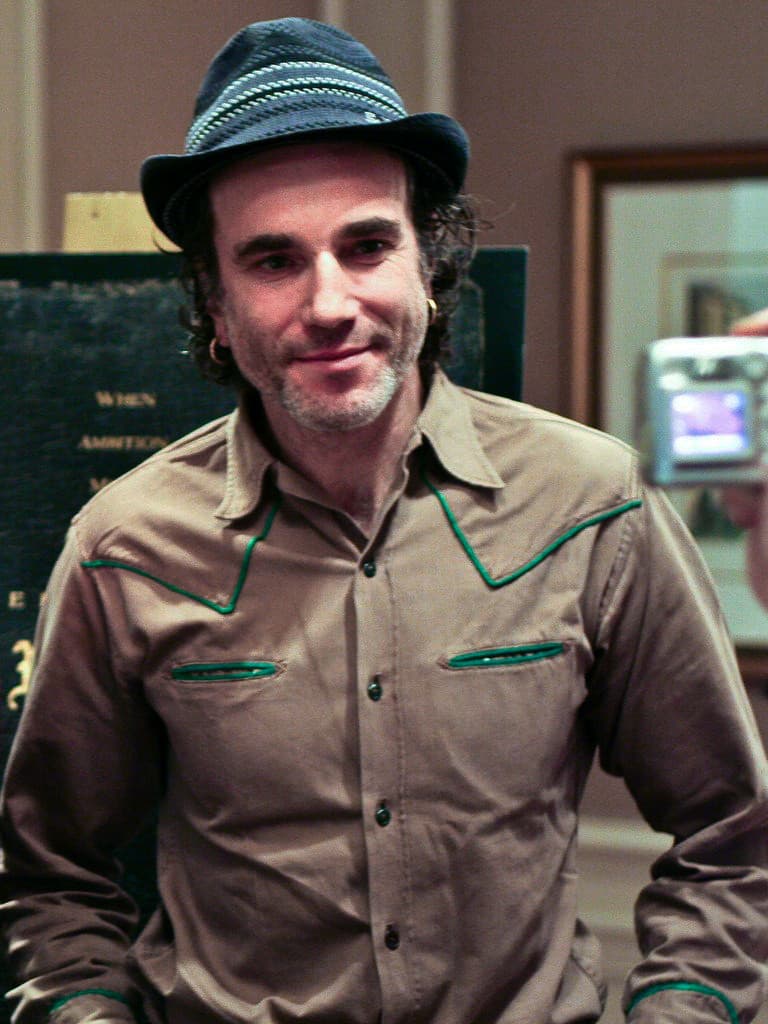
Pure instrumental attachment - every relationship as a resource extraction operation, including the relationship with a child; connection experienced as a means to an outcome rather than as a need in its own right
The absence of any witnessed early attachment suggests a formative environment in which the primary lesson was self-sufficiency as survival - connection was either unavailable or experienced as a liability that slowed the work
Extraction as the only relational mode - Plainview enters every relationship with an implicit ledger, assessing what value can be taken from it and exiting when the value is exhausted or the relationship demands something he cannot give
Declarative and transactional - Plainview states what he will do and what he wants, never asks what others want, and treats inquiry about others as a negotiating tactic rather than a genuine gesture
The mirror dynamic with Eli Sunday - two performers selling transcendence to people who need belief, each withholding from the other the validation each secretly requires, circling toward a final confrontation that is the film's only honest relationship
The First Fifteen Minutes
There Will Be Blood opens without dialogue. For approximately fifteen minutes of screen time, Daniel Plainview does not speak. He does not speak because he does not need to. He is alone - digging, falling, breaking his leg, dragging himself to file a claim, working the silver, finding the oil. The silence is not artistic flourish. It is psychological exposition. Paul Thomas Anderson is showing the audience who this man is before he is ever required to interface with another human being, because what he is in the silence is what he will remain throughout the film, even when words are eventually required.
What he is, in the silence, is complete. Daniel Plainview alone is not a diminished version of Daniel Plainview. He is the full version. The people who arrive later - the workers, the investors, the towns, H.W., Eli Sunday - do not add to him. They are the landscape he moves through, and the landscape exists to be worked.
This is the film's foundational argument, stated formally before a single word is spoken: here is a man for whom other people are primarily an environment.
The Linguistic Fingerprint
When Plainview does speak, the structure of his speech is the structure of his psychology. His sentences are almost entirely declarative. He states conditions, announces intentions, describes what he has done and what he will do. He issues the terms of arrangements. He makes promises that are specifically calibrated to be kept, because a kept promise is more effective than a broken one - it establishes the credibility that makes the next extraction possible.
What he almost never does is ask. Watch the film for questions. Plainview occasionally asks for information - geological, logistical, legal - but he almost never asks about the interior of another person. He does not ask H.W. what he is feeling after the accident on the derrick that costs the boy his hearing. He does not ask Mary Sunday what she needs. He does not ask Eli what it is like to believe the things Eli says he believes.
The absence of the question is structural and total. It is not that Plainview is brusque or socially awkward in the ways that characters in other films are brusque and socially awkward, as a trait that coexists with genuine curiosity that is merely poorly expressed. Plainview has no curiosity about the interior of other people because the interior of other people is not relevant data. What is relevant is what they will do, what they have, and what it will cost to get it.
The one place where the linguistic pattern breaks is the monologue in the bowling alley. "I'm finished" is the most honest speech in the film, and it is honest precisely because it is the only place where Plainview describes his interior rather than his intentions. He tells Eli what he actually is. He names it. He has nothing left to extract and nothing left to perform, and the performance finally falls away to reveal the bedrock underneath.
H.W. and the Logic of Instrumental Adoption
The film's most quietly devastating study in instrumental attachment is the relationship between Plainview and H.W., his adopted son. H.W. arrives in Plainview's life as the infant child of a worker killed on the derrick. Plainview takes him in and raises him, and the film is careful not to sentimentalize this: Plainview genuinely attaches to the boy. The attachment is real. It is also instrumental.
H.W. is useful in the way that a well-chosen tool is useful. A man traveling alone to negotiate with families looks predatory. A man traveling with a child looks like someone who has a stake in the future, someone who understands family, someone who can be trusted with other people's land. H.W. is Plainview's proof of humanity - not because Plainview is consciously deploying the child as a PR asset, but because Plainview's psychology cannot sustain a relationship that is not also solving a problem.
The accident on the derrick that deafens H.W. is the hinge point in their relationship, and what follows it is the film's most psychologically precise sequence. Plainview sends the boy away. He sends him to a school for the deaf, which is a reasonable response to the practical problem of a deaf child. But the manner of the sending - its abruptness, its emotional blankness, the way Plainview simply has H.W. removed from the train - reveals that what Plainview is doing is not primarily arranging for H.W.'s care. He is removing a damaged asset from the field.
Key Insight: H.W.'s deafness does not make him less lovable. It makes him less legible. Plainview's relational mode operates through speech - declarations, transactions, stated terms. A child who cannot hear Plainview's declarations and cannot respond with words is a child with whom the only available relational mode has broken down. The sending away is not cruelty in the conventional sense. It is the behavior of a man who genuinely has no other mode to offer.
When H.W. returns and grows and eventually tells Plainview, through an interpreter, that he is leaving to start his own company in Mexico, Plainview's response is the film's second most honest moment. He tells H.W. he is not his son and never was. He says it to wound. But he says it because it is also, in the specific vocabulary of Plainview's psychology, true. H.W. was an adoption, not an attachment. The distinction, which the film has been building toward for two and a half hours, finally becomes audible.
Eli Sunday as Mirror
The relationship between Plainview and Eli Sunday is the only relationship in the film that has the texture of a real relationship - not because it is loving or warm, but because Eli is the only person Plainview actually sees. He sees Eli because Eli is doing the same thing Plainview is doing.
Both men are performers. Plainview performs competence, solidity, paternal warmth, the honest oil man who is offering something real. Eli performs faith, divine connection, the pipeline to God that the people of Little Boston need. Both men are selling transcendence - one of oil (the future, progress, wealth, the transforming power of what lies beneath the ground) and one of spirit - and both men depend on the belief of others for the performance to function. The difference is that Plainview knows he is performing and Eli may not.
The scene in which Plainview submits to Eli's healing ritual in the Church of the Third Revelation is the film's most formally uncomfortable sequence. Plainview allows Eli to strike him, to call him a sinner, to conduct the public ritual of spiritual submission. He does it because he has promised Paul Sunday a payment contingent on it, and Plainview keeps his promises when keeping them is cheaper than breaking them. But the performance he gives inside the church is the finest acting in a film full of extraordinary acting: Plainview submitting with the specific quality of a man who is enacting submission while simultaneously filing every detail of the experience for future use.
What both men withhold from each other is the validation that each secretly requires. Eli needs Plainview to believe - genuinely, not performatively. Plainview needs Eli to acknowledge that Plainview's power is real and primary and that Eli's spiritual authority is, in the final calculus, a product that can be bought. Neither gets what they need. The film holds this tension through every scene they share until the bowling alley resolves it with the only resolution available: annihilation.
The Bowling Alley
The final scene of There Will Be Blood is regularly described as operatic, as excessive, as the moment where the film tips into something beyond realism. This reading misses what the scene is. The bowling alley is the logical endpoint of the film's argument, not its departure.
Eli comes to Plainview asking for money. He has lost his faith, or lost his congregation, or lost whatever the vehicle was through which he assembled credibility and followers. He comes as a supplicant. Plainview makes him say it - makes him say "I am a false prophet, God is a superstition" - and then kills him.
The killing has the quality of an obligation finally discharged. Eli is the one person in the film who has consistently claimed to have something Plainview does not have - access to something beyond the material, authority derived from a source outside money and extraction. Plainview has never believed this and has never needed to believe it, but the claim has been a persistent irritant in the way that an unpaid debt is an irritant. The bowling alley scene is the collection.
"I'm finished" is Plainview's final declaration. It is not said in triumph. It is said in the tone of a man who has completed the last item on a list and found that the list's completion does not produce the feeling that was anticipated. He has everything. He has extracted everything available from every relationship the film has shown him entering. He is alone with the extraction, in a house he built for himself because he told someone early in the film that he hates most people, in a bowling alley in his own basement because he has no one to play with.
The only honest relationship Plainview can have is the one where he finally names what has always been true. The bowling alley scene is the film's most intimate moment. It is the first time Plainview has been fully present with another person, and the presence requires the person's death.
The Wound That Is Never Named
The film offers no origin scene for Plainview. There is no moment in his past that explains him, no flashback to the wound that produced the architecture. Anderson and Daniel Day-Lewis made a deliberate choice: Plainview is presented as a fully formed system without etiology. We see the output without the input.
This is the film's most sophisticated formal decision, and it is the correct one. The absence of the origin story means that Plainview cannot be understood as a damaged person who might have been otherwise under different circumstances. He is presented as a type - a human possibility that exists, that has existed throughout the history of economies and extraction industries, and that will continue to exist. The lack of psychological backstory prevents the comfortable move of locating Plainview's pathology in a specific wound that could, theoretically, have been healed.
What the film offers instead is the consequence - the full logical development of what instrumental attachment produces when it is combined with extraordinary competence and the specific historical moment of early American oil. Plainview is not the result of a single wound. He is the result of a complete self-organization around a relational mode that treats people as environments rather than ends.
Key Insight: The film's title is usually read as a reference to the oil that comes from the ground. It is also a description of the relational consequence: there will be blood because a man who treats people as resources will eventually reach the bottom of the resource, and when he does, there is nothing left to do but note that the well is dry.
What the Film Argues
There Will Be Blood is not a cautionary tale. It does not argue that Plainview should have been different, or that his life would have been better if he had been capable of connection. The film is too honest for that sentimental conclusion.
What it argues is something colder: that instrumental attachment, run to its full development without interruption or correction, produces a specific and coherent endpoint. The endpoint is not miserable in the way we usually imagine loneliness to be miserable - it is not full of longing for connection, not marked by the specific pain of someone who knows what they are missing. Plainview does not appear to know what he is missing. He has never had it to miss.
The endpoint is the bowling alley. It is the man alone with his possessions and his completion. It is the statement - said aloud, to no one who will carry the message - that he is finished. The film ends immediately after. Anderson cuts to black. There is nothing more to show.
The minimum viable truth is this: a man who treats every person as a resource to be extracted will, at the end of the extraction, find himself alone in a room with everything he took and no one to take it from.
References
- There Will Be Blood. Directed by Paul Thomas Anderson. Paramount Vantage / Miramax Films, 2007. Based on Upton Sinclair's novel Oil! (1927). - Sinclair, Upton. Oil! Albert and Charles Boni, 1927. - Bowlby, John. Attachment and Loss, Vol. 1: Attachment. Basic Books, 1969. - Kernberg, Otto. Borderline Conditions and Pathological Narcissism. Jason Aronson, 1975. - Hare, Robert D. Without Conscience: The Disturbing World of the Psychopaths Among Us. Guilford Press, 1993. - Hoberman, J. "Blood Simple." Village Voice, December 26, 2007. - Foundas, Scott. "Oil's Well That Ends." LA Weekly, December 27, 2007. - Romney, Jonathan. "There Will Be Blood." Sight and Sound, February 2008. - Wood, Robin. Hollywood from Vietnam to Reagan - and Beyond. Revised ed. Columbia University Press, 2003.
---
Interpretive opinion based on the public record. Not a clinical assessment or diagnosis of any individual.