The Road
The world has ended. Everything has burned. What remains is a man, a boy, and the question of whether love is enough of a reason to keep going when there is no other reason left.
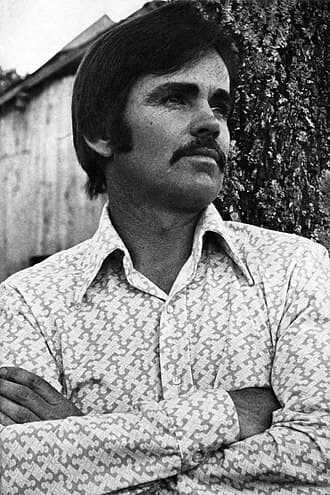
Love as the only remaining orientation when all other structures have failed
The father who has lost everything except the one thing he cannot afford to lose
Carrying the fire - meaning maintained in the absence of any external validation
Pure protective attachment - the relationship is the entire world
The boy as the father's reason for being, and the unbearable weight of that
The Biographical Source
Cormac McCarthy was 58 years old when his son John Francis McCarthy was born in 1998. He has described the novel's origin plainly: he was staying in a hotel in El Paso with his young son, and he looked out the window at the dark hills and imagined what those hills might look like in fifty years, and then imagined himself and his boy walking through them.
That image became The Road. It is dedicated to John. The dedication is the map before the map: a novel about a father who will do anything to protect his son, written by a man who had become a father late enough in life to know that protection is both absolute and futile.
McCarthy has spoken sparingly about his work, but in his 2007 interview with Oprah Winfrey, the first television interview he gave in decades, he was direct about the book's personal source: "I think everything I do is autobiographical in some way. I don't think you can write about things you don't know about." The late fatherhood is not incidental. A man who has a child at 58 is acutely aware of mortality in a way that younger fathers often are not. He will not see everything. He cannot be there for everything. The novel is, among other things, an extended confrontation with that fact.
What the Apocalypse Is
The Road is not interested in what caused the catastrophe. McCarthy deliberately withholds this information. The ash falls, the sky is gray, nothing grows, the dead cities lie silent. What happened is not the subject. The apocalypse is the wound stripped of all context. What remains when everything that provides meaning externally is gone? What remains is whatever the person always was, now visible without cover.
The formal choices enforce this. There are no chapter breaks, no quotation marks around dialogue, no dates, no character names. The father is the man. The son is the boy. The prose is stripped to the bone. McCarthy said in the Winfrey interview that he wanted a book that was as lean as he could make it, where every sentence had to earn its place. The result is a reading experience of almost clinical psychological intensity. There is nowhere to look except at the relationship itself.
The Man's Terrain
The man carries two things: his son and a pistol. The pistol has two bullets. One is for the boy if capture becomes imminent. The man has decided, before the novel begins, that there are conditions under which death is preferable to what remains. This is not nihilism. It is a specific kind of love: the love that will not permit the worst to happen to the beloved even at the cost of everything.
"If he is not the word of God God never spoke," the man thinks of his son. The sentence is one of the most theologically dense in American fiction. It says: in the absence of all other meaning, this relationship is the only remaining candidate for something sacred.
"The man's psychology is visible precisely because there is nothing left to hide it. The apocalypse has removed every structure that would otherwise mediate between the interior and the world. What we read is a wound with no covering: a father who has organized his entire remaining existence around the protection of a single person, and who knows that his time to protect is running out."
Carrying the Fire
The novel's central phrase is the father's recurring instruction to the boy: they are carrying the fire. The fire is not defined. It is not a plan or a destination. It is the commitment to remain human: to not become, in the language of the novel, one of the bad guys.
In terrain terms, the fire is meaning maintained without any external source of validation. The father continues to insist on the distinction between good and evil, between the protectable and the unprotectable, in a world where those distinctions no longer have institutional support. The distinction exists because he insists on it. That insistence is both heroic and, because it depends entirely on him, fragile.
This is what reading the novel requires of the reader psychologically. You must sit with the possibility that meaning is a construction, that the man's insistence on the fire is itself a survival mechanism rather than a discovery, and that his insistence is also the most human thing in the book. These two readings are not contradictory. They are simultaneously true. The novel will not resolve them for you, and that refusal to resolve is the hardest thing about reading it.
What the Boy Carries
The boy was born after the catastrophe. He has no memory of the world as it was. For him, the father's fire is simply what exists. He is also, observably, more morally sensitive than his father. Where the man conserves, evades, protects through hardness, the boy keeps asking whether they can help people they encounter. He has received the fire and transformed it.
This creates the novel's sharpest terrain question: is the fire the father passes to the son the man's wound transposed, or is it something that can survive its origin and become something better? The ending, which arrives abruptly and then opens into a tentative possibility, answers this question without explaining the answer. McCarthy trusts the reader to feel it. That trust is part of the argument.
The Reading Experience Itself
The Road is one of the most demanding reading experiences in American fiction not because of its length or its complexity but because of what it asks the reader to hold. It requires sustained attention to a relationship that is entirely without the normal mediating comforts of plot. You are in a gray world, moving south, waiting for something to go wrong. The emotional experience of reading it is close to grief. That is not an accident. The novel is structured so that the reader cannot remain observational. You are inside it. The formal choice to strip punctuation and chapter breaks removes the usual mechanisms that allow a reader to step back. The book will not let you step back. This is the point.
References
- McCarthy, Cormac. The Road. Alfred A. Knopf, 2006. - McCarthy, Cormac. Interview with Oprah Winfrey. The Oprah Winfrey Show, June 2007. - Woodward, Richard B. "Cormac McCarthy's Venomous Fiction." The New York Times Magazine, April 1992. - Cant, John. Cormac McCarthy and the Myth of American Exceptionalism. Routledge, 2008. - Bell, Vereen M. The Achievement of Cormac McCarthy. Louisiana State University Press, 1988. - Cooper, Lydia R. No More Heroes: Narrative Perspective and Morality in Cormac McCarthy. Louisiana State University Press, 2011.
---
Interpretive opinion based on the public record. Not a clinical assessment or diagnosis of any individual.