Pope Francis
The man who chose poverty inside the most powerful institution on earth. A terrain reading of what it means to carry a reformer's wound inside a structure that does not want to be reformed.
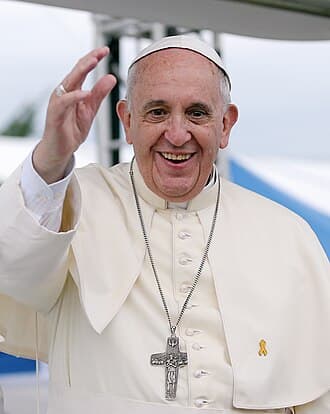
Reform as wound response inside an unreformable structure
Complicity wound - early Jesuit decisions he later regarded as moral failure
Deliberate smallness as both statement and self-regulation
Proximity to the marginalized as organizing principle
Institutional loyalty in tension with prophetic instinct
The Wound That Made the Pope
Before he was Francis, he was Jorge Mario Bergoglio -- a young Jesuit superior in Buenos Aires during one of the most violent periods in Argentine history. Between 1976 and 1983, the military junta conducted what became known as the Dirty War, in which an estimated 30,000 people were disappeared, tortured, or killed. Bergoglio was Provincial of the Society of Jesus in Argentina from 1973 to 1979, the years at the heart of the terror.
The specific accusation concerns two Jesuit priests under his authority: Orlando Yorio and Franz Jalics. In 1976, both were abducted by the military and held for five months, during which they were tortured. The accusation, made most publicly by Yorio before his death in 2000, was that Bergoglio had withdrawn his protection from them -- that he had declined to renew their authorization to work in the slums, effectively removing his institutional cover at the moment when such cover was the difference between safety and disappearance.
The documented record is more complex than the accusation suggests. Jalics, who survived and became a Jesuit priest in Germany, issued a statement in 2013 saying he had reconciled with Bergoglio and did not hold him responsible. Investigative reporting by the Argentine journalist Horacio Verbitsky brought the story to wide attention, but subsequent historians -- including Austen Ivereigh, whose biography is the most thorough in English -- found evidence that Bergoglio had in fact worked through back channels to secure the priests' release, visiting Emilio Massera, one of the junta's commanders, to negotiate on their behalf.
This is the primary wound in the map: not powerlessness imposed from outside, but complicity arrived at from within, in a situation whose moral coordinates were genuinely unclear. The man who became the reforming pope was formed, in part, by a period he spent the rest of his life trying to answer for.
The Years of Exile and What Isolation Produces
After his term as Provincial ended, Bergoglio's standing within the Jesuits declined sharply. His leadership style had been authoritarian by the standards of the order, and the faction that followed him had created internal rupture. By the mid-1980s he had been effectively sidelined -- sent to study theology in Germany, then assigned to a secondary role in Cordoba that amounted to internal exile.
"A man who has been powerful, then blamed, then silenced within his own institution -- that sequence does not produce complacency. It produces either bitterness or a specific kind of clarity. Bergoglio came out of Cordoba with the second."
The Cordoba period lasted from 1990 to 1992. What internal exile within an institution produces, when the person survives it with their vocation intact, is a particular kind of perceptual sharpening: you understand what the institution does to people it considers a problem. You carry that understanding into any power you later hold.
The Name and What It Declared
When Bergoglio appeared on the balcony of St. Peter's Basilica on March 13, 2013, and announced that the new pope would be called Francis, the choice was a manifesto before he had said a word about policy.
No pope had ever taken the name of Francis of Assisi. The resonance was immediate and deliberate: poverty, simplicity, proximity to the suffering, the rejection of institutional comfort. His first acts confirmed the reading -- he declined the papal apartments and stayed in the Casa Santa Marta guest house; he carried his own bag; he paid his own hotel bill before leaving Rome after the conclave. The white cassock. The Ford Focus instead of the motorcade.
These are not incidental quirks. They are the clearest terrain signal in the map. A man who carries a wound around power and complicity does not reach for more power. He reaches for less. The deliberate smallness is the wound's answer -- and also a statement about what he believed the institution had become.
The Reforms He Made and the Limits He Met
The substance of his papacy is visible in three documents and one unfinished project.
Laudato Si' (2015) was the first papal encyclical on climate change and ecological destruction. It drew explicit connections between environmental degradation and economic injustice, and it used the language of the periphery -- the poor who suffer first and most from ecological collapse. The document was internationally significant and institutionally uncomfortable.
Amoris Laetitia (2016) addressed family life and created genuine controversy within the Church by opening a pastoral door, however cautiously, for divorced and remarried Catholics to receive communion. The ambiguity was deliberate. It provoked four cardinals to issue a formal challenge (dubia) demanding clarification, which Francis did not provide. The refusal to provide clarity was itself a position: he was not prepared to close the door, and he was not prepared to force the institution through it.
The synodality process -- his effort to build a more participatory Church governance structure -- remains the most structurally ambitious element of his papacy and the most institutionally resisted. The Synod on Synodality that culminated in 2023 and 2024 produced documents that disappointed reformers hoping for concrete changes on women's ordination, clerical celibacy, and LGBTQ+ inclusion. The institution absorbed the process and continued largely as it was.
He said in a 2013 interview with Antonio Spadaro in America magazine: "I am a sinner. This is the most accurate definition. It is not a figure of speech, a literary genre. I am a sinner." This is not humility performance. It is the statement of someone whose wound is about complicity, whose orientation toward power is shaped by having had it and misused it.
Proximity as Theology and Terrain
His consistent movement toward the margins -- refugees at Lampedusa, prisoners he visited personally, the sick in hospital visits conducted without cameras, the geographically remote to whom he directed institutional attention -- is theology, but it is also terrain.
The man who carries a wound about what he failed to do when it mattered moves toward those he might have failed. This is not performance. The pattern is too consistent, too personally costly to the institution around him, and too specifically calibrated to the populations he himself describes as living on "the existential peripheries" to be strategic positioning.
In Evangelii Gaudium (2013), his first major apostolic exhortation, he wrote: "I prefer a Church which is bruised, hurting and dirty because it has been out on the streets, rather than a Church which is unhealthy from being confined and from clinging to its own security." The language is the wound's language -- someone who knows what it costs to be safe inside the institution while others are not.
The Institution as Cross
He died having changed less than his election promised and more than his critics would acknowledge. The institution that elected him also constrained him, outlasted many of his appointments, and will continue after him largely as it was.
The terrain question is whether he understood this from the beginning. The evidence suggests he did -- and chose it anyway. A man formed by a complicity wound does not expect redemption to be clean. He knows what institutions do to the people inside them who ask them to be different. He was one of those people, twice over: once as the priest who made choices he later regarded as failures, and again as the pope who could see the structure clearly enough to know how far it would permit itself to be moved.
The limits of his papacy reveal less about the man than about the institution. The question he embodied -- whether reform is possible from within a structure that holds more power than any individual reformer -- remains open.
References
- Ivereigh, Austen. The Great Reformer: Francis and the Making of a Radical Pope. Henry Holt, 2014. - Ivereigh, Austen. Wounded Shepherd: Pope Francis and His Struggle to Convert the Catholic Church. Henry Holt, 2019. - Francis, Pope. Evangelii Gaudium (The Joy of the Gospel). Apostolic Exhortation, November 24, 2013. - Francis, Pope. Laudato Si' (On Care for Our Common Home). Encyclical, May 24, 2015. - Francis, Pope. Amoris Laetitia (The Joy of Love). Post-Synodal Apostolic Exhortation, March 19, 2016. - Francis, Pope. Interview with Antonio Spadaro, S.J. America, September 30, 2013. - Rubin, Sergio, and Francesca Ambrogetti. Pope Francis: His Life in His Own Words. G.P. Putnam's Sons, 2013. - Vallely, Paul. Pope Francis: Untying the Knots. Bloomsbury, 2013. - Verbitsky, Horacio. El Silencio. Editorial Sudamericana, 2005. - Jalics, Franz. Statement on Jorge Mario Bergoglio. March 2013.
---
Interpretive opinion based on the public record. Not a clinical assessment or diagnosis of any individual.