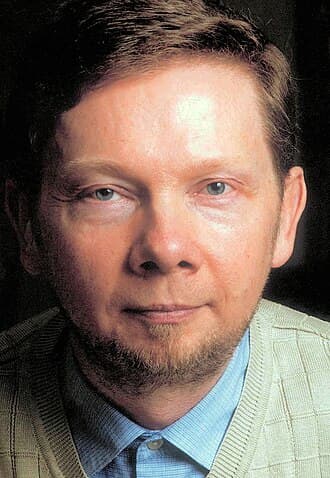
Eckhart Tolle
One of the most complete cases of a wound becoming a method. His framework maps the observer's interior with extraordinary precision and stops exactly where ReLoHu begins.
Observer-present orientation
Near-continuous psychological suffering / suicidal despair at 29
Wound-to-method: suffering became the teaching
Low attachment to personal narrative
Universalizing drive that minimizes particular texture
The Pre-Awakening Suffering
Eckhart Tolle was born Ulrich Leonard Tolle in Lunen, Germany, in 1948. He has described his childhood as unhappy, his family life as characterized by conflict, and his years of formal education as a source of anxiety rather than structure. He moved to England in his early twenties and studied literature at the University of London, then began graduate study at Cambridge.
What he has described in interviews and in his books is not situational unhappiness but something more pervasive: a background hum of anxiety and depression that he could not locate a source for or resolve through thought. "There was a constant background of unease, of almost continuous anxiety," he told Oprah Winfrey in their 2008 radio series. "I didn't know what was wrong. I didn't know why I was suffering." He has described periods of suicidal ideation, specifically the sense that the suffering had accumulated to the point where continuing did not seem possible. By his own account, this state was near-continuous through his twenties.
The suffering was not the result of specific trauma that could be named and worked through. It was something more structural: an orientation toward mental content so total that the present moment had effectively ceased to exist as a livable space. He was living inside his thoughts about his life rather than in his life. That distinction, which became the foundation of his teaching, was something he arrived at not through therapeutic process but through a rupture.
The Rupture at Twenty-Nine
Tolle has told the story of his awakening in several versions across his books and interviews. In the most commonly told version, he woke in the night at twenty-nine in a state of suicidal despair and noticed the structure of the thought running through him: "I cannot live with myself any longer."
"I suddenly became aware of what a peculiar thought that was," he writes in The Power of Now. "'Am I one or two? If I cannot live with myself, there must be two of me: the I and the self that I cannot live with.' Maybe, I thought, only one of them is real."
The recognition produced, by his account, a dissolution of the suffering and a shift into what he describes as an experience of profound stillness. He slept. When he woke in the morning, the suffering was gone. He has described looking at a tree and being overwhelmed by its presence. The ordinary was suddenly vivid in a way it had not been for years.
What followed was approximately two years on park benches in London and Hampstead Heath. He did not return to his doctoral studies. He did not seek employment. He sat. People approached him, sensing something different, and asked questions. He answered as best he could. He was supported by friends and acquaintances during this period; the public record does not account fully for how he survived materially, though he has mentioned staying with people who offered shelter. The two years of apparent doing-nothing were, in his retrospective account, the consolidation of the awakening: the state needed time to become stable before it could be transmitted.
The Power of Now: Rejected, Then Read
Tolle began teaching informally in the early 1990s and started writing the book that would become The Power of Now around 1995. He has described the writing as something that came through him rather than from deliberate construction. The book was completed and submitted to publishers beginning in 1996.
It was rejected by many publishers. The content was not easily categorized: too spiritual for the psychology section, too psychological for the spirituality section, not affiliated with any recognizable tradition. He eventually self-published it in 1997 through a small press called Namaste Publishing in Vancouver, selling copies out of the trunk of his car and through word of mouth in the British Columbia spiritual community where he had settled.
The book sold slowly at first, then caught a current. By 1999 it had found its way to Oprah Winfrey's assistant. Winfrey read it and recommended it on her program. Sales accelerated dramatically. By the time Oprah selected A New Earth (2005) for her book club in 2008 and conducted a ten-week web class with Tolle, the audience reached 35 million people across 139 countries, making it the largest book club event in history at that point.
The scale of resonance is a terrain data point. Something in the teaching was meeting a wound that 35 million people carried. The wound it met is the one described in the book: the experience of being trapped inside one's own mental content, unable to access the present moment, suffering from a self-concept that cannot stop generating anxiety. That wound is not rare. What was rare was a framework that addressed it in terms accessible enough to cross cultural and religious boundaries without requiring prior affiliation.
"He is the most complete case in the public record of a wound resolving into direct transmission. The framework he built is not about the wound. It is the view from after it. The teaching has the clarity that belongs to something seen from a distance that was once inhabited entirely."
Shadow: The Universalizing Vector
The limitation in Tolle's teaching follows directly from its strength. By reducing experience to present versus non-present, by identifying the "pain body" as the accumulated suffering that the ego sustains through identification with mental content, he creates an accessible framework that reaches an enormous audience. The cost is specificity.
His teaching minimizes particular relational texture. It does not have a developed account of specific grief patterns, of the complexity of wounds that require engagement rather than dissolution, of what happens when two people with specific histories and specific injuries encounter each other in ways that cannot be resolved by either person becoming more present. "Accept the present moment as if you had chosen it," he writes in The Power of Now. That instruction is transformative for a certain kind of suffering. It is inadequate, and potentially harmful, for another kind.
The relational field, two specific people with specific histories navigating specific conflict, is largely outside its scope. His framework reaches stillness. It does not reach encounter. The difference between those two destinations is the terrain that his teaching cannot map.
Where the Wound Still Appears in the Teaching
Tolle's pre-awakening relational architecture is almost entirely absent from the public record. He mentions childhood unhappiness and academic anxiety but provides very little detail about specific relationships, specific injuries, or the relational texture of the suffering. The result is a teaching that is extraordinarily precise about the interior relationship between the observer and mental content, and almost entirely silent about the relational field.
This is not a neutral omission. It is the wound appearing in the teaching. The suffering that resolved on the park bench was not, by Tolle's own account, relational suffering. It was structural suffering, the suffering of an observer trapped in identification with its own mental content. The method that emerged from that resolution solves exactly that problem and no other.
Where his own wound still shows is in the teaching's implicit claim to universality: that all suffering is, at its root, the same suffering, and that all suffering resolves through the same shift. A person whose wound was primarily structural can reasonably arrive at that conclusion. A person whose wound is primarily relational, whose suffering is not about identification with mental content but about specific injuries sustained in specific relationships, experiences the teaching's universalizing vector as a kind of erasure.
References
- Tolle, Eckhart. The Power of Now: A Guide to Spiritual Enlightenment. New World Library, 1997. - Tolle, Eckhart. A New Earth: Awakening to Your Life's Purpose. Dutton/Penguin, 2005. - Tolle, Eckhart. Stillness Speaks. New World Library, 2003. - Tolle, Eckhart. Interview with Oprah Winfrey. Oprah's Soul Series, XM Radio, 2008. - Tolle, Eckhart. Interview with Sounds True, 2012. - Winfrey, Oprah. A New Earth web class with Eckhart Tolle. Oprah.com, 2008. - Tolle, Eckhart. Various interviews on the awakening experience, including Watkins Mind Body Spirit magazine, 2011.
---
Interpretive opinion based on the public record. Not a clinical assessment or diagnosis of any individual.