The 2008 Financial Crisis
Thousands of highly intelligent people, operating inside systems designed to prevent catastrophe, built the catastrophe anyway. The terrain question is not how they missed it. It is what they needed to believe in order to keep going.
Collective narcissism at institutional scale - the belief that this time is different
The institutional wound: systems that protect the architects and expose everyone else
Magical thinking rationalized as sophisticated analysis
Incentive structures that reward the wrong signals
The people with the least power absorb the losses of the people with the most
The Motivated Blindness
The instruments that caused the crisis - mortgage-backed securities, collateralized debt obligations, credit default swaps - were genuinely complex. But the core of what went wrong was not complexity. It was the desire not to see.
Rating agencies rated toxic instruments AAA because their business model required pleasing the banks paying for the ratings. Traders bought instruments they did not understand because the commissions were extraordinary. Regulators did not ask because the ideology of the period held that markets regulated themselves.
Everyone had a reason to keep going. The reasons were financial. The rationalizations were intellectual.
The Financial Crisis Inquiry Commission, in its 2011 report, was direct: "The crisis was the result of human action and inaction, not of Mother Nature or computer models gone haywire. The captains of finance and the public stewards of our financial system ignored warnings and failed to question, understand, and manage evolving risks within a system essential to the well-being of the American public."
The Specific Institutional Roles
The ratings agencies - Moody's, S&P, Fitch - were paid by the institutions whose instruments they were rating. That structure created an incentive to assign ratings that kept the business relationship intact. Securities that would later be revealed as nearly worthless were rated as the safest possible investment class. The agencies did not invent the conflict of interest. They operated it at maximum scale during the period when the pressure was highest.
The investment banks packaged and sold instruments whose composition they understood better than their buyers. Goldman Sachs, in documented congressional testimony before the Senate Permanent Subcommittee on Investigations in 2010, was shown to have sold mortgage-backed securities to clients while simultaneously holding short positions against the same instruments. Senator Carl Levin's question to Goldman executives - "How about the fact that you are selling something and you are net short on it?" - elicited responses that the subcommittee found evasive.
Regulatory capture was the third leg. The prevailing ideology, articulated most prominently by Alan Greenspan during his tenure as Federal Reserve chair, held that financial institutions would self-regulate because self-interest aligned with systemic stability. Greenspan testified before Congress in October 2008 that he had "found a flaw" in that ideology. "I was shocked," he said, "because I had been going for 40 years or more with very considerable evidence that it was working exceptionally well."
The Warnings and the People Who Issued Them
Bear Stearns collapsed in March 2008, months before the broader crisis became visible to the general public. Two Bear Stearns hedge funds specializing in mortgage securities had failed in June 2007. The institutional response - within Bear Stearns and across the industry - was largely to treat the failure as specific rather than symptomatic.
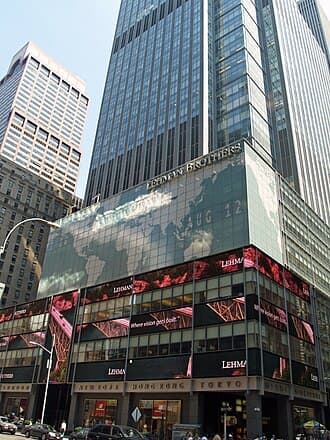
Dick Fuld, the CEO of Lehman Brothers, testified before the House Committee on Oversight and Government Reform in October 2008, after Lehman had filed for bankruptcy. He said: "I wake up every single night thinking, what could I have done differently?" The question was genuine in its framing. What the congressional record shows is that Fuld received internal warnings about Lehman's leverage and exposure and that the response to those warnings was not to reduce the exposure but to continue. The intelligence was available. The will to apply it was not.
Hank Paulson, the Treasury Secretary who oversaw the government response, described in his memoir On the Brink the experience of watching the system come apart in September 2008 with insufficient tools to stop it. The TARP authorization - the $700 billion Troubled Asset Relief Program - was initially rejected by the House of Representatives before passing on reconsideration. The rejection was not irrational: it was the correct democratic response to being asked to socialize the losses of institutions that had privatized the gains.
This Time Is Different
Kenneth Rogoff and Carmen Reinhart documented across 800 years of financial history that every major financial crisis is preceded by the conviction that this time, for specific articulated reasons, the normal rules do not apply.
The same conviction operated in 2005, 2006, 2007. Housing prices had never fallen nationally. Securitization had distributed risk. Financial innovation had made the system more resilient. Each of these beliefs was held by intelligent people and each of them was wrong.
"The crisis was not a failure of intelligence. It was a failure of the will to apply intelligence to conclusions that would have required stopping. The system punished stopping and rewarded continuing. The people inside the system responded to the incentives."
Who Bore the Consequences
The architects of the crisis were largely made whole by the institutions that stepped in to prevent systemic collapse. The homeowners who had taken mortgages they could not afford - often with inadequate disclosure, sometimes with active misrepresentation - lost their houses.
Approximately eight million jobs were lost in the United States between 2008 and 2010. Household net worth declined by approximately thirteen trillion dollars. The institutions whose failure precipitated the crisis were rescued with public funds. No senior financial executive was prosecuted for conduct related to the crisis.
This asymmetry is not incidental. It is the wound the event maps. The systems designed to prevent catastrophe were operated by people whose losses would be socialized and whose gains would remain private. That structure is not a bug in the system. In 2008, it was the system.
The Long-Term Psychological Damage
The trust rupture produced by the crisis and its aftermath was structural and durable. Polling data consistently shows that institutional trust - in banks, in government, in regulatory bodies, in financial expertise - declined sharply after 2008 and did not recover to pre-crisis levels in the following decade.
The political psychology of the decade that followed - the rise of anti-establishment movements across the ideological spectrum, the acceleration of populist anger in both directions, the collapse of deference to expert consensus - cannot be fully understood without accounting for the specific experience of watching the most sophisticated financial institutions in the world destroy the economy and face no personal consequences while ordinary households did.
The crisis did not only destroy wealth. It destroyed the credibility of the system that was supposed to prevent exactly that kind of destruction. That second loss was larger and longer-lasting than the financial loss itself.
The Lesson Not Learned
The specific instruments of 2008 are now heavily regulated. The underlying architecture - privatized gain, socialized loss, incentive structures that reward short-term performance over long-term soundness - remains.
This is what financial crises have in common across 800 years: the mechanism changes, the structure persists.
References
- Lewis, Michael. The Big Short: Inside the Doomsday Machine. W.W. Norton, 2010. - Reinhart, Carmen M., and Kenneth S. Rogoff. This Time Is Different: Eight Centuries of Financial Folly. Princeton University Press, 2009. - Financial Crisis Inquiry Commission. The Financial Crisis Inquiry Report. U.S. Government Printing Office, 2011. - Sorkin, Andrew Ross. Too Big to Fail: The Inside Story of How Wall Street and Washington Fought to Save the Financial System. Viking, 2009. - Tett, Gillian. Fool's Gold: How the Bold Dream of a Small Tribe at J.P. Morgan Was Corrupted by Wall Street Greed. Free Press, 2009. - U.S. Senate Permanent Subcommittee on Investigations. "Wall Street and the Financial Crisis: Anatomy of a Financial Collapse." April 2011. - Paulson, Henry M. On the Brink: Inside the Race to Stop the Collapse of the Global Financial System. Business Plus, 2010. - Greenspan, Alan. Testimony before the House Committee on Oversight and Government Reform, October 23, 2008 (public record).
---
Interpretive opinion based on the public record. Not a clinical assessment or diagnosis of any individual.