Jonestown
Not a story about manipulation. A story about what happens when an entire group of people find, in one place and one person, the belonging they could not find anywhere else - and what that leader does with that much need.
Mass wound-matching between leader and congregation
Collective longing for radical belonging in a society that withheld it
Total surrender as the cost of total acceptance
Enmeshment architecture - individual identity dissolved into collective
Escalation as loyalty proof - each demand prepares the next
What the Map Is Reading
Jonestown is consistently read as a story about Jim Jones: his charisma, his manipulation, his madness. This map reads it differently: as a story about 900 people, most of them Black Americans, who had experienced profound and systematic exclusion from mainstream American belonging, and who found in the Peoples Temple something they could not find elsewhere.
The manipulation did not create the need. It found the need and made an offer.
Indianapolis: The Origin
Jim Jones founded the Peoples Temple in Indianapolis in the early 1950s. What he built there was, by documented accounts, genuinely unusual for its moment: a racially integrated congregation in a city where such integration was not common practice. Jones preached against racism from the pulpit when doing so had social cost. The Temple fed people, housed people, and organized a community around the conviction that the marginalized deserved dignity and full inclusion.
This is the part of the story that gets compressed in retrospect. The Temple worked, for a time, as what it claimed to be. Members interviewed for documentary projects described joining not because they were deceived but because the community Jones had built was real. Survivor Deborah Layton later wrote: "I wanted to be part of something important, something that was making a difference." The wound the Temple met was real. That is what made the escalation possible.
The Migration Architecture
The Temple moved from Indianapolis to Northern California in the 1960s, establishing a congregation in Ukiah and then expanding to San Francisco and Los Angeles. Each move required members to uproot themselves and follow. Each move deepened their investment in the community and attenuated their connections to the world outside it.
By the mid-1970s, Jones had moved from integrationist Christianity toward a more explicitly political and Marxist framework. He had also begun the practices that survivor accounts document as coercive: Public Catharsis sessions in which members were required to confess sins or failings before the congregation, sometimes followed by physical discipline. Members surrendered financial assets to the Temple. Night-time "White Night" drills simulated emergency scenarios, including mass death, conditioning members to follow instructions under extreme stress without time to deliberate.
"People do not surrender their lives to a lie. They surrender them to something that was, at some point, true - or close enough to true that the lie became indistinguishable from the hope. Understanding Jonestown means understanding what the hope was responding to."
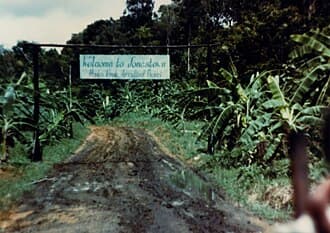
The move to Guyana, completed by 1977, was the final isolating step. Jones called it the Promised Land, a place where the Temple community could build its vision free from American racism and capitalism. For members who had already surrendered their finances, their relationships outside the Temple, and their capacity for independent judgment through years of escalating demands, leaving Guyana required overcoming barriers that had been systematically constructed to be impassable.
Who Was There
The membership of Jonestown was predominantly Black women. Estimates from records and survivor accounts place the proportion at approximately 70 percent Black, with women outnumbering men significantly. This demographic is not incidental to the terrain reading.
Black women in 1970s America experienced some of the highest concentrations of the belonging deprivation the Temple addressed: economic exclusion, limited institutional power, and a cultural environment that consistently failed to reflect their experiences as central rather than peripheral. The Temple offered them leadership roles, financial support, community recognition, and a movement organized around the explicit claim that their lives mattered. The offer was targeted, whether intentionally or not, at the people for whom belonging deprivation was most acute.
The Ryan Visit and the Airstrip
Congressman Leo Ryan of California flew to Guyana in November 1978 after receiving constituent complaints about family members in Jonestown. His delegation, which included journalists and concerned relatives of Temple members, arrived on November 17. Initially Jones permitted the visit. On November 18, as Ryan's delegation was preparing to depart with a group of members who wanted to leave, armed Temple security personnel opened fire on the delegation at the Port Kaituma airstrip. Ryan, three journalists, and one Temple defector were killed. Eleven others were wounded.
The attack made retreat impossible. Jones convened the community at the central pavilion the same afternoon.
The Final Recording
FBI investigators recovered an audio recording made at the Jonestown pavilion during the final hours of November 18, 1978. Known publicly as the "Death Tape," it runs approximately forty-five minutes. It documents Jones speaking to the assembled community, urging them to drink the cyanide-laced punch as an act of revolutionary dignity. It also documents dissent.
A woman identified as Christine Miller argued with Jones directly, in front of the assembled congregation, for approximately six minutes. She said the community should go to the Soviet Union rather than die. Jones responded by accusing her of thinking of herself too much. Others supported her. Then they did not.
The recording documents something that the sanitized version of Jonestown suppresses: there were people who refused, who argued, who were not willing. Of the 918 people who died at Jonestown, forensic evidence suggests that a portion, including many children, did not drink voluntarily. The resisters exist. Their presence in the record matters for the terrain reading. Coercive control is not total. It is nearly total. The gap between those two things is where the moral record of the survivors lives.
The Escalation Pattern
Jones understood, consciously or otherwise, that each demand successfully met prepares the follower to meet the next. Public confessions. Financial surrender. Physical discipline. Geographic isolation. The White Night drills. Each step was possible only because the previous steps had been completed.
This is the terrain pattern of coercive control at group scale: the isolation that makes the final demand possible is built incrementally, in steps too small to register as what they are. The word cult short-circuits the terrain reading. It implies aberration. What the Temple provided - radical belonging, total acceptance, a community organized around shared belief in justice - is what most people want. The wound is not unusual. The offer was unusually complete.
References
- Layton, Deborah. Seductive Poison: A Jonestown Survivor's Story of Life and Death in the Peoples Temple. Anchor Books, 1998. - Guinn, Jeff. The Road to Jonestown: Jim Jones and Peoples Temple. Simon & Schuster, 2017. - Moore, Rebecca. Understanding Jonestown and Peoples Temple. Praeger, 2009. - U.S. House of Representatives. Report of the Special Study Mission to Guyana (the Ryan Mission), November 1978. - FBI FOIA Jonestown files, including the "Death Tape" transcript, released 1979-1980. - Reiterman, Tim, with John Jacobs. Raven: The Untold Story of the Rev. Jim Jones and His People. E.P. Dutton, 1982. - Jonestown Institute, Alternative Considerations of Jonestown and Peoples Temple. San Diego State University.
---
Interpretive opinion based on the public record. Not a clinical assessment or diagnosis of any individual.