Kill Tony #574
A live comedy show as terrain event. Twelve comedians, one minute each, and a panel that extracts what the comedy was actually about. What the room surfaced and what it could not hold.
Disclosure machine
Varied wounds revealed through live performance
Comedy as vehicle for wound extraction
Room as single organism
What the room cannot hold
What an Episode Map Is
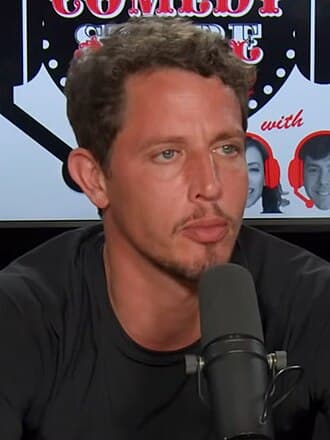
Kill Tony is a live comedy show in which twelve comedians perform one minute each before a panel of established comedians. The format is simple. What it produces is not.
An Episode Map is a ReLoHu analysis of what the room revealed - not the jokes, but the terrain visible through the jokes. Comedy is one of the most accurate psychological disclosure mechanisms available precisely because it operates under the cover of entertainment. The minute begins, the lights come up, and the mask that was carefully assembled in the green room must perform without the usual social buffers. The pressure of the format prevents the usual defenses from assembling in time.
One minute is often more revealing than an hour of therapy.
The Confession Mechanism
The single-minute constraint is not an arbitrary production choice. It is what creates the clinical value. A comedian with three minutes to work can establish context, build, redirect, land. A comedian with sixty seconds must commit immediately. The bit they lead with is not always the bit they planned; it is the bit that the adrenaline of the moment pushed to the front.
What comes out first under pressure is what lives closest to the surface. In episode 574, several contestants opened with material about family humiliation, sexual inadequacy, or professional failure. The jokes were often technically competent. What they disclosed was not the punchlines but the wound the punchlines were built around. Comedy, at its structural level, is a wound-revealing machine wearing a laugh as camouflage.
How Tony Runs the Room
Hinchcliffe controls the room through physical observation, speed, and the management of status. He notices things: body language, the quality of someone's hesitation, the gap between what someone claims to be doing and what they are actually doing. He has said in interviews that he reads the room the way a predator reads terrain, looking for what is loose, what is unsecured, what can be moved.
"I'm watching everything," he told podcaster Bobby Lee in 2021. "When someone walks up, I know within about ten seconds whether they have something or not."
That ten-second read is not about material quality. It is about wound visibility. The comedians who most clearly display a wound - and who have developed some technical relationship to it - are the ones Hinchcliffe engages with most productively. He rewards the comedian who has transformed personal terrain into craft. He dismisses formless mediocrity not because it fails to entertain but because it fails to disclose.
The cruelty that sometimes enters the room is itself terrain information about Hinchcliffe. His observational style has the precision of someone who learned very early to read other people accurately as a survival skill. That precision is a gift. It also carries the imprint of the environment that produced it.
The Panel as Second Organism
Rogan, Gillis, Normand, and Shaffir bring their own terrain into the room. Each has a distinct relational register: Rogan's tribal loyalty and status sensitivity, Gillis's self-deprecating intelligence operating below a surface of ease, Normand's observational precision that sometimes tips into cruelty to avoid vulnerability, Shaffir's comfort in transgression as the primary mode of engagement.
"The panel is not passive. It is a second organism operating within the first organism of the room, processing the comedians' disclosures through its own wound structures. What the panel laughs at hardest is usually the disclosure that hits closest to their own terrain."
In episode 574, the panel's response patterns were legible in exactly this way. The moments of loudest laughter from all four panelists tended to cluster around material that touched the shared masculine wound structure of the group: competence anxiety, visibility anxiety, the terror of being seen as ordinary. The room was not laughing at the joke. It was laughing at its own reflection.
What Bombs and What Thrives
The comedians who bomb on Kill Tony tend to belong to one of two categories. The first are technically skilled performers who are not actually disclosing anything - they have polished the surface of the material to the point where the wound beneath it is no longer visible. The laughs are absent because there is nothing landing, and there is nothing landing because there is nothing being offered.
The second category is more interesting: comedians who are disclosing but have not yet developed any technical relationship to what they are disclosing. The wound is visible, but raw. The room can feel it and does not know what to do with it. The silence that follows is not boredom. It is discomfort in the presence of unmediated pain.
What thrives is the comedian who has transformed wound into craft without sanitizing the wound out of the material. The bit that lands has the shape of a joke and the weight of something true. The audience laughs because they recognize the truth, and the laugh is the recognition.
The Audience's Role
The audience at Kill Tony is the third organism. Several hundred people in the Comedy Mothership in Austin, trained by regular attendance to understand the format and its stakes, functioning as a collective body with responsive intelligence. When a comedian lands, the audience response is immediate and physical. When a comedian bombs, the silence has a specific texture that is different from boredom - it is alert, watching, uncertain.
The audience is also complicit in the structure. The format requires someone to fail publicly, and the room knows it. This is not sadism. It is the ancient function of public disclosure: to witness someone attempt transformation and to mark, through response, whether it succeeded. The comedian who earns laughter has genuinely transformed something. The room knows the difference.
References
- Kill Tony #574. Hosted by Tony Hinchcliffe. Comedy Mothership, Austin, TX. Publicly available recording. - Kill Tony podcast/YouTube channel, 2013-present. - Hinchcliffe, Tony. Interview with Bobby Lee. Tiger Belly podcast, 2021. - Hinchcliffe, Tony. Interview with Joe Rogan. The Joe Rogan Experience #1538, 2020.
---
Interpretive opinion based on the public record. Not a clinical assessment or diagnosis of any individual.