Anna Delvey
Anna Sorokin did not simply pretend to be someone she was not. She built a self so completely that the question of whether Anna Delvey was real became, for a time, genuinely complicated -- including for Anna.
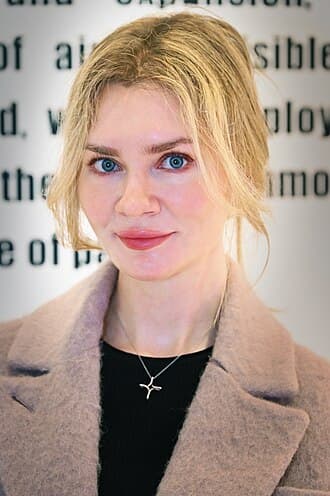
Identity as construction project: the self that does not yet exist performed into existence
Immigration without cultural capital: the specific illegibility of being Russian-born, German-raised, arriving in New York without the background that buys entry
The self-made self taken to its logical limit; the con as a sincere attempt at bootstrapping
Instrumental but not cynical; she selected people whose desire to believe was genuine, and served it
Narcissistic performance that became indistinguishable from identity; the character consuming the person who created it
What She Was Doing
Anna Sorokin arrived in New York from Germany in approximately 2013. She was in her early twenties, spoke English with a German accent, and had no family wealth, no institutional affiliations, and no social network in the city she intended to conquer. What she had was a complete confidence in her own eventual arrival, and the practical intelligence to understand how arrival worked in that particular environment.
She became Anna Delvey. The name was more elegant, more Western European, easier to place. She developed a backstory involving a German trust fund worth roughly 60 million euros. She dressed well, stayed in expensive hotels, dined at the right restaurants, and introduced herself into the social and institutional fabric of New York's art world and finance adjacent circles with a consistency and commitment that many people with actual money never manage.
The question the case raises is not whether she was lying. She was lying. The question is what kind of lying it was.
The Immigration Architecture
To understand what Anna Delvey was doing, it helps to understand what she was not. She was not Russian-wealthy and hiding it. She was not German-wealthy and hiding it. She was a Russian-born, German-raised young woman who arrived in one of the world's most stratified cities without the class markers, educational pedigree, family connections, or cultural fluency that the city's elite world uses to sort people at the door.
This is the specific wound that produced the specific con. New York's upper tier is not primarily a meritocracy. It is a system of inherited and acquired markers, and the most important marker of all is the ease with which you appear to belong. For someone without any of the foundational credentials, there are two routes in: earn them slowly, over decades, or manufacture them entirely and move so quickly that the manufacturing is never checked.
She chose the second route. She moved quickly.
What Her Targets Wanted
The people Anna Delvey defrauded were not naive. They were bankers, hoteliers, socialites, and finance professionals. The City National Bank processed a loan application for 22 million dollars from a 26-year-old with no verifiable assets and apparently did not complete adequate due diligence. The magazine Le Monde sent a photographer to document her because she had become a person worth documenting.
The targets were not deceived despite their sophistication. They were deceived in part because of it. Anna Delvey confirmed their taste. She was the kind of person they believed they could identify: young, visionary, European, aesthetically serious. Believing in her cost them nothing in social terms and confirmed their standing as people who recognize emerging figures early. When her story broke, the embarrassment was not that they had been taken in by a con artist. It was that they had been taken in by a con artist who had accurately read their desires and served them.
She did not deceive people who wanted the truth. She deceived people who wanted her to be real.
The Foundation
The Anna Delvey Foundation, as she described it, was to be a private arts club and foundation occupying a significant Manhattan building, with programming that would bridge high art, finance, and social life. She pursued leases, hired architects, negotiated with institutions. None of it materialized because none of the money materialized.
In interviews and statements across multiple years, including after her conviction, Sorokin has consistently maintained that the foundation would have been real if the money had been real. >> "It was always the plan to pay everyone back." | Anna Delvey, New York Magazine
She told New York Magazine's Jessica Pressler, whose profile became the basis for the Netflix series. The statement invites skepticism, but it also invites a different question: is it possible she was right? Is it possible that a sufficiently capitalized version of Anna Delvey would have produced the thing she described?
The honest answer is: possibly. The Anna Delvey Foundation was not inherently a bad idea. The gap between her and a dozen successful arts institution founders is not primarily a gap in vision or competence. It is a gap in the starting resources -- which is precisely what the con was attempting to paper over.
The Trial
Anna Sorokin was charged with grand larceny and theft of services in New York and tried in 2019. She was convicted on multiple counts and sentenced to four to twelve years in prison, of which she served approximately two years before release.
The trial became notable for her appearance management. She worked with a stylist to source outfits -- Valentino, AP Studio, other labels -- for each day in court. She reportedly rejected outfits she found insufficiently on-brand. The attention to appearance during a criminal trial for fraud built on appearance is either the most tone-deaf response possible or the most revealing one. Anna Delvey was a construction, and the construction required maintenance regardless of the context. There was no other mode available.
The Character Consuming the Person
Netflix released Inventing Anna in 2022, with Julia Garner playing Sorokin. The show was produced with Sorokin's cooperation and, by most accounts, her significant involvement in shaping its portrait of her. She was paid by Netflix. She became a character in her own story, which is to say she became the one thing Anna Delvey had always been moving toward: a definitively existing person.
The phenomenon of becoming a Netflix character while still in immigration detention, of having your self-construction validated by the largest entertainment platform in the world, is without many precedents. What it does to a psychology already organized around performed identity is an open question. The problem Anna Sorokin always had was that Anna Delvey was not verifiable. The Netflix series made her verifiable. Whether what was verified was the person or the performance, and whether that distinction still has meaning, is the most interesting question her case leaves open.
"I'm not going to pretend like it's not surreal," she told Insider magazine in 2022, watching a show about herself while detained by Immigration and Customs Enforcement. The statement is the most honest thing she has said publicly. The surreality she describes is the logical terminus of performing a self into existence: at the far end of the process, the self you performed is being performed by someone else, and you are watching.
References
- Pressler, Jessica. "Maybe She Had So Much Money She Just Lost Track of It." New York Magazine, May 28, 2018. - Gessen, Masha. "Anna Delvey's New York." The New Yorker, October 21, 2019. - People v. Sorokin, New York County Supreme Court, 2019. - Sorokin, Anna. Interview with Insider, 2022. - Smith, Rachel Syme. "Anna Delvey's New Life." The New Yorker, 2022.
---
Interpretive opinion based on the public record. Not a clinical assessment or diagnosis of any individual.