Elvis Presley
He was the most famous person on earth and almost certainly the loneliest. The architecture that produced Elvis Presley as a cultural phenomenon also made genuine human contact structurally impossible. The Gladys wound was there from the beginning. Colonel Tom Parker made sure it had nowhere to heal.
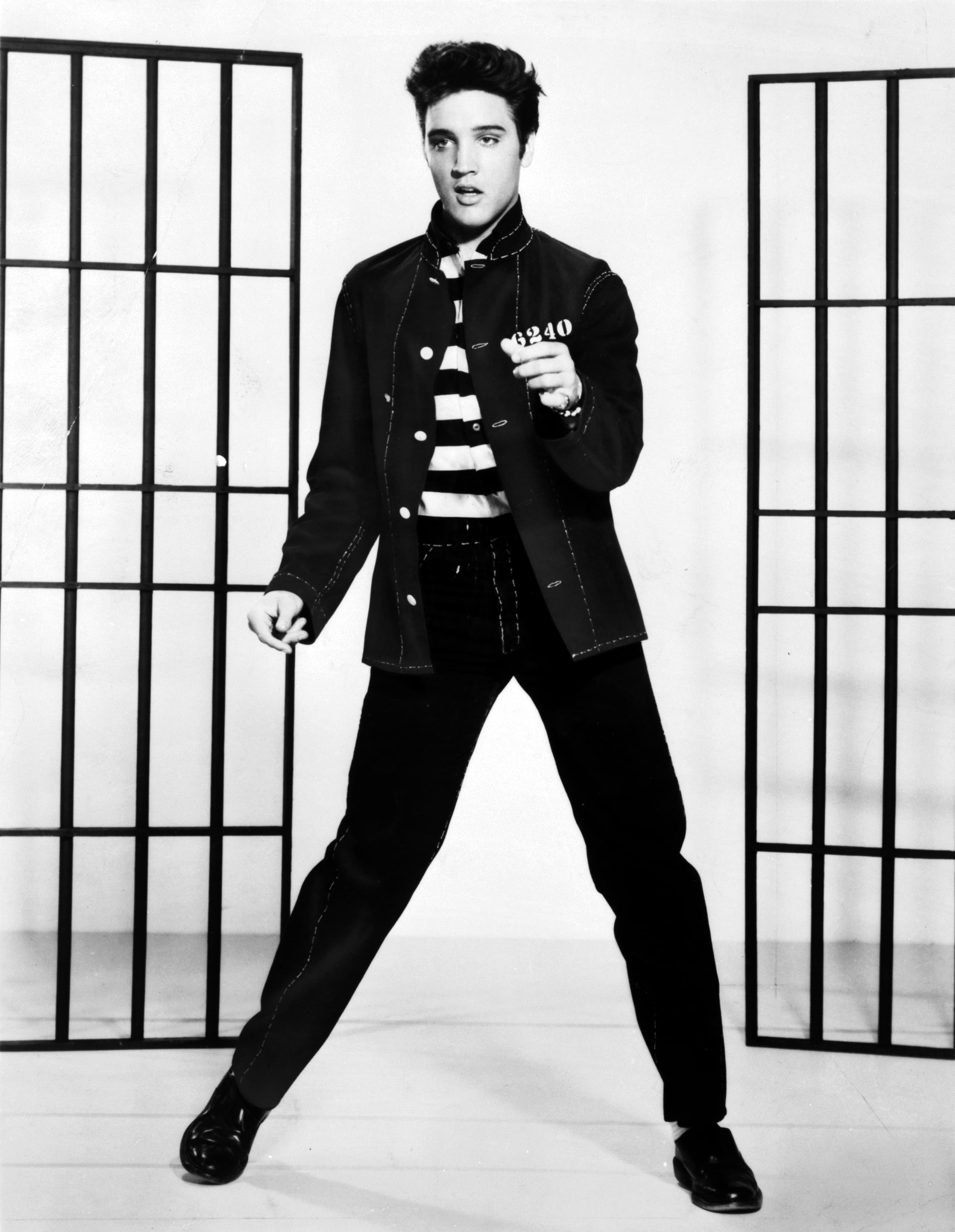
Identity captured and commodified before the self had a chance to form independently
Enmeshed maternal attachment followed by catastrophic loss - the one person who saw him as a person rather than a product
Captive performer - controlled environment, controlled output, controlled isolation
Surrounded but alone - the Memphis Mafia as paid companionship that structurally excluded real intimacy
Performed identity that outlasted and eventually replaced the original self
The Gladys Wound
Gladys Love Presley called her son "my precious baby" until he was an adult. She walked him to school. She met him at the bus stop. She was, by every account from people who knew them, the organizing fact of Elvis's early emotional life - and the relationship was not healthy in the way that loving, close relationships between parents and children can be healthy. It was fused. Elvis was her reason, her project, her proof. He appears to have accepted this completely, not because he was weak but because the arrangement was never presented as optional.
The Presleys were poor, genuinely poor, in the way that marks a child's sense of safety at the neurological level. Tupelo, Mississippi in the 1930s and 40s, the housing projects, the financial precariousness that ran like a current through the household - these are not neutral backdrop. They are conditions that amplify the mother-child bond into something more intense than ordinary attachment, because the mother is also the primary buffer between the child and a world that genuinely poses threat. Elvis's twin brother, Jesse Garon, was stillborn. Gladys had lost one son before Elvis could be remembered. The surviving child absorbed a portion of the love and the anxiety that had nowhere else to go.
A child whose primary attachment is enmeshed in this way does not develop the usual internal architecture for self-regulation, self-definition, or the capacity to be alone without distress. The mother is the self-regulator. When the mother is gone, the self has no independent mechanism. It seeks a replacement - or it fragments. Elvis would spend the rest of his life cycling between these two responses without ever fully achieving either.
What is conspicuously absent from every account of Elvis's early emotional life is the presence of a stable second attachment - a father figure who functioned as a counterweight, a peer group with genuine reciprocity, a mentor who asked for nothing. Vernon Presley was present but passive, a man defined more by his absence during a prison stint in Elvis's infancy and his emotional distance afterward than by anything he provided. The absence of a functioning paternal relationship is not incidental; it meant Elvis never had a model for a relationship between equals, never internalized the template for horizontal attachment that would have given him tools to navigate the industry that was coming for him.
Gladys died on August 14, 1958. Elvis was twenty-three. He had been drafted into the Army five months earlier, stationed in Germany, separated from his mother for the first time in his adult life in any meaningful sense. He received emergency leave to return home. The accounts of his behavior at her funeral and in the weeks following are consistent across multiple sources: he was inconsolable in the way of a person whose internal structure had collapsed, not simply a man grieving a parent. He talked to her in the casket. He called out for her. Vernon Presley later said that Elvis was never the same afterward. This observation is usually treated as sentiment. It is better treated as diagnosis.
The terrain reading is not that Gladys's death broke Elvis. It is that Gladys's death removed the only person who had ever functioned as Elvis's actual self-structure, and that without her, there was no privately-held identity left to defend against what came next.
Linguistic Fingerprint: The Man Who Never Complained Directly
Elvis Presley was interviewed hundreds of times across three decades of fame. The record of what he said in those interviews is substantial, and it reveals a person who had developed an extraordinarily consistent mode of managing public disclosure. He was warm. He was funny in a self-deprecating way. He deflected personal questions with charm. He answered questions about his mother with visible emotion. He answered questions about his career with the language of gratitude.
What he almost never did was complain. Not directly. Not about Parker. Not about the films. Not about the constraints of his life. When he was pressed about the movies in the 1960s - and he was pressed, because critics and journalists understood that the films were beneath the talent - he consistently responded with some variant of the same construction: "Well, I'd like to try different things" or "I hope to do more serious work someday." The hedging is diagnostic. The passive construction - "I'd like," "I hope" - describes a person who has learned to express desire without asserting agency. He did not say "Parker won't let me" because that would have been a direct statement about the structure of his captivity. He said "I'd like" and left the sentence passive, the responsible party unnamed, the constraint undescribed.
This linguistic pattern - the expressed desire, the absent agent, the hope deferred to an unspecified future - is not modesty. It is the speech pattern of a person who has learned that direct assertion produces consequences he cannot manage. It is the grammar of a man who does not believe he has the right to want things straightforwardly. The grammar held for twenty years of public interviews. It never broke.
In private, according to people who were close to him, Elvis did express frustration - but even in private, the accounts suggest he moved quickly from frustration back to justification, back to loyalty, back to the circular reasoning that made the arrangement feel inevitable rather than chosen. He had no one to help him think differently.
Colonel Tom Parker as Captor
Thomas Andrew Parker was born Andreas Cornelis van Kuijk in Breda, Netherlands. He entered the United States illegally, probably in the late 1920s, and never obtained legal status. He could not leave the country. He could not risk the scrutiny that would come with customs processing. This is not incidental biographical detail - it is the structural fact that determined the shape of Elvis's career from 1955 until his death in 1977.
Parker took between 25 and 50 percent of Elvis's earnings, depending on the deal and the accounting. He systematically prevented Elvis from touring internationally - the venues that would have sustained his relevance in the late 1960s and 1970s, the audiences that would have confirmed his global stature, the experiences that might have expanded his world - because Parker could not go with him, and Parker could not let him go alone. The Hollywood film period (1960-1968), in which Elvis made thirty-one mostly forgettable movies and recorded their mostly forgettable soundtracks, was not a career choice. It was a revenue model that Parker could control from American soil. The films produced reliable income with manageable risk. The fact that they also produced the systematic erosion of the most interesting artist in American popular music was not Parker's problem.
Parker was not a manager. He was a captor who had made himself indispensable to a person who had no one else and no framework for evaluating what was being done to him. Elvis expressed frustration with the films. He told people he wanted to make serious pictures. He did not fire Parker. The dependency was total, and the dependency had a specific architecture: Parker controlled the business relationships, controlled the financial flows, controlled the information environment, and had successfully positioned himself as the irreplaceable intermediary between Elvis and a world Elvis had no independent means of navigating.
The relationship began when Elvis was twenty and Parker was in his mid-forties. The power differential was not merely financial or professional. It was the differential between a young man from Tupelo who had never been anywhere and an older man who had spent decades learning to read and manage people. Parker understood, with the precision of a practiced operator, that Elvis's primary wound was the loss of someone who would make decisions for him. Parker installed himself as that person. He did not fill the wound. He exploited the space where the wound was.
Key Insight: The specific contour of Elvis's early damage - the enmeshed mother, the passive father, the never-developed capacity for autonomous self-direction - was not incidental to Parker's success in controlling him. It was the precondition for it. A person with a more integrated self would have hired a lawyer, reviewed the contracts, and walked away from an arrangement this extractive. Elvis could not do any of these things not because he was stupid but because the self that would have needed to do them had never been built.
The Hinge Moment: 1968
The '68 Comeback Special is usually narrated as a triumph - the moment Elvis escaped the films, returned to the music, demonstrated that the original power was still there. The terrain reading is more complicated.
The special was produced by Steve Binder, who was not Parker's person. Binder pushed Elvis to perform live, to sit on a stage in a black leather suit and play with musicians who were not hired companions, to be spontaneous in a way that the film sets and the Vegas sets had made impossible for years. The footage shows a man who is genuinely alive in a way that almost nothing from the preceding decade does. The performances are extraordinary. The spontaneity is visible. Something that had been buried came back to the surface.
Elvis came out of the '68 Special with momentum, with critical rehabilitation, with the commercial machinery reoriented. He had options that had not existed six months earlier. He had demonstrated, on camera, that there was still a real artist underneath the product. The industry was watching. Other management configurations were, at least theoretically, available.
He went to Las Vegas. He did not use the momentum to renegotiate the Parker arrangement. He did not seek different advice. He did not leverage the rehabilitation of his artistic reputation to acquire the kind of independence that might have followed from it. He allowed Parker to channel the renewed energy into the format Parker could control: a Vegas residency, a fixed venue, a contractual structure that replicated the controlled environment of the film period in a new setting.
This is the hinge moment. Everything before it was the accumulation of damage. The '68 Special was the one point in the documented record where the structural momentum shifted toward a different outcome. He was thirty-three years old. He was demonstrably still at the height of his powers. He had the leverage. He did not use it. The choice - or the failure to choose - determined everything that followed.
Graceland as Gilded Prison
Elvis bought Graceland in 1957 at age twenty-two. By the final decade of his life, he rarely left it. The mansion in Memphis had become the full geography of his existence: its gates, its grounds, its rooms decorated in the aesthetic of a man who had too much money and no one whose taste he trusted more than his own impulses. The Jungle Room, the television room with the three screens, the aesthetic of a place that was trying to be everything because its occupant could not comfortably be anywhere else - Graceland's interior design is psychological documentation.
The Memphis Mafia - the entourage of childhood friends, cousins, and hangers-on who surrounded Elvis - were not friends in the structural sense. Their financial survival depended on Elvis's continued goodwill. Their presence in his life was conditional on their usefulness and their compliance. Real friendship requires the freedom to disagree, to leave, to tell someone something they do not want to hear. None of these conditions obtained in Elvis's inner circle. The people around him were paid companions whose function was to keep him company and whose ability to do so required that they never challenge him in any way that mattered.
There is a particular dynamic that emerges in environments like this that is worth naming precisely. The entourage does not simply fail to challenge the person at the center. Over time, it actively produces a feedback loop in which the person's existing beliefs and behaviors are confirmed and amplified. Elvis's grandiosity was confirmed. His isolation was normalized. His pharmaceutical dependency was enabled. His increasingly strange relationship with time - sleeping through days, staying awake through nights, losing track of ordinary rhythms - was accommodated rather than addressed. The Memphis Mafia did not make these choices maliciously. They made them because their survival depended on not making the other choices.
The prescription medication followed from the isolation as night follows day. Dr. George Nichopoulos - Dr. Nick - prescribed Elvis thousands of pills in the final years: amphetamines, barbiturates, narcotics, sedatives. The quantities documented in subsequent investigations are staggering. But the enabling of this was not simply one doctor's failure. It was the product of a system in which Elvis's wellbeing was never the primary concern, in which anyone who expressed genuine concern risked their position in the circle, and in which the mood-altering medications were the only available mechanism for managing internal states that had no other outlet.
What the medications were doing, at the functional level, was managing an internal emotional environment that had never developed its own regulatory capacity. The enmeshed attachment with Gladys had been the original regulation. When she died, there was nothing. The medications were not pleasure-seeking, not primarily. They were the only available substitute for a self-soothing capacity that had never been built.
Shadow Behavior: What Elvis Never Admitted
Elvis presented himself throughout his life as grateful, humble, and deferential. The gratitude was probably genuine. The humility had specific limits that are visible in the record if you look for them. The deference was a relational posture that covered something else.
What Elvis almost never admitted in public - and what the people around him only described in retrospect, after his death, when there was no longer anything to protect - was his rage. Not the generalized frustration about the movies. Rage: at Parker, at the constraints, at the audience that wanted the performance but not the person, at the women he could not have real relationships with because the structural conditions for real relationships did not exist in his life. The rage was real. The entourage knew about it. Incidents of explosive anger are documented throughout the Las Vegas period and the final years. Objects were thrown. People were dismissed. The anger was real and it had nowhere to go, so it discharged unpredictably and then was covered over with the public performance of gratitude.
The shadow behavior extends to his relationships with women. He was drawn to very young women, to women he could control, to women who needed something from him rather than women who could meet him as equals. This is not a character judgment; it is a description of the relational pattern produced by the original wound. A person who never learned to exist in a relationship between equals, who was either the dependent child or the controlling patron, will seek relationships that replicate one of those two positions. The very young women he pursued were the version of the relationship he could navigate. They were also people he could not be genuinely known by, which meant the loneliness continued, which is the definition of the pattern.
The Performed Identity
Elvis Presley did not choose to be Elvis Presley. He was a working-class kid from Tupelo, Mississippi, who walked into Sun Studio in 1953 to record a song for his mother and walked out having produced something that did not previously exist. The sound was real. The instinct was real. The synthesis of black gospel and country music he produced in those early recordings was not a calculated appropriation - it was the sound of a person who had actually grown up with both traditions and who had the musical intelligence to let them occupy the same space. The threat he represented to a particular American cultural order was real.
What happened next was not primarily his doing. Parker, the industry, the movie studios, the television appearances, the carefully managed image - these forces shaped the construction of Elvis-as-cultural-phenomenon in ways that the twenty-year-old from Tupelo had no tools to resist and probably no language to name. The original self - the kid who loved Blackwood Brothers gospel and Dean Martin and the feel of a Sun Records session - got smaller as the phenomenon got larger.
By the time Elvis was performing in the rhinestone jumpsuits in Las Vegas in the early 1970s, he was performing a simulation of a person who had once been genuinely new. The simulation was extraordinarily skilled - he was a remarkable performer to the end - but it was a performance of an image, not an expression of a self. He had become, in the most precise sense, the product that Parker had always seen him as. The tragedy is not that he was manufactured. The tragedy is that the manufacturing happened to a person who had started as something real.
The spiritual seeking in the final years - the interest in numerology, the Blavatsky, the search for meaning through Larry Geller's books and conversations - is often dismissed as eccentricity or the grasping of a deteriorating mind. The terrain reading is different. It was the behavior of a person who understood, at some level, that the performed identity was empty, who was looking for something underneath it that might be real, and who had no secular framework for conducting that search. The seeking was genuine. The frameworks available to him were inadequate. The search never arrived anywhere.
The Las Vegas years (1969-1977) deserve particular attention. This is where Parker's financial model reached its terminal expression: a controlled venue, a captive audience, a reliable revenue stream. Elvis performed as many as two shows a day, hundreds of performances a year, in the same city, to audiences who had flown in specifically to see the legend perform the legend. The work required superhuman physical stamina and produced, by all accounts, profound psychological exhaustion. The medications were the only way to sustain the output. The output was the only way to sustain the financial structure that Parker had built. The financial structure was the only thing keeping Elvis inside the arrangement. It was a closed loop.
“I never expected to be anybody important.”
Elvis Presley
The sentence is striking. He said it in the early years, and the humility reads as genuine. But there is something else in it too, if you apply pressure: the word "important" is doing a lot of work. What he never expected was not merely fame or success. He did not expect to matter. The kid from Tupelo, whose sense of his own worth had been organized entirely around his value to his mother, had genuinely not anticipated that the rest of the world would want him. The world did want him - or it wanted the product he had been made into - and he was never able to fully reconcile the wanting with any private sense of worthiness.
The Wound That Was Always There
The familiar cultural narrative positions Elvis's decline as the product of excess - too much success, too much money, too many yes-men, too many pills. The terrain reading is different. The excess was a symptom. The wound was the psychology that had been in place since childhood: the enmeshed attachment, the identity that was never privately held, the inability to receive real care because the structures around him made real care impossible.
Gladys's death did not create the wound. It removed the only person who had been, however imperfectly, attempting to fill it. What came after - Parker, the Memphis Mafia, the Las Vegas years, the medications - was not the story of a person who had everything and destroyed it. It was the story of a person who never had the one thing that might have made the rest survivable: someone who saw him as a person, not a product, and who had the structural freedom to act on that perception.
He died on August 16, 1977, at Graceland. He was forty-two. The medical examiner's initial report cited cardiac arrhythmia. Later forensic analysis established that polypharmacy was a significant contributing factor. He was found on the bathroom floor by his fiancee, Ginger Alden. The people who were paid to be close to him found him too late.
The conspicuous absence at the center of Elvis Presley's life is not what he lacked in money, talent, or fame. All of those were present in extraordinary abundance. What is absent, throughout the entire documented record, is a single sustained relationship in which Elvis was held accountable by someone he could not dismiss, challenged by someone whose opinion genuinely mattered to him, and known by someone who had nothing to gain from the relationship. Gladys came closest. She was also the person who had built the conditions of the original damage. The irony holds the whole story: the wound and the only person who could have addressed it were the same person, and she died in 1958, and the rest was consequence.
A person who was never permitted to be nobody could never figure out how to survive being somebody.
References
- Guralnick, Peter. Last Train to Memphis: The Rise of Elvis Presley. Little, Brown, 1994. - Guralnick, Peter. Careless Love: The Unmaking of Elvis Presley. Little, Brown, 1999. - Nash, Alanna. The Colonel: The Extraordinary Story of Colonel Tom Parker and Elvis Presley. Simon & Schuster, 2003. - Nichopoulos, George, with Rose Clayton Phillips. The King and Dr. Nick. Thomas Nelson, 2010. - Goldman, Albert. Elvis. McGraw-Hill, 1981. - Clayton, Rose, and Dick Heard, eds. Elvis: Up Close. Turner Publishing, 1994. - Vellenga, Dirk, with Mick Farren. Elvis and the Colonel. Delacorte Press, 1988. - Marcus, Greil. Mystery Train: Images of America in Rock 'n' Roll Music. Dutton, 1975. - Bowlby, John. Attachment and Loss, Vol. 1: Attachment. Basic Books, 1969.
---
Interpretive opinion based on the public record. Not a clinical assessment or diagnosis of any individual.