Britney Spears
The wound of conditional worth, manufactured from adolescence. The conservatorship made legal what was already true in her architecture. One of the most legible cases of autonomy suppression and what thirteen years of it does to the interior.
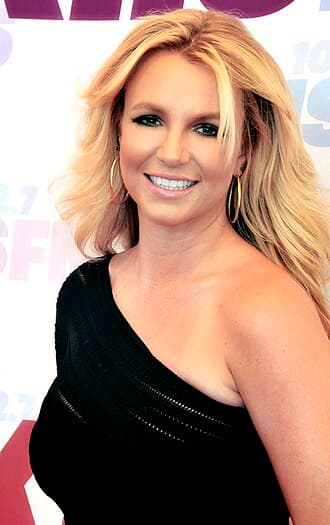
Manufactured architecture
Conditional worth based on performance / autonomy suppressed from childhood
Conservatorship as wound codified into law
Witnessed by strangers when institution and family failed
Naming vs. resolving - the memoir as act
Kentwood
Britney Jean Spears was born in McComb, Mississippi in 1981 and grew up in Kentwood, Louisiana, a town of approximately 2,500 people in Tangipahoa Parish. Kentwood was Baptist, conservative, and organized around church and family as the primary containers of meaning. The path from childhood talent shows to global stardom that the Spears family found required dismantling the ordinary infrastructure of childhood to pursue it: continuity of friendships, rhythms of school years, the gradual accumulation of a stable private self.
Her father Jamie Spears was a contractor and, by the account of everyone who has spoken on the record about the family, an alcoholic. His alcoholism was not a hidden family secret. It was a recurring crisis, a source of financial instability, and a structural presence in the household that required those around it to organize their behavior around managing its effects and their appearance around managing its exposure. In households with an alcoholic parent, children develop a specific and durable perceptual capacity: reading the emotional state of an unpredictable adult with fine accuracy, and adjusting everything visible about themselves to minimize the chance of triggering harm. This is adaptation, not pathology, but it installs a particular architecture of self: a performing surface calibrated to a powerful observer, and an interior that learns to wait.
That architecture - surface available for management, interior suppressed - is the original installation. It preceded the star machinery. The star machinery recognized it and built on it.
Her mother Lynne Spears was the family stabilizer and the person who recognized and promoted Britney's talent. Britney began performing in local talent shows and church productions as a very small child. She auditioned for The Mickey Mouse Club at age eight, was told she was too young, and was connected to a New York talent agency that arranged summers of training. She spent those summers away from Kentwood while the family's finances organized themselves around her potential. The trajectory was not a choice she made at eight. It was a structure that formed around her capacity, in a family with specific financial and relational pressures, before she had the interior resources to evaluate it.
The Manufacturing
She joined The Mickey Mouse Club at ten alongside Justin Timberlake, Ryan Gosling, JC Chasez, and Christina Aguilera. She returned to Louisiana at thirteen when the show ended. She signed with Jive Records at fifteen. "...Baby One More Time" was released in 1998 when she was sixteen and became one of the best-selling singles in music history. She had been under professional management for roughly eight years by the time the single was released.
The machinery that assembled around her was not primarily malicious. It was professional. Management, record labels, choreographers, stylists, publicists: a system of adults whose economic interests were organized around her output, making decisions about her image, her speech, her physical presentation, and her brand before she had accumulated the adult architecture required to contest those decisions or evaluate what was being given up.
The specific mechanism of the image built around her early career requires attention. She was packaged as simultaneously innocent and sexual: schoolgirl imagery alongside adult choreography and styling, the tension between the two explicitly used as promotional material. This dual positioning was not accidental. It placed her in a structurally impossible position with respect to her own sexuality: she was simultaneously the property of an industry that used her sexuality commercially and a person who was expected, publicly, to disavow having any. Any action she took - owning her sexuality, disavowing it, or attempting to reframe it - could be used against her by the existing narrative apparatus.
When she and Justin Timberlake ended their relationship in 2002, he publicly implied she had been unfaithful, and media coverage accepted that framing without question. She did not offer a counternarrative at the time. In her memoir, twenty-one years later, she wrote: "He got to tell his story and make me look terrible. I had no voice." The lack of contemporary rebuttal is sometimes read as confirmation of his account. The correct reading is that she had not been given - and had not yet built for herself - a platform from which her account would be treated as equally credible.
Linguistic Fingerprint
The way Britney Spears has characteristically spoken in public across her career reveals a pattern worth mapping precisely.
In interviews from the late 1990s and early 2000s, her speech is heavily hedged, compliance-forward, and organized around managing the impression of the interviewer. She says "I don't know" frequently, defers to others' descriptions of her, laughs at moments that are not funny, and frames even direct questions about her own preferences in terms of what other people have told her about herself. She rarely completes a sentence about her own interiority without introducing a qualifying frame: "people say," "I guess," "I mean, I just." This is not a verbal tic. It is the linguistic surface of someone who learned that asserting your own account of yourself is risky, that the authoritative reader of who you are is someone else.
The hedge is the data. Healthy adults, in comfortable circumstances, assert their own preferences and interior states with declarative sentences. They say: I want this. I feel that. I think this is true. The systematic replacement of declarative statements about the self with hedged, other-referencing constructions is the linguistic form of the original Kentwood adaptation: the interior is real, but its expression is constantly monitored and pre-adjusted for the perceived authority in the room.
Contrast this with the 2021 court testimony. The hedging largely disappears. She says: "I deserve to have a life." "I am not happy." "I am so angry it's insane." The declarative mode emerges precisely when she is speaking under oath, in a legal context, about matters where the stakes of misrepresentation are so high that the survival calculus flips: here, the cost of performing compliance exceeds the cost of naming what is true.
Key Insight: The 2021 testimony is not a rupture from her normal mode. It is the first time the cost structure of telling the truth aligned with her safety calculation. The interior had been there the whole time.
What She Never Said
Across decades of interviews, promotional appearances, and public statements, Britney Spears almost never said that anyone in her immediate professional or family circle was wrong, harmful, or acting against her interests - not during the period when they were doing so. She described exhaustion in terms of her own inadequacy. She described the conservatorship's restrictions in terms of their being "for her good." She did not name the people who were harming her while they were harming her.
This is not surprising, and it is not evidence of weakness or complicity. It is evidence of the architecture in operation. The person who learned in childhood that naming the problem with the person who controls your safety is more dangerous than enduring the problem does not suddenly have access to a different calculus because she is now a global celebrity. The celebrity amplifies the stakes in both directions. The instilled architecture does not respond to external success. The wound that conditions worth on performance does not dissolve when the performance is objectively successful. If anything, the success raises the stakes of the original proposition: what if they stop finding you useful? What if the approval is withdrawn? The success becomes more evidence that the approval could be lost, not less.
What she never admitted, during the conservatorship years, is that she was trapped. She described restrictions. She said she was "not happy." She did not, in any public statement before the 2021 testimony, say: what is being done to me is wrong. The boundary between description and condemnation is the exact boundary that the architecture could not cross safely.
The Diane Sawyer Interview as System
In November 2003, Spears gave an interview to Diane Sawyer on ABC. The interview has since become a widely studied example of how the framing structure of a media encounter can operate on a subject regardless of her answers.
Sawyer asked Spears repeatedly about her relationship with Timberlake, pressed her on whether she had broken his heart, held up a magazine with Timberlake's image asking if she missed him, and then asked - with a displayed visual of Timberlake's face - what she thought about a statement by a former governor's wife who said she would like to shoot Britney Spears. When Spears began crying, Sawyer continued. She later asked Spears about her responsibility to young fans, framed in terms that implied Spears had been a bad influence.
At no point in the interview did Spears push back on the framing, name the asymmetry, or assert her own account of events as equally valid to Timberlake's. She apologized. She cried. She deferred.
The interview is not about what Spears did or didn't do in her relationship. It is about who held interpretive authority in the encounter and who did not. Sawyer - an older woman, an institution, an establishment journalist - held it completely. Spears held none. The interview is a demonstration, under controlled conditions, of what the conservatorship would formalize five years later: that someone else knew better than Britney Spears what was true about Britney Spears.
“I've been through a lot. I just feel like my decisions and everything are always kind of picked apart.”
Britney Spears, *Dateline NBC*, 2003
The Hinge: 2004
In January 2004, Britney Spears married her childhood friend Jason Alexander in Las Vegas. The marriage was annulled 55 hours later. She described it afterward as a joke, a mistake, a moment of impulsivity.
The hinge the terrain map identifies is not the Las Vegas marriage itself. It is the 55-hour window and what it reveals: there was a moment when someone chose freely, without management approval, without family coordination, without a professional apparatus in place - and the immediate institutional response was to treat the choice as evidence of incapacity. The marriage was annulled. The machinery reasserted control. Her account of the choice - that she had been playful, spontaneous, perhaps unwise, but was capable of evaluating her own decisions - was not the account that was institutionalized.
2004 is where the architecture of her controlled life and her own emerging adult will most legibly collided, and the collision was resolved entirely in favor of the architecture. She was 22. She had generated hundreds of millions of dollars. She was not legally incompetent. She was nonetheless treated, by the systems around her, as someone whose autonomous choices were problems to be managed rather than expressions to be respected. The conservatorship four years later was not a new development. It was a formalization of a structure that had been operating since she was a child.
February 2007: The Salon
On February 16, 2007, Britney Spears walked into Esther's Hair Salon in Tarzana, California, and asked the stylist to shave her head. The stylist declined. Spears picked up the clippers and shaved her own head. She then went to a tattoo parlor and got a small tattoo on her wrist.
The coverage that followed treated this as primary evidence of a breakdown. Paparazzi photographs of her shaved head circulated globally within hours. Commentary from celebrity journalists, mental health professionals invited onto news programs, and public figures uniformly characterized the act as evidence of instability, mental illness, a cry for help.
The terrain analysis does not locate instability here. It locates something more precise. Britney Spears had been performing under management since she was eight years old. Since that time, her physical body - specifically her hair, her face, her physique, and their presentation - had been a managed commercial product belonging to a professional apparatus she did not control. The hair was not hers in any functional sense. It was their asset. Shaving it was an act of destruction directed at the product, by the person who was required to be the product, using the only method available: her own hands, in a public space, without asking anyone's permission. This is not a breakdown. It is the most coherent autonomous act available to her at that moment. It was legible as breakdown only to observers for whom the destruction of the product was the most shocking possible interpretation, rather than the most logical one.
She had also, at this point, lost custody of her sons Sean Preston and Jayden James to Kevin Federline, following months of custody disputes during which her behavior was documented and used as evidence of parental unfitness. She was 25 years old and had been in managed performance since she was eight.
Key Insight: The thing the industry most needed from her body, she destroyed first. That is not the behavior of someone in free fall. It is the behavior of someone who finally located what she could take back.
The Conservatorship: Architecture of Negation
The conservatorship established in February 2008 by the Los Angeles Superior Court placed Britney Spears under the legal control of her father Jamie Spears and attorney Andrew Wallet, with Jodi Montgomery later assuming conservatorship of her person. It had two components: conservatorship of person and conservatorship of estate.
Under its terms: she could not hire or fire her own lawyer. She could not independently choose her medical team. She could not spend her own money without authorization. She could not drive without permission. She could not decide who entered her home. She could not control the terms of her work schedule, her touring, or her recording commitments. She performed across thirteen years of this arrangement, touring globally, releasing albums, appearing in Las Vegas residencies. Her estate, generated entirely by her labor, was managed by her father.
Jamie Spears was removed as conservator of her estate in September 2021. The full conservatorship ended in November 2021. He had held that role for thirteen years.
Thirteen years of legally overridden autonomy applied to a person whose architecture was already organized around conditional worth, around monitoring the requirements of powerful authority figures, around suppressing her own interior account of her experience - this does not merely limit freedom. It confirms the deepest wound proposition available: you are not competent to govern yourself. The people with institutional authority over you are right about what you need. Your own account of your interior experience is not legally relevant. The proposition she had been operating under since childhood, instilled by an alcoholic father and an industry that packaged her before she was an adult, was codified into a court order and held for over a decade.
The conservatorship is not a separate chapter in her story. It is the original chapter, formalized.
The Coded Surface
During the conservatorship years, Spears maintained an active Instagram presence. The posts were often erratic in tone, cycling from cheerful choreography videos to cryptic captions to images that appeared to observers to be communicating something other than their explicit content. Media coverage and fan communities developed extensive interpretive frameworks for reading the account as coded communication - messages about her real situation embedded in images and phrasing that would not trigger the monitoring apparatus.
Whether or not any individual post was intentionally coded, the overall pattern is consistent with what has been documented in people operating under conditions of monitored communication: a public surface maintained for overseers, with a different register available to those who knew to look. It is structurally identical to what she learned in childhood: a performing surface calibrated to the observed authority, and an interior that waits.
“I've lied and told the whole world I'm okay and I'm happy. It's a lie.”
Britney Spears, testimony before Los Angeles Superior Court, June 23, 2021
Her June 2021 court testimony is the most important primary document in the public record about this case, and it is worth reading slowly. She said: "I deserve to have a life. I've worked my whole life. I deserve to have a two-to-three-year break and just be a mother, a normal person, enjoy myself without anyone making these decisions for me."
The word "deserve" is doing significant work in that statement. Someone who has always known they deserve something says: I want this. Someone who has spent years uncertain whether their wants are legitimate says: I deserve this. The word is a claim, not just a preference - a claim against an implicit authority that has been denying it. The testimony reveals an interior that had been running in parallel to the performance of compliance for the entire thirteen years, and for much of her career before it. The distance between the public surface and the private interior is not a gap in the conservatorship. It is the conservatorship's primary psychological product.
The Memoir as First Autonomous Act
The Woman in Me, published in October 2023, is the first document in her public life produced with full authority over her own account. She chose what to include, how to frame it, what names to use, and what conclusions to draw. She wrote it without management approval, without her father's involvement, without a label or handler in the room. It sold over one million copies in its first week.
It is significant that it took until 2023 - forty-two years old, two years out of the conservatorship - for this to be the case. Every prior public account of Britney Spears, including her own stated accounts of herself, existed within a structure where someone else held editorial authority. Publicist-managed. Label-approved. Conservatorship-filtered. The memoir is not just a book. It is the first time the infrastructure of her self-presentation was structurally hers.
The distinction the terrain map holds is critical: naming the wound and the wound resolving are not the same event. They are related. Naming is necessary. She named clearly, specifically, and without the hedged compliance-framing of the prior decades. The resolution - the interior work of metabolizing what the architecture produced over forty years - is a longer process, less linear, accessible only to her. What the memoir achieves is legibility. She is now the primary authority on her own experience in the public record. That is not nothing. For someone whose architecture was built on the proposition that someone else's account of her experience is more credible than her own, it is a significant reorganization.
But the architecture was not built in forty-two years and it will not be dismantled by one book, however precisely aimed.
The Shadow: Compliance as Survival, Compliance as Trap
The shadow behavior in Britney Spears's case is not the 2007 head-shaving or the Las Vegas marriage or any of the acts that were coded as instability. Those were the moments when the buried interior broke surface. The shadow is the compliance - the vast, sustained, cooperative compliance with structures that were actively harming her.
She performed under the conservatorship. She toured. She recorded. She delivered the product. She said in interviews, even during the conservatorship, that she was fine, that she supported her father, that she was grateful. She did this not because she was naive about what was happening but because she had been trained since childhood that compliance is what keeps you safe. The alcoholic father's household teaches: manage your surface, suppress your interior, produce what is required, and you will survive. The machinery of the music industry confirmed it. The conservatorship locked it in legally.
The shadow is the part of herself that cooperated, that performed wellness, that sustained the apparatus. She disowns it - understandably - by naming the harm in the memoir. The deeper work is with the part that cooperated, not to assign blame to it, but to understand it as the response it was: a girl who learned that compliance keeps you alive, applied without modification to every situation that followed, including the ones where it worked against her survival rather than for it.
The wound that conditions worth on performance is never fully safe when it controls you. Because performance can always be withdrawn. The approval that comes from performing is not the same as being known.
The structure of her entire life is a single proposition held since childhood and applied across every context: the way to stay safe is to give them what they want. The conservatorship is what happened when the people who wanted things from her had the law on their side.
References
- Spears, Britney. The Woman in Me. Gallery Books, 2023. - Framing Britney Spears. Directed by Samantha Stark. The New York Times/FX on Hulu, 2021. - Los Angeles Superior Court. Conservatorship of the Person and the Estate of Britney Jean Spears, Case No. BP108870. Court records, 2008-2021 (public filings). - Spears, Britney. Testimony before Los Angeles Superior Court, Judge Brenda Penny, June 23, 2021 (court transcript, public record). - Spears, Britney. Interview with Diane Sawyer. PrimeTime Live, ABC, November 2003. - Spears, Britney. Interview with Matt Lauer. Dateline NBC, June 2006. - Levin, Sam. "Britney Spears Conservatorship: What We Know." The Guardian, September 2021. - Snapes, Laura. "Britney Spears: The Full Story." The Guardian, November 2021. - Spears, Lynne. Through the Storm: A Real Story of Fame and Family in a Tabloid World. Thomas Nelson, 2008. - Dockterman, Eliana. "Britney Spears Finally Tells Her Own Story." Time, October 2023.
Interpretive opinion based on the public record. Not a clinical assessment or diagnosis of any individual.