Prince Harry
Identity rupture in public. The second son navigating institutional belonging, inherited trauma, and a very loud attempt at self-authorship.
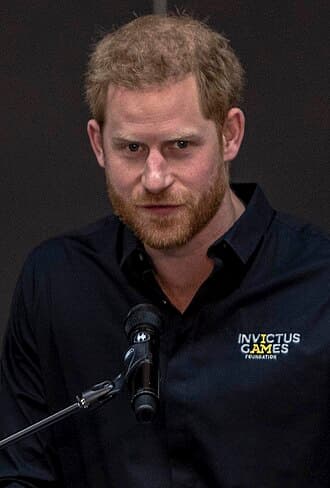
Self-authorship in progress
Grief suppressed at twelve / institutional suppression of loss
Second son identity defined by negation
Inherited pattern of institutional non-containment
Naming before full digestion
The Second Son Structure
In institutional terms, the second son exists as backup. The role is defined primarily by what he is not: not the heir, not the primary. The identity is built around a negative definition. That structure either gets filled from the outside - the party prince, the playboy, the wild one - or from the inside, which is harder and takes longer.
Harry grew up inside one of the most scrutinized institutions in the world with a role that had no specific function except continuity insurance. His brother William had a job. Harry had proximity to the job. The difference is more significant than it sounds.
The "spare" designation is not only formal. It shapes the psychological environment from childhood: what is attended to, what is expected, what is permitted. The heir gets the structure that defines him. The spare gets the structure that defines what he is not.
The Grief That Was Not Allowed to Be Grief
Diana died in Paris in August 1997. Harry was twelve. The grief was both private and global simultaneously: a twelve-year-old lost his mother, and the entire world was watching him do it. He was required to walk behind the coffin in public, in full view of cameras, at the age that a child needs to collapse and be held, and the institution had rules about emotional expression that did not accommodate what a child requires in that moment.
The walk behind the coffin - Harry and William, Charles and Philip, walking the long route from St. James's Palace to Westminster Abbey - is documented on film. Harry has said in Spare that he was on autopilot. That he was performing composure he did not have because the performance was required.
"The grief was suppressed at the moment it most needed expression. He has said publicly that he did not fully grieve his mother's death until his early thirties. That twenty-year gap is significant terrain data."
In the Oprah interview, Harry said: "My mother was killed, and nobody said anything to me. I was so angry with what happened to her, and the fact that there was no justice at all." The sentence carries twenty years of held material in approximately thirty words.
The Military Years
Harry served two tours in Afghanistan, in 2007-2008 and 2012-2013. The military provided something the institution had never offered: belonging that was earned rather than assigned, identity that was built through demonstrated capability rather than conferred by birth.
In Spare, Harry describes the military years as the period when he had something resembling a self that was not defined by the monarchy. He was Captain Wales, but he was also a soldier among soldiers, assessed on the same terms as everyone around him. The structure of military service - clear hierarchy, clear purpose, clear identity - gave him the container the royal institution had not.
The transition out of military service removed that container. The years between his last deployment and his marriage were, by his own account, years of difficulty without the structure that had organized his identity.
The Fracture Years: 2016-2019
The institutional relationship began visibly fracturing around the time of his relationship with Meghan Markle, which became public in 2016. The press coverage of Meghan was documented - by Harry and by external observers - as qualitatively different from coverage of previous royal companions. Harry issued a formal statement from Kensington Palace in November 2016 that explicitly criticized press harassment and racist coverage.
The act of issuing that statement was itself significant terrain data. Members of the royal institution do not issue statements criticizing the press. The bargain is tolerance in exchange for access. Harry broke the bargain, which communicated that he had decided the bargain was not worth holding.
By 2019, the couple had announced the creation of a separate household from William and Kate, a structural separation that formalized what was already a relational one. The decision to step back from senior royal duties, announced in January 2020, completed the arc.
The Oprah Interview and What It Revealed
The CBS interview with Oprah Winfrey, broadcast in March 2021, was watched by approximately seventeen million people in the United States on the night of broadcast. Harry and Meghan described the period before their departure in specific terms. Meghan described seeking help for suicidal ideation and being told by an unnamed member of the institution that she could not receive professional help because it would not look good. Harry said: "I was trapped. I didn't see a way out." He also said that there had been conversations within the family about the potential skin color of their unborn child.
The institution's formal response to the interview was a single sentence: "Recollections may vary."
The asymmetry between what was said and what was responded to is itself a terrain map of how the institution operates: the institution does not engage with interior experience. It manages external presentation.
Spare and the Naming
Harry's memoir, published in January 2023, reached number one on bestseller lists in multiple countries in its first week. The book named things that members of royal families are not expected to name: grief unprocessed for two decades, physical altercations with his brother, medications taken for mental health, feelings of abandonment.
What is notable about the book from a terrain map perspective is how legible the wound is and also how undigested some of it still is. The grief, the institutional suppression, the sense of having been used and abandoned by the same system that formed him: all of it is present. The analysis of it is still in progress. The book is both the map and the wound. He has not fully separated them yet.
That is not a criticism. That is what in-progress self-authorship looks like. The departure from the institution was a terrain act: he chose the pain of leaving over the cost of staying. What he is building in its place is not yet complete.
Inherited Trauma
Diana herself was in an institution that did not know what to do with her particular texture. Harry watched that dynamic from childhood. The pattern he inherited is not only grief. It is the specific experience of being a person inside a system that cannot hold you.
The question his trajectory raises is whether the exit is enough, or whether the wound also requires the kind of specific work - not public naming, but private digestion - that cannot be done at the volume of a Netflix documentary or a bestselling memoir. The exit is real. The work that follows is quieter.
References
- Harry, Prince, Duke of Sussex. Spare. Random House, 2023. - Harry and Meghan. Interview with Oprah Winfrey. CBS, March 7, 2021. - Harry, Prince. Interview with Tom Bradby. ITV, January 8, 2023. - Harry and Meghan. Netflix documentary series, December 2022. - Lacey, Robert. Battle of Brothers: William, Harry and the Inside Story of a Family in Tumult. Harper, 2020. - Harry, Prince. "Prince Harry Speaks at Aspen Institute Commission on Information Disorder." November 2021. - Kensington Palace Statement on press harassment. November 8, 2016 (public record).
---
Interpretive opinion based on the public record. Not a clinical assessment or diagnosis of any individual.