Oprah Winfrey
Witnessing as vocation. Someone who metabolized a brutal early life into a decades-long practice of making others feel seen, and the complexity of what that costs.
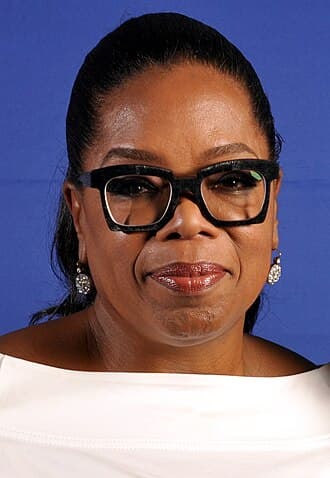
Witnessing as vocation
Inadequate witnessing in a brutal early formation
Wound-to-vocation: unwitnessed child became professional witness
Witnessing millions while original wound remains unresolved
Body as register of the cost
Origin Architecture
Winfrey was born January 29, 1954, in Kosciusko, Mississippi, to unmarried teenage parents. Her earliest years were spent with her grandmother, Hattie Mae Lee, on a rural farm with no running water. Hattie Mae was strict, religious, and present in a way neither parent could be. She also taught Winfrey to read before age three, arranged for her to recite scripture in church, and told her she was gifted. That early message -- you are exceptional, you are seen -- was the first and most important act of witnessing Winfrey received, and it arrived from someone who would soon be unavailable.
At age six she was sent to Milwaukee to live with her mother, Vernita Lee. The household was unstable, overcrowded, and not structured around a child's development. The witnessing Hattie Mae had offered was gone. Sexual abuse at the hands of a cousin and a family friend began when Winfrey was nine. She has described this publicly, at length, including the specific detail that the abuse continued over years and was not believed or addressed when she disclosed it. Being disbelieved about your own experience is a wound of a particular shape: it does not just hurt, it reorganizes your relationship to your own perception.
At fourteen, pregnant after years of abuse, she gave birth prematurely. The baby died shortly after. She has said she experienced the death as a second chance. At that point she was sent to Nashville to live with her father, Vernon Winfrey, whose stability, discipline, and investment in education represented a different architecture entirely.
What Hattie Mae Built
The psychological significance of the grandmother period is easy to underestimate. Before the wound was fully installed, someone saw her. Hattie Mae dressed her in church clothes, put her in front of a congregation, taught her that her voice had value and her mind was unusual. That early, specific act of witnessing became the template for everything that followed -- not just what Winfrey sought, but what she would eventually provide professionally at enormous scale.
The loss of that witness is as important as the witness itself. Children who are seen clearly and then unseen do not forget what it felt like. They spend the rest of their lives either recreating it for themselves or for others.
Witnessing as Vocation
The Oprah Winfrey Show ran for twenty-five years beginning in 1986 and was, at its best, a sustained practice of making people feel seen. The wound-to-vocation conversion here is unusually complete in scale and duration. The specific competence Winfrey developed -- the ability to draw genuine disclosure from people, to reflect their experience back to them accurately, to make a room of strangers feel that a particular person's story was also their own -- is not a natural talent. It is a skill that develops through intense early need.
In a 2013 Harvard commencement address she described the deepest human need she had observed across 37,000 interviews: "I have to say that the single most important lesson I learned in 25 years talking every single day to people was that there is a common denominator in our human experience. The overwhelming majority of us want the same thing. We want to be validated. We want to feel worthy and seen."
"She built the world's largest stage for the practice of being seen. The question the map holds is whether the person operating the stage ever fully received what she was giving."
That formulation -- witnessed at scale, from behind the camera -- is precisely the terrain of someone operating from unresolved wound. You can deliver what you needed without ever receiving it yourself.
The Body as Register
Winfrey's public relationship with weight has been the most visible register of what the intellectual and vocational framework she built could not fully reach. She has addressed it with remarkable honesty over decades, including a 1988 episode in which she wheeled a wagon containing 67 pounds of animal fat onto the stage to represent the weight she had lost, then regained it within months. She has written about food as comfort, as management, as the thing that worked when other things did not.
The insight about the body is not that it is a failure. It is that it is information. The body keeps a more honest record than the narrative. When an intellectual framework -- no matter how sophisticated, no matter how publicly effective -- cannot reach a particular layer of interior experience, the body will register what the mind has organized around.
Winfrey has said that for years she treated weight loss as something to be achieved through will and information. The resolution she found much later, through a changed relationship to the physical and eventually through GLP-1 medication, arrived not as defeat but as the acknowledgment that some terrain requires a different tool than the one you built your entire vocation around.
The Structure of Intimacy
Winfrey has been with Stedman Graham since 1986. They were briefly engaged and did not marry. She has spoken about this directly: in a 2019 interview with Vogue she said that if she had married him she believed it would have destroyed the relationship, that she is not built for what marriage requires, that Gayle King is the person she is in fact closest to.
The structure of the relationship with Graham -- sustained, parallel, never legally bound -- is worth reading as terrain data. It suggests someone who found a way to have continuity and companionship without the specific vulnerability that formal, legally codified mutual dependency would require. Given the early architecture -- the repeated experience of people she depended on being unavailable or harmful -- this is not a pathology. It is a reasonable accommodation.
The OWN Years and What They Revealed
Winfrey ended the daily show in 2011 at the peak of its reach. The Oprah Winfrey Network launched and struggled. Ratings were poor. Projects failed. By 2012 she had described the period as the hardest of her life. She has said, in various interviews, that she expected the work to come naturally and it did not, that she had underestimated how much of her identity was organized around the daily show's format.
This is among the most revealing data in her public record. The wound-to-vocation structure that worked brilliantly for twenty-five years revealed its cost when the vocation itself changed. Strip away the mechanism and you are left with the wound it was managing. The OWN struggle was the wound without its preferred container.
She rebuilt, stabilized the network, and has continued working. The reconstruction is real. But the years from 2011 to 2014 are a window into what the interior terrain looks like when the vocational architecture is temporarily unavailable.
References
- Winfrey, Oprah. What I Know For Sure. Flatiron Books, 2014. - Winfrey, Oprah. The Path Made Clear: Discovering Your Life's Direction and Purpose. Flatiron Books, 2019. - Kelley, Kitty. Oprah: A Biography. Crown, 2010. - The Oprah Winfrey Show. King World/Harpo Productions, 1986-2011. - Winfrey, Oprah. Harvard Commencement Address, May 2013. - Winfrey, Oprah. Academy Award acceptance speech (Jean Hersholt Humanitarian Award), April 2018. - Noel, Pamela. "Oprah Winfrey: The Most Talked-About TV Host in America." Ebony, July 1985. - Winfrey, Oprah. Interview with Jonathan Van Meter. Vogue, March 2019. - Sellers, Patricia. "The Business of Being Oprah." Fortune, April 2002.
---
Interpretive opinion based on the public record. Not a clinical assessment or diagnosis of any individual.