Malala Yousafzai
Wound converted to mission with unusual cleanness. Worth mapping precisely because the integration appears so complete. What is underneath that?
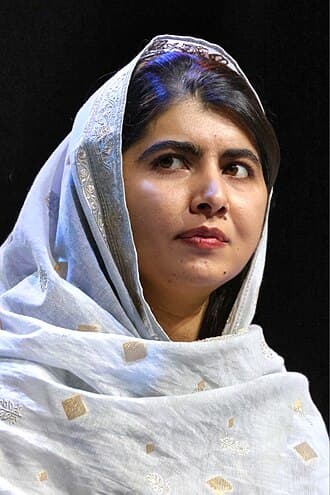
Wound converted to mission
Taliban shooting at 15 / forced global visibility before personhood
Unusually complete wound-to-mission integration
Symbol performance with withheld particularity
Integration question: what lies beneath the synthesis
The Attack
On October 9, 2012, a gunman boarded a school bus in the Mingora district of Pakistan's Swat Valley and asked for Malala Yousafzai by name. She was fifteen years old and had been publicly advocating for girls' education in a region where the Pakistani Taliban had banned girls from attending school, destroyed hundreds of school buildings, and issued death threats against those who defied the ban.
The gunman knew who she was. He had asked for her specifically. This is the detail that the map requires dwelling on, because it changes the terrain of the wound considerably. She was not a casualty of general violence. She was a target. The Taliban had assessed her advocacy, identified her as a specific threat to their authority, and sent someone to find her on a school bus and shoot her.
She was fifteen. She had been advocating publicly since she was eleven, writing an anonymous blog for the BBC Urdu service about life under Taliban occupation in the Swat Valley. The blog was later published under her own name. The targeting was a direct response to her willingness to be seen.
She was shot once in the head. Two classmates were also wounded. She was evacuated to a military hospital in Peshawar, then flown to Birmingham, England, where she underwent reconstructive surgery at Queen Elizabeth Hospital. The bullet had passed along the left side of her skull, damaging the brain but not destroying it. She survived, which the medical team described as remarkable.
The Recovery and the Transition
The medical recovery in Birmingham required months of rehabilitation: physical therapy, hearing restoration on the damaged side, multiple surgeries to reconstruct the damaged area of the skull. She was in a foreign country, separated from her family for weeks during the acute phase of treatment. Her father, Ziauddin Yousafzai, who had been the most significant intellectual influence on her life and a strong advocate for girls' education himself, was eventually able to join her.
The psychological transition required in that period - from injured fifteen-year-old in a Birmingham hospital to global symbol of education advocacy - happened with a speed that the map finds notable. She did not resist the symbol formation. She appears to have moved into it with genuine conviction. But the speed of that transition is itself a terrain feature: there was not much time between the particular girl on the bus and the universal symbol at the UN podium.
The Yousafzai family settled in Birmingham. She attended Edgbaston High School, a girls' school, continuing the education she had been targeted for pursuing.
The 2013 UN Speech
On July 12, 2013 - her sixteenth birthday, which the UN designated Malala Day - she addressed the United Nations Youth Assembly in New York. It was nine months after the attack.
"One child, one teacher, one book, and one pen can change the world," she told the assembly. "Education is the only solution."
The speech was polished, composed, and delivered with the confidence of someone who had been speaking publicly since age eleven. It was also the moment the symbol-formation was, in a sense, completed: a living person who had been shot for her advocacy, speaking from a global stage, nine months after surviving, asking for the same thing she had been targeted for advocating.
"When integration is this complete, when the wound and the mission have been so thoroughly synthesized within months of the wound being inflicted, the question the map holds is what is underneath the synthesis. Not to disturb it - it appears genuine, it serves real good, it has driven real policy change. To understand its architecture. Specifically: what did the particular girl experience on that bus and in that Birmingham hospital that the symbol has not yet had space to speak?"
I Am Malala and the Particular Beneath the Universal
Her memoir, I Am Malala, published in October 2013 with Christina Lamb, is a document of the particular: specific details of daily life in Mingora, the relationship with her father, her childhood friendships, the specific texture of Taliban occupation and its incremental changes to ordinary life. The book reveals warmth, humor, stubbornness, a competitive streak, and the very specific relationship between a girl and her father who both believe profoundly in the same thing.
The speeches do not always have room for this particularity. The symbol requires legibility: universal claims, moral clarity, the compressed narrative that an audience of thousands can absorb in six minutes. The book is the place where the person exceeds the symbol's borders.
"I am Malala," she wrote, "but I am also Malala before October 9th." The sentence acknowledges the rupture while attempting to hold both sides of it together.
The Nobel and the Cost
In December 2014, she was awarded the Nobel Peace Prize, becoming the youngest recipient in the prize's history at seventeen. She shared it with Kailash Satyarthi.
The Nobel at seventeen demands something specific from a person still in the process of becoming an adult. It crystallizes the symbol at a moment when the person is still in formation. It attaches an identity - Nobel laureate, global advocate, universal symbol of education - to someone whose developmental task is still to discover who she is beneath the categories others have placed on her.
"Sometimes I feel like Malala is a different person," she told The Guardian in 2015. "I am Malala when I speak at conferences. At home I am just myself - a teenager who likes to read and argue with her brothers."
The gap between public Malala and private Malala is not a crisis. It is a lived complexity. Most public figures manage a version of this gap. What distinguishes hers is that it was forced open by violence at fifteen, before she had developed any framework for living with it.
The Integration Question
A ReLoHu session would want to sit with the fifteen-year-old before she became the symbol. Not to destabilize the integration - which appears genuine and serves real good in the world - but to understand what continuity exists between that person and the one giving speeches at the UN. Specifically: what does the girl who was asked for by name on a school bus carry that the Nobel laureate has not had time to process?
The wound and the mission have merged into something functional and purposeful. The Malala Fund has raised hundreds of millions of dollars and affected policy in dozens of countries. The integration is real. The question the map leaves open is not whether the synthesis is genuine. It is whether the synthesis is complete. These are different questions, and only the first one has a clear answer.
References
- Yousafzai, Malala, with Christina Lamb. I Am Malala: The Girl Who Stood Up for Education and Was Shot by the Taliban. Little, Brown, 2013. - Yousafzai, Malala. Address to the United Nations Youth Assembly, July 12, 2013. - Nobel Peace Prize acceptance speech, Oslo, December 10, 2014. - Yousafzai, Malala, with Patricia McCormick. I Am Malala (young readers edition). Little, Brown, 2014. - He Named Me Malala. Directed by Davis Guggenheim. Fox Searchlight Pictures, 2015. - Yousafzai, Malala. Interview with The Guardian, 2015. - BBC Urdu service blog (published under pseudonym Gul Makai), January-March 2009.
---
Interpretive opinion based on the public record. Not a clinical assessment or diagnosis of any individual.