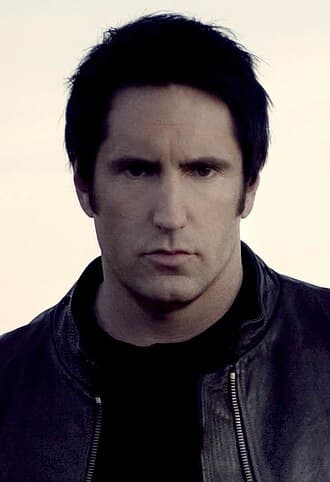
Trent Reznor
The wound that built a world. One of the clearest cases of interior pain becoming total sonic architecture, and one of the most legible examples of what terrain in genuine resolution looks like.
Wound-as-architecture
World is hostile to your actual inner life
Total sonic control as substitute interior environment
One permanent member - domain of total authorship
Sobriety rupture and terrain reorganization toward generosity
Mercer, Pennsylvania
Michael Trent Reznor was born in Mercer, Pennsylvania in 1965, raised by his maternal grandparents after his parents divorced when he was five. Mercer is a small, conservative agricultural town in the western part of the state, the kind of place where interior complexity is not a social asset and where a child with an unusual inner life has no particular framework for understanding what that means or where it leads.
He studied piano from age five, showed musical aptitude early, and was by his own account an isolated kid in a place that had limited use for what he was. The wound, assembled here in childhood, is not a single incident. It is the sustained experience of having an interior life that the available exterior environment cannot accommodate. That is a particular kind of loneliness because it lacks a specific object. No one did anything. The place just could not hold what you were.
The response he developed was not to stop having the interior life. It was to build an environment adequate to it.
Pretty Hate Machine: Made Alone
Reznor moved to Cleveland after college, took a job as a studio assistant at Right Track Studios, and used studio downtime after hours -- sometimes overnight, with the permission of the studio owner -- to record what became Pretty Hate Machine. He played almost all the instruments himself. He engineered it himself. The album was made in the absence of anyone else's judgment about what it should be.
The production circumstances are not incidental. They are the thesis. A person who experienced the world as hostile to his interior life built the first major artifact of that life in a space he had, temporarily, to himself. The late-night studio hours were not a workaround. They were the condition of possibility. To make the work he needed to make, he needed to be alone in the environment where he was building it.
The album sold 1 million copies before the internet existed to explain why. Its audience had been waiting for evidence that someone else's interior had the same texture theirs did.
The Downward Spiral: Documentary or Aspirational
The Downward Spiral, released in 1994 and recorded in the house in Los Angeles where Sharon Tate was murdered in 1969, is a concept album about self-destruction from interior to exterior. It was made during a period when Reznor was using heroin and other substances heavily, living in the rented Cielo Drive house partly as a deliberate provocation of his own psychology, and producing work that his later collaborator Atticus Ross has described as coming from a place of genuine crisis.
The question of whether the album was documentary or aspirational is worth sitting with, because the answer appears to be: both, and that was the point. Reznor has said in multiple interviews that he did not know whether he was going to survive the period that produced The Downward Spiral. He told Rolling Stone in 1994: "I was playing a character who was me, but not me. The record was about getting to the edge and looking over. I didn't know if I was going to come back."
"The studio is not a workplace. It is a wound response. A space where the interior life that was not welcome in the external environment becomes the entire environment. The work is not about the wound. The work is the wound, given form."
The distinction between documenting a descent and performing one from the inside is important. The Downward Spiral seems to have been made without the author being certain which side of that line he was on.
What the Heroin Was Managing
Substances serve a regulatory function before they become the problem they are managing. For Reznor in the mid-1990s, following the commercial and critical success of The Downward Spiral, the substances appear to have been managing two related things: the intensity of the interior experience that produced the work, and the specific horror of having that interior experience become commercially successful and therefore no longer entirely his.
The wound was about a world hostile to your actual inner life. The success changed the relationship to the wound without resolving it. The work that came from pain was now the thing that thousands of other people owned, played in their bedrooms, screamed back at him from concert audiences. The intimacy of the wound became a product. The substances may have been the only available tool for managing what that meant.
The period produced The Fragile (1999), a double album made over four years of increasing substance use, perfectionism, and isolation. The work is extraordinary and exhausting, a record of someone trying to maintain total control over a creative environment while the regulatory system enabling that control is actively degrading.
Sobriety and the First Years
Reznor got sober in 2001. He has described the first years as involving a complete identity reconstruction. In a 2009 interview with Classic Rock he said: "I had used the drugs and the darkness as the engine for everything. When I got sober I had to find out whether there was still something to say without them. That was genuinely terrifying."
The immediate post-sobriety output was sparse and redirected. With Teeth (2005) was the first album made sober, and it sounds like it -- tighter, less sprawling, more controlled, less willing to let the descent continue past the breaking point. Whether this is a limitation or a resolution depends on what you believe art is for.
The sobriety rupture required re-authoring identity without the wound as organizing center. That is among the most demanding things a person can do, and the evidence in the work suggests it took most of the decade to accomplish.
The Atticus Ross Collaboration: Terrain in Resolution
Beginning with The Social Network score in 2010, Reznor began working formally with Atticus Ross on film music. They have since scored The Girl with the Dragon Tattoo, Gone Girl, Soul, Mank, Bones and All, and others. The collaboration has produced two Academy Awards.
The terrain significance is structural. Film scoring requires serving a directorial vision. You are not building an interior environment and inviting people into it. You are subordinating your craft to what someone else made, amplifying their intention rather than expressing your own. Total authorship is explicitly not available.
For someone whose entire early career was organized around the need for total authorship as the only safe space for the interior life, this is not compromise. It is what the wound looks like when it has been metabolized. The same skills, directed toward generosity rather than self-protection. The man who could only work alone overnight in borrowed studio time now shares a creative process with a collaborator and makes things in service of other people's stories. That is a map of genuine resolution.
References
- Nine Inch Nails. Pretty Hate Machine. TVT Records, 1989. - Nine Inch Nails. The Downward Spiral. Nothing/Interscope, 1994. - Nine Inch Nails. The Fragile. Nothing/Interscope, 1999. - Nine Inch Nails. With Teeth. Nothing/Interscope, 2005. - Nine Inch Nails. Year Zero. Interscope, 2007. - Reznor, Trent, and Atticus Ross. The Social Network (film score). Null Corporation, 2010. - Reznor, Trent. Interview with Mick Wall. "Inside the Mind of Trent Reznor." Classic Rock, 2009. - Diehl, Matt. "Sympathy for the Devil." Rolling Stone, December 2005. - Watrous, Peter. "Nine Inch Nails: Hurt You With Tools." Rolling Stone, October 1994. - Reznor, Trent. Interview with Steve Appleford. Rolling Stone, December 1994.
---
Interpretive opinion based on the public record. Not a clinical assessment or diagnosis of any individual.