Jobs & Lisa
He named a computer after her before he acknowledged she existed. The map of a father's wound becoming a daughter's wound - and what it means to spend a lifetime seeking something from someone who cannot give it.
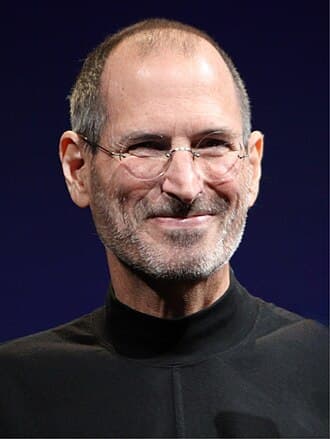
The transmitted wound - father's abandonment fear becoming daughter's abandonment reality
Jobs: abandoned adoptee who could not tolerate being the cause of need / Lisa: the need that could not be acknowledged
Intermittent reinforcement - the father present enough to create attachment, absent enough to prevent security
Lisa: persistent seeking / Jobs: oscillation between presence and denial
The computer named Lisa as the displacement of what he would not claim directly
The Denial
Lisa Brennan was born on May 17, 1978. Steve Jobs was 23. Within months he had filed a sworn statement in Santa Clara County Superior Court claiming he was sterile and could not be the father. A DNA paternity test in 1979 established 94.4% probability that he was. He was ordered to pay child support of $385 a month, later raised. He was simultaneously a multimillionaire.
The adoption wound is the operative context. Jobs was himself surrendered by his biological mother and adopted by Paul and Clara Jobs. The circumstances of his adoption produced a specific and well-documented wound: a terror of being the cause of another person's need. He could not be the reason someone needed something. The denial of Lisa was, in this reading, the denial of his own experience of being denied.
Chrisann Brennan, Lisa's mother, has documented the relationship in her memoir The Bite in the Apple (2013). She describes a young man capable of great charm and vision who could also, in the same breath, be cruel and evasive. The relationship between Jobs and Brennan was fractured long before Lisa's birth. What the paternity denial added was legal, financial, and emotional abandonment made simultaneous.
The Lisa Computer
In 1983, Apple released the Apple Lisa, a personal computer that predated the Macintosh. Jobs later claimed, repeatedly, that the name was coincidental - that Lisa was an acronym for Local Integrated Software Architecture. Engineers at Apple have contradicted this over the years, and Jobs himself, late in his life, acknowledged to his biographer Walter Isaacson that the computer was in fact named after his daughter.
The gap between those two statements is the wound's most legible artifact. He gave her name to a machine before he acknowledged the child. He could attach the name to something he was proud of without acknowledging the person the name belonged to. The displacement is precise: credit without contact, recognition without relationship.
Lisa grew up with her mother, largely on welfare during her early years, while her father became one of the wealthiest and most celebrated figures in American technology. The material contrast is documented. Chrisann Brennan has described periods of real economic hardship while Jobs lived in a Palo Alto house and built a company worth billions.
Intermittent Presence
Lisa's memoir Small Fry (2018) documents a childhood of intermittent access to her father. He would appear and be warm and full of interest, then disappear. He would invite her to live with him and then make the household cold. He would acknowledge her in private and then, in company, pretend not to know her well.
"Sometimes he called me a mistake," she writes. The statement lands with the clarity that only comes from a person who has spent years deciding whether to say it.
The repair began in her teens. By about fourteen, she had moved into Jobs's household in Palo Alto. She attended college at Harvard. He paid. He could be generous in material ways when the situation was structured enough to contain him. What remained inconsistent was the thing that could not be purchased: reliable emotional presence.
"Intermittent reinforcement produces stronger attachment than consistent reinforcement. The child who sometimes receives warmth from an inconsistent parent will pursue that warmth with more persistence than a child who receives it reliably. Lisa Brennan-Jobs spent her childhood in exactly this structure. The persistence it produced is documented in the memoir she wrote as an adult."
The Household and Laurene
Jobs married Laurene Powell in 1991. They had three children together: Reed, Erin, and Eve. The household Lisa moved into was already organized around a different family. Laurene Powell Jobs has generally spoken carefully about her relationship with Lisa. What Small Fry documents is the complexity of occupying an ambiguous position in a household where the father's primary loyalty was to his second family, not his first daughter.
The dynamic was not hostile. It was something harder to name: incomplete. Lisa was present but not fully incorporated. Acknowledged but not fully claimed. The memoir returns to this texture repeatedly, because the texture is the wound.
What She Built From It
Small Fry is one of the clearest accounts in recent literary memoir of what it costs to be the child of someone incapable of consistent love. It is also a record of someone using writing to do what the relationship could not: to look at the thing directly, to give it its proper name, to refuse the version of events that protected her father at her expense.
Jobs died in October 2011, of pancreatic cancer, at 56. Lisa has said the relationship improved in his final years. He told her he loved her. The improvement does not undo the formation. It is, if anything, another data point in the map: even at the end, the wound required the dying man to do what he had spent her childhood unable to do.
The memoir is the reclamation. It is Lisa Brennan-Jobs insisting that her experience of the relationship is the authoritative account of the relationship, not the hagiography that surrounded her father in death. That insistence is itself a terrain act. It says: I exist. I was there. The record is not complete without me.
References
- Brennan-Jobs, Lisa. Small Fry. Grove Atlantic, 2018. - Isaacson, Walter. Steve Jobs. Simon & Schuster, 2011. - Brennan, Chrisann. The Bite in the Apple: A Memoir of My Life with Steve Jobs. St. Martin's Press, 2013. - Santa Clara County Superior Court. Jobs v. Brennan paternity case records, 1978-1980 (public record). - Brennan-Jobs, Lisa. "What I Learned From My Father." The Cut, September 2018. - Merchant, Brian. The One Device: The Secret History of the iPhone. Little, Brown, 2017.
---
Interpretive opinion based on the public record. Not a clinical assessment or diagnosis of any individual.