Freud & Jung
The most consequential intellectual rupture of the twentieth century. A father who needed a successor and a son who needed to exceed the father - and seven years of letters that document exactly what happens when neither need can be met.
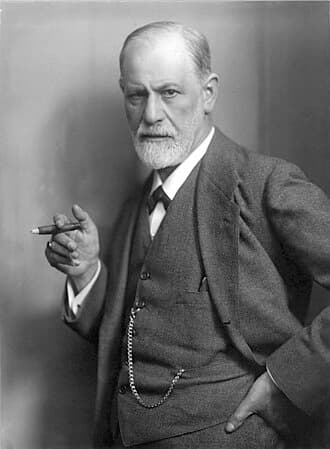
Father-son wound enacted at the level of ideas
Freud: succession anxiety / Jung: the need to be more than an heir
Intellectual intimacy that cannot survive the son's divergence
Asymmetric - Freud as patriarch, Jung as crown prince who refuses the crown
Ideas as proxies for the relationship wound
The Appointment
Freud was forty-nine when Jung first wrote to him in 1906, sending a copy of his word association studies. He was already the father of psychoanalysis and already anxious about its future. Jung was thirty, working at the Burgholzli psychiatric hospital in Zurich, brilliant, and - critically - not Jewish. Freud feared that psychoanalysis would be dismissed as a narrowly Viennese or Jewish science. A Swiss Protestant heir could carry the movement beyond that perceived limitation.
Freud appointed Jung his "crown prince" and "successor." He later wrote to Jung: "You are after Breuer the first person who has given me real help... you have impressed me so much that I am afraid of you." He did not ask Jung whether he wanted the role. The appointment was made. The terms were not negotiated.
What Each Man Needed
Freud needed an heir who would transmit the system intact. The system represented his life's work and, not incidentally, his primary defense against his own death anxiety. When Jung pressed him in 1909, during their joint voyage to America for the Clark University lectures, to analyze one of his own dreams, Freud declined. He told Jung: "I cannot risk my authority." That sentence is the central terrain document of the entire relationship. The authority was not separate from the system. Protecting the authority meant protecting the system. Protecting the system meant maintaining the non-negotiable status of its premises.
Jung needed a father who could receive him fully - including the parts of his thinking that exceeded or contradicted the father's framework. He had grown up watching his own father collapse under the weight of a framework he could not believe in but could not abandon. He was not going to repeat that. He was drawn to mythology, to the collective unconscious, to dimensions of psychic life that Freud's materialist framework dismissed as mysticism. He needed intellectual permission to follow where the material led.
"The rupture was not about libido theory, though that is what the letters argue about. It was about whether Jung was permitted to think thoughts that Freud could not contain. He was not. That is the wound."
The America Trip
In August and September 1909, Freud and Jung sailed together to the United States, where both received honorary degrees from Clark University in Worcester, Massachusetts. They spent weeks together in close quarters, during which they analyzed each other's dreams. Jung later recounted that Freud consistently refused to provide the personal context that dream analysis required. When Jung pressed for more, Freud said: "I cannot risk my authority."
Jung recorded in his autobiography that this moment produced a specific and lasting reaction: "At that moment, he lost it altogether. That sentence burned itself into my memory; and in it the end of our relationship was already foreshadowed." The trip that was meant to consolidate their alliance was the moment Jung understood the relationship had a structural limit.
The Letters
They wrote to each other constantly between 1906 and 1913. Three hundred and sixty letters survive, collected in The Freud/Jung Letters published in 1974. The correspondence documents one of the richest intellectual exchanges in history and, beneath it, the progressive deterioration of a relationship that could not hold what both men brought to it.
Freud analyzed Jung's resistance to his ideas as neurosis. In a 1912 letter, he wrote: "I would suggest that we abandon our personal relations entirely." He later withdrew this suggestion, but the move had been made visible. Jung analyzed Freud's insistence on sexual theory as the father's need to maintain authority. In his 1912 work Transformations and Symbols of the Libido, he redefined libido as a broader psychic energy rather than a specifically sexual force. This was the public announcement of the divergence. Freud read it as a theoretical disagreement. It was a declaration of independence.
The Kreuzlingen Gesture
In May 1912, Freud traveled to Kreuzlingen in Switzerland to visit Ludwig Binswanger, whose father-in-law was gravely ill. Kreuzlingen is less than fifty miles from Zurich, where Jung lived and worked. Freud did not contact Jung or arrange a visit. When Jung learned of the trip afterward, he wrote to Freud asking about it. Freud's explanation was technical: the visit had been arranged under difficult circumstances and he had not wanted to impose.
Jung did not accept this explanation. The symbolic weight of the incident - Freud in the same country, passing near, choosing not to appear - functioned as a relational statement. The Kreuzlingen gesture became, in Jung's account, the moment he understood that the relationship had already ended in Freud's interior. Both men were operating on different timelines for the same rupture.
The Final Letters and the Break
The final exchange of substantive letters occurred in 1913. In January, Jung resigned as editor of the Jahrbuch fur psychoanalytische und psychopathologische Forschungen. In April, he resigned from the presidency of the International Psychoanalytic Association. In October, he withdrew from teaching at the University of Zurich.
Freud told his circle that Jung had withdrawn from him, framing it as abandonment. Jung spent the years from 1913 to approximately 1918 in what he later called his confrontation with the unconscious - a period of deliberate self-exploration that produced the Black Books, the Red Book, and the experiential foundation of analytical psychology. The son had to destroy the father's system to build his own. The father had to cast out the son to protect the system. Both men were doing what the wound required.
What the Break Produced
Freud never developed a framework for the collective dimensions of psychological life. He acknowledged the limits of his model but maintained the premises. He died in London in 1939, still defending the architecture.
Jung went on to develop the concepts of the collective unconscious, the archetypes, the shadow, the anima and animus, and the individuation process. He also spent years in a psychological crisis that the break precipitated. The cost of the rupture was real for both men. What each produced in its aftermath is the measure of what the relationship had both enabled and prevented.
References
- McGuire, William, ed. The Freud/Jung Letters: The Correspondence between Sigmund Freud and C.G. Jung. Princeton University Press, 1974. - Jung, C.G. Memories, Dreams, Reflections. Recorded and edited by Aniela Jaffe. Pantheon Books, 1962. - Gay, Peter. Freud: A Life for Our Time. W.W. Norton, 1988. - Bair, Deirdre. Jung: A Biography. Little, Brown, 2003. - Kerr, John. A Most Dangerous Method: The Story of Jung, Freud, and Sabina Spielrein. Knopf, 1993. - Shamdasani, Sonu. Jung and the Making of Modern Psychology. Cambridge University Press, 2003. - Freud, Sigmund. On the History of the Psycho-Analytic Movement. 1914.
---
Interpretive opinion based on the public record. Not a clinical assessment or diagnosis of any individual.