Lennon & McCartney
The most generative creative partnership in recorded music history. Each carried what the other lacked. The partnership worked because of the wound, not despite it - and it ended for the same reason.
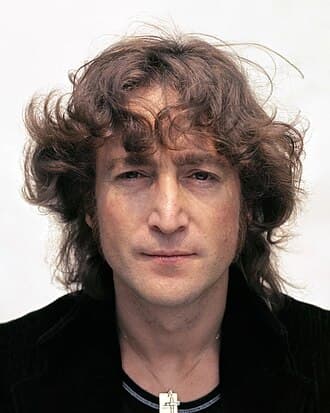
Creative symbiosis as mutual wound completion
Both lost their mothers young - the shared wound as the partnership's foundation
Each provides what the other cannot access alone
Competitive intimacy - the rivalry that produces rather than destroys
The partnership cannot survive individuation - both must grow beyond it
Paul McCartney's mother, Mary, was a midwife and health visitor. She died of breast cancer in October 1956. Paul was fourteen. His father Jim McCartney, a former jazz musician, did not tell Paul directly that his mother had cancer before she died. Paul came home from school one day and was told she was gone. His reported first response was not crying but the question: "What are we going to do without her money?" He has since said he believes this was a form of shock that kept him from the grief he could not yet access.
John Lennon's mother, Julia, was a complicated figure. She and Lennon's father had separated when John was young, and he was largely raised by his aunt Mimi. Julia remained in contact with John and was a presence in his adolescence. She taught him the banjo. In July 1958, Julia was killed by a car driven by an off-duty police officer, Nigel Whalley's account placing the accident on Menlove Avenue outside Mimi's house. John was seventeen.
They had met the year before. On July 6, 1957, at the Woolton Parish Church garden fete, McCartney watched the Quarrymen play. Lennon was on stage, performing with the confidence of someone who had already decided on his identity. McCartney, who was fifteen to Lennon's sixteen, was introduced backstage and played "Twenty Flight Rock" by Eddie Cochran, demonstrating that he knew the chords, that he was technically capable, and that he could be useful. Lennon invited him to join the group shortly after.
Two adolescents who had lost their mothers and were trying to build identities in the absence of that anchor found each other. In finding each other, they found a container for what they could not hold alone. The partnership is built on this shared wound. Not on talent alone, not on ambition alone, but on the specific recognition between two people who had been bereaved in a way almost no one around them could understand.
What Each Provided
The songwriting dynamic was specific and documented. They would sit opposite each other with guitars, a practice McCartney has described repeatedly in interviews. "We'd write eyeball to eyeball," he told Barry Miles in Many Years From Now. "Literally facing each other. If I'd written a word he didn't like, I could see it in his face."
Lennon brought rawness, directness, wit that could turn cruel, and the willingness to go to uncomfortable places in a lyric. McCartney brought melodic instinct that was almost freakish in its fluency, craftsmanship, and the pull toward accessibility. Lennon could make a song feel dangerous. McCartney could make a melody that lodged in the brain and would not leave. Each softened and sharpened the other in alternation.
The credit "Lennon-McCartney" obscures the actual division of labor, which scholars including Ian MacDonald have analyzed song by song. "Help!" is primarily Lennon, a genuine cry from the wound dressed in an uptempo arrangement McCartney helped shape. "Yesterday" is entirely McCartney, arriving to him in a dream. "In My Life" is primarily Lennon's lyric and McCartney's baroque piano figure. The collaboration produced neither man's work alone. It produced something that required both wounds to exist.
The Competitive Intimacy
They competed constantly and productively. When McCartney wrote "Yesterday" and played it for Lennon, Lennon's response was that it was good but too soft. When Lennon wrote "Strawberry Fields Forever," McCartney matched it with "Penny Lane" for the same single. The competition was the engine, not the exhaust.
"The partnership functioned as a psychological prosthetic. Each man could access, through the other, capacities he did not reliably have alone. Lennon's solo work is rawer and less shaped. McCartney's is more polished and less dangerous. The collaboration produced neither. It produced something that required both wounds to exist."
The rivalry was generative because it was contained within the partnership. Each man's attempt to exceed the other raised both. This is the rarest form of creative relationship: one in which rivalry and collaboration are not in tension but are the same process.
The White Album as Dissolution Made Audible
By 1968, the sessions for what became the White Album were conducted largely separately. Lennon would record with his musicians. McCartney would record with his. Harrison brought his own songs with his own producers. Starr played drums and left when the sessions became unbearable, returning only when the others asked him back.
"Blackbird" is McCartney alone, building something quiet. "Julia" is Lennon alone, singing directly to his mother. "Revolution 1" is Lennon's draft; "Back in the U.S.S.R." is McCartney's bravado. The album is not a Beatles record in the sense that earlier records were Beatles records. It is four people in the same building, making separate music that was compiled into a double album.
The White Album is the dissolution made audible. The wound completion that had powered the partnership was no longer completing anything, because both men were becoming more fully themselves, and the more fully themselves they became, the less they needed what the other provided.
The Breakup: What Each Said
The formal dissolution of the Beatles involved lawsuits, counterclaims, and public statements that did not disguise the bitterness. McCartney filed suit in December 1970 to dissolve the band's partnership, which made him, in Lennon's public characterization, the person who broke up the Beatles.
Lennon told Rolling Stone in 1970: "I don't know how many of our songs actually were Lennon-McCartney. I put them all down to Lennon and McCartney because that's what the deal was. But in fact the songs were written by Lennon and McCartney separately." The sentence is a form of grief and a form of aggression. It undoes the fiction of the partnership, which was also the fact of it.
McCartney's response, over decades of interviews, has been to defend the collaboration's reality while also asserting his own primacy within it. He has said, more than once, that in his view "Yesterday" is the most covered song in history, and that it is his. Each man, in the breakup, took back the gift of the other. The songs remained. The container that produced them did not.
References
- Miles, Barry. Paul McCartney: Many Years From Now. Henry Holt, 1997. - The Beatles Anthology. Chronicle Books, 2000. - The Beatles Anthology documentary series. Apple Corps/Capitol Records, 1995. - Norman, Philip. John Lennon: The Life. Ecco, 2008. - Norman, Philip. Paul McCartney: The Life. Little, Brown, 2016. - MacDonald, Ian. Revolution in the Head: The Beatles' Records and the Sixties. Henry Holt, 1994. - Lennon, Cynthia. John. Crown, 2005. - Wenner, Jann. "John Lennon: The Rolling Stone Interview." Rolling Stone, January 21, 1971. - Lewisohn, Mark. Tune In: The Beatles: All These Years, Vol. 1. Crown Archetype, 2013.
---
Interpretive opinion based on the public record. Not a clinical assessment or diagnosis of any individual.