The Codependent
Codependency is not about loving too much. That framing is sentimental and incorrect. It is a self-organization strategy in which one person's identity, emotional regulation, and sense of worth become entirely dependent on managing another person's wellbeing. The wound produces the appearance of selflessness. The structure is something else.
Identity and self-worth contingent on managing another person's emotional state or behavior - the self as instrument of another's need
Childhood emotional labor recruited into adult management - the child whose value was instrumental and conditional on service
The helper trap - organizing life around roles that guarantee continuous supply of people who need them
Selfless giving that is structurally compulsive, not freely chosen; giving driven by anxiety about what happens if it stops
The resentment signal - accumulated fury that confuses the codependent because they believed they were being loving
What Codependency Actually Is
The word has been in popular use long enough to have lost precision. It is used to describe anyone who is too involved in someone else's problems, anyone who cares too much, anyone whose relationship has become unhealthily entangled. These uses are not wrong, exactly, but they miss the structural fact that makes codependency a specific and coherent pattern rather than a generic description of excessive caring.
Codependency is a self-organization strategy. The pattern develops in environments where a child's emotional survival required attending to an adult's emotional state rather than their own. The child does not choose this. The child adapts to the available environment with the tools available to a child, which are primarily relational tools - attunement, appeasement, caretaking, the reading of adult affect before it becomes dangerous. What codependency produces is not a person who loves too much. It is a person who was never allowed to develop a self that existed independently of what other people needed from them.
This distinction matters because the treatment for "loving too much" is to love less, and that is not what recovery from codependency requires or looks like. Recovery requires the construction of a self - the terrifying and unfamiliar project of identifying what one actually feels, wants, needs, and values independent of anyone else's state.
The Developmental Origin
The environments that produce codependent adults share a common structure: the child's emotional labor was recruited into the management of an adult's wellbeing or emotional state. The specific adult problems vary - alcoholism, depression, narcissistic volatility, chronic physical illness, a parent whose own unresolved losses made them emotionally unavailable in ways they could not name. The common feature is that the child learned, through accumulated experience rather than explicit instruction, that their primary relational task was to manage the adult rather than to be managed by them.
The child of an alcoholic parent learns to read the parent's emotional temperature before walking through the door. Is it a good night or a bad night? The child becomes extraordinarily skilled at this reading - more skilled than most adults with full cognitive development - because the consequences of misreading are real and felt. The child also learns that love is not given freely. It is given conditionally, and the condition is the child's performance of the caretaking role.
The child of a narcissistic parent learns a related but distinct lesson: their value is instrumental. They exist to be a mirror, a trophy, a source of reflected glory, or a convenient receptacle for the parent's self-criticism when the parent's self-image cannot sustain its own weight. The child learns to calibrate their presentation to the parent's needs - to become what the parent needs them to be in a given moment - because this is the only reliable strategy for maintaining connection with the only available attachment figure.
What both of these children learn is that the self is a problem. The self has needs and feelings and preferences that, when expressed, create trouble. The adaptive solution is to suppress the self and amplify the attunement to the other person. The strategy works, in the short run, in the specific environment where it was developed. The adult who emerges from this environment is running a strategy that no longer fits the available landscape.
The Narcissist/Codependent Pairing
The most widely observed relational pattern in codependency literature is the dyad between codependent and narcissistic wound structures. These two psychologies fit together with terrible precision, and the fit is not coincidental.
The narcissist requires a selfless mirror - a person whose primary relational function is to reflect, validate, and attend. The codependent requires a person whose needs are large enough to justify the codependent's existence. Each confirms the other's core psychology. The narcissist finds a partner who will subordinate themselves without visible complaint. The codependent finds a partner whose need is so reliable and so consuming that the question of the codependent's own selfhood can be indefinitely deferred.
"The pairing works because it is not accidental - it is structural. The codependent psyche does not randomly select partners. It selects partners whose wound structure matches the template established in childhood. The narcissistic partner feels familiar in a specific and important way: they require the same relational posture that the codependent learned, early and under pressure, was the only available mode of connection. The familiarity is not comfort. It is recognition."
The pattern is self-reinforcing in ways that make it genuinely difficult to exit. The codependent's caretaking enables the narcissist's avoidance of accountability, which produces behaviors that require more caretaking, which deepens the codependent's belief that they are indispensable, which deepens their investment in the relationship. Both parties are organized around the wound they brought into it.
The Helper Trap
Many codependents organize their identities around helper roles. Therapist, nurse, social worker, teacher, the friend everyone calls in crisis, the family member who keeps things together. The role is genuine - they are often very good at it, and the care they provide is real care that produces real benefit to the people who receive it. The role does not become a trap because the care is false.
The role becomes a trap because it also solves the wound. It provides a continuous and reliable supply of people who need them - which is the only consistent source of self-worth the codependent has access to. When the helping is working, the internal experience is something that resembles purpose, connection, and value. When the helping stops - when the client gets better, when the friend is no longer in crisis, when the role ends - the codependent is left with the question that the helping has been deferring.
Recovery requires confronting the question that the role has been designed to avoid: who am I if no one needs me? This is not a rhetorical question. For the codependent, it is genuinely unanswerable in the early stages of recovery, because the self that would answer it was never developed. The work is construction, not renovation. There is no prior version of an independent self to return to. There is only the unfamiliar and anxiety-producing project of building one.
The Resentment Signal
Because codependent giving is not freely chosen - it is compulsive, driven by anxiety about what happens if the giving stops, organized around a survival strategy rather than genuine generosity - it accumulates resentment. The codependent gives and gives, often with real warmth and genuine desire to help, and eventually discovers they are furious. The fury is usually disproportionate to specific triggering events and confusing to the codependent themselves, because they believed they were being loving.
The resentment is the diagnostic. Real generosity, freely chosen, does not produce resentment as its endpoint. It produces depletion, sometimes, and a need for rest and replenishment. But the specific texture of codependent resentment - the accumulated rage of a person who has been giving what they did not freely choose to give - is different from ordinary tiredness. It is the resentment of someone who has been working under compulsion and has finally noticed.
The resentment is also, in the terrain reading, the wound's first acknowledgment that something is wrong. Before the resentment surfaces, the codependent has no access to the problem - the helping feels like caring, the caretaking feels like love, the subordination feels like generosity. The resentment breaks the spell. It says: I did not choose this freely. It says: I have been giving something I could not afford to lose. It says: something here is not working.
“Codependents are reactors, not actors.”
Melody Beattie, *Codependent No More*, 1986
The Recovery Terrain
Recovery from codependency does not look like learning to say no, though that is often part of it. It does not look like becoming less generous or less caring, though the surface behaviors can temporarily resemble that while the internal re-organization is happening. What recovery actually requires is the gradual and often painful construction of a self that can tolerate its own existence independent of whether anyone needs it in a given moment.
This requires learning to identify and sit with one's own emotional states - to notice what one actually feels before immediately attending to what someone else feels. It requires building the capacity to receive care, which is frequently more difficult for codependents than giving it, because receiving care without immediately reciprocating it feels dangerous in a way that the developmental history explains. It requires, eventually, the ability to give freely rather than compulsively - to help from choice rather than from fear of what happens if the helping stops.
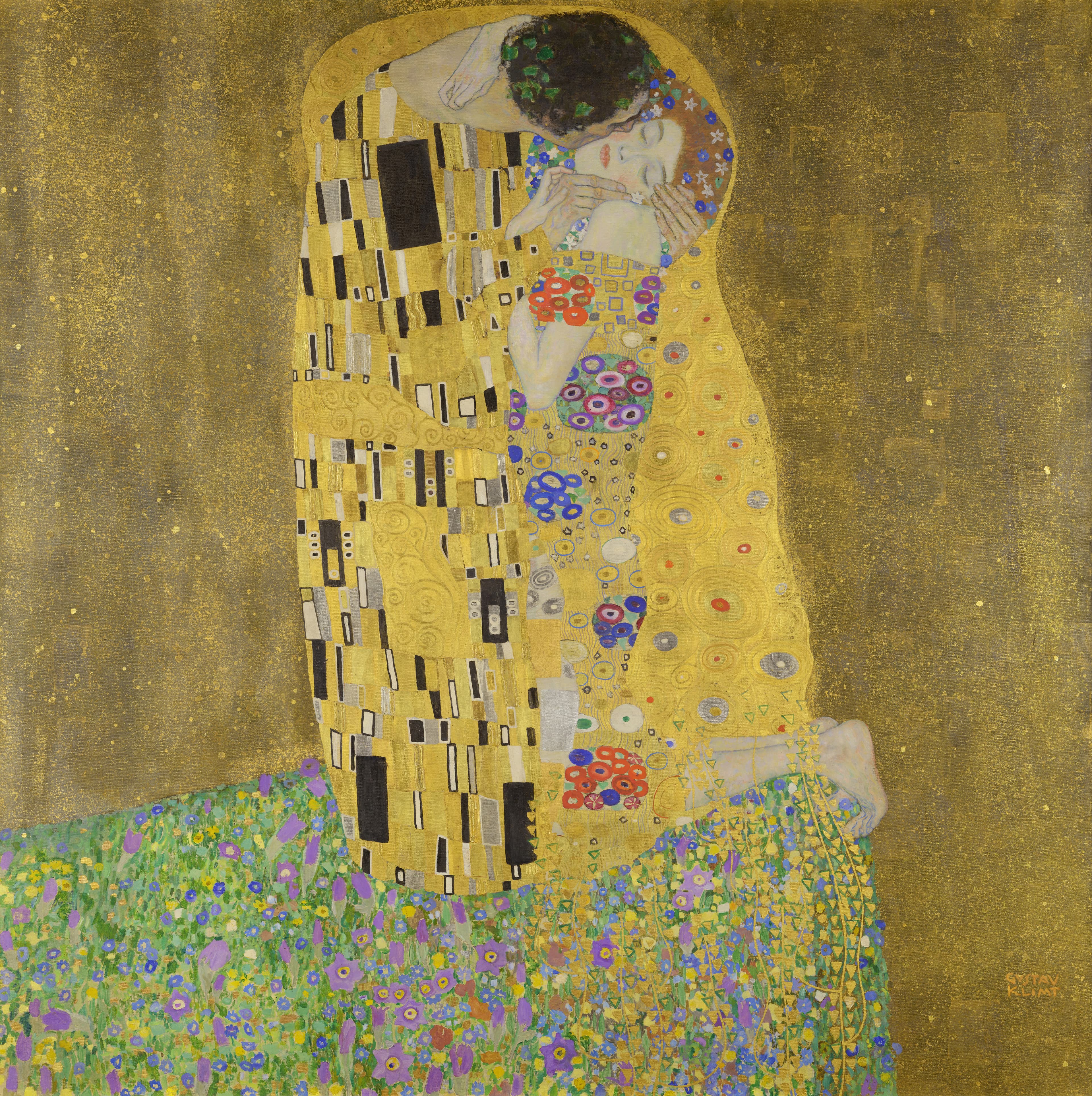
The Klimt image that accompanies this map is not incidental. The Kiss is usually read as romantic unity - two figures merging, the gold ground suggesting transcendence. The terrain reading is different: two figures in which it is genuinely difficult to tell where one ends and the other begins, one face turned toward the viewer and one face buried, the merger so complete that individuation is no longer visible. That is the codependent configuration. The question recovery asks is not whether the kiss was real. The question is what, if anything, exists outside it.
References
- Beattie, Melody. Codependent No More: How to Stop Controlling Others and Start Caring for Yourself. Hazelden, 1986. - Whitfield, Charles. Codependence: Healing the Human Condition. Health Communications, 1991. - Bowlby, John. A Secure Base: Parent-Child Attachment and Healthy Human Development. Basic Books, 1988. - Johnson, Sue. Hold Me Tight: Seven Conversations for a Lifetime of Love. Little, Brown, 2008. - Brown, Stephanie. Treating Adult Children of Alcoholics: A Developmental Perspective. Wiley, 1988. - Lancer, Darlene. Codependency for Dummies. Wiley, 2012. - Ainsworth, Mary D.S., et al. Patterns of Attachment: A Psychological Study of the Strange Situation. Erlbaum, 1978.
---
Interpretive opinion based on the public record. Not a clinical assessment or diagnosis of any individual.