Diana & Charles
A person who was fully a person, inside an institution that required her not to be. The marriage failed because she refused. The institution never forgave her for it.
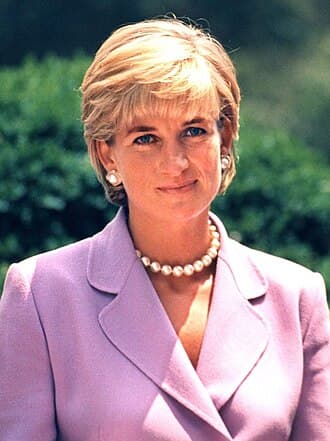
Individual authenticity vs. institutional opacity - irreconcilable
Diana: childhood abandonment / Charles: emotional isolation inside duty
The institution cannot contain a person who is genuinely transparent
Two people with incompatible wounds - his requires withdrawal, hers requires contact
The public as witness - she used transparency where he used opacity
The Courtship
Diana Spencer was nineteen years old when she became engaged to the Prince of Wales. Charles was thirty-two. They had spent, by most documented accounts, no more than a dozen occasions together before the engagement was formalized in February 1981. The process was less a courtship than a selection: Diana met the institutional criteria - aristocratic lineage, no prior relationships that would generate press complications, youth sufficient to carry the symbolic weight of continuity.
The asymmetry was architectural before it was personal. He had thirteen years of life, experience, and the full formation of his character that she had not yet had. She was still becoming whoever she was going to be when she entered an institution that required her to be its idea of her. The conditions for the specific collision that followed were established before the wedding.
When asked in their engagement interview whether they were in love, Diana said yes. Charles said "whatever 'in love' means." The remark was widely noted and widely misread. It was not callousness. It was the honest answer of a man who had been trained to manage feeling rather than express it, confronted suddenly with a question for which his formation had not prepared him.
The Incompatible Wounds
Charles Windsor was raised inside an institution that managed emotion through suppression and duty. The wound of his formation was not cruelty - it was absence of the kind of warmth that is permitted to be expressed. He learned to carry feeling without showing it, to fulfill obligation without protest, to exist inside a role.
Diana Spencer experienced parental abandonment as a child when her mother left. The wound of her formation was the opposite: a hunger for visible, expressed, reciprocated affection. She needed contact. The institution she married into was architecturally incapable of providing it.
Two people who had each been wounded by absence could not reach each other across the particular shape of their wounds.
What the Institution Required
The British monarchy in 1981 had operated for centuries on a specific bargain: the people who inhabit it sacrifice private selfhood for public symbolic function. Vulnerability is a liability. Transparency is a threat. What the institution needs from its members is the performance of stability, regardless of interior conditions.
Diana's reported struggles during the marriage - the bulimia, the self-harm, the episodes of depression - were, from the institutional perspective, management problems. Andrew Morton's 1992 biography, which drew on secretly recorded tapes Diana had made in her own voice, documented her attempts to seek help and the responses she received. The institution was not equipped to help and was not inclined to try.
"Diana was constitutionally incapable of performing stability she did not feel. This is not a character flaw. It is, arguably, psychological health. But health and institutional function are not always compatible, and the institution made clear which it valued."
The Panorama Interview
In November 1995, Diana sat for a BBC interview with journalist Martin Bashir that was watched by an estimated twenty-three million people in the United Kingdom alone. She described the marriage in terms the institution had no framework to contain. She described her bulimia, her self-harm, the isolation. >> "There were three of us in this marriage, so it was a bit crowded." | Diana, Princess of Wales, BBC Panorama, November 1995
She also said: "I'd like to be a queen of people's hearts, in people's hearts, but I don't see myself being Queen of this country." The sentence is the terrain map of the entire relationship: she had found her kingdom in the emotional register, in direct contact with people, in the space the institution could not occupy. The institution read this as a declaration of war. She was not declaring war. She was describing where she actually lived.
The Public as Confidant
Diana understood something Charles could not: that the public could be a relationship. Her ability to make millions of people feel genuinely seen - at AIDS wards, with landmine survivors, in the Panorama interview - was not manipulation. It was the application of a genuine hunger for contact at scale.
The institution read this as dangerous. It was dangerous - to the institution. She was showing the public what a person inside the institution actually felt. The institution's authority depends on that never being shown.
The press was simultaneously the mechanism of her making and the instrument of her destruction. The photographers who created the mythology of the People's Princess were the same photographers who chased her car through a Paris tunnel in August 1997. The public fascination she had cultivated, at institutional cost, had a mass that could not be directed.
The Divorce and Its Meaning
The divorce was formalized in August 1996. The institution stripped Diana of her HRH title as part of the settlement. She remained Diana, Princess of Wales, but she was no longer Her Royal Highness. The message was institutional and precise: you may keep the name but you are no longer of us.
The decision about the title communicated something the institution perhaps did not intend to make so clear: that the priority, even in divorce, was defining who belonged and who did not. Protecting the boundary was more important than managing the perception.
Diana died in Paris on August 31, 1997. The public response - the flowers accumulating at the palace gates, the million people lining the funeral route, the collective grief that moved across countries - was something the institution did not anticipate and could not organize. It was people recognizing, without being told to, someone who had felt the way they felt and had said so publicly. The grief was the proof of what the institution had required her to suppress and she had refused.
References
- Morton, Andrew. Diana: Her True Story - In Her Own Words. Simon & Schuster, 1997. - Brown, Tina. The Diana Chronicles. Doubleday, 2007. - Diana, Princess of Wales. Interview with Martin Bashir. Panorama, BBC One, November 20, 1995. - Dimbleby, Jonathan. The Prince of Wales: A Biography. William Morrow, 1994. - Lacey, Robert. Battle of Brothers: William, Harry and the Inside Story of a Family in Tumult. Harper, 2020. - Smith, Sally Bedell. Diana in Search of Herself: Portrait of a Troubled Princess. Times Books, 1999. - Bradford, Sarah. Diana. Viking, 2006.
---
Interpretive opinion based on the public record. Not a clinical assessment or diagnosis of any individual.