Elon Musk + Donald Trump
Two men whose entire architecture requires them to be the most important person in the room, trying to share a room. The terrain analysis is not about politics. It is about structural collision and why the outcome is not difficult to predict.
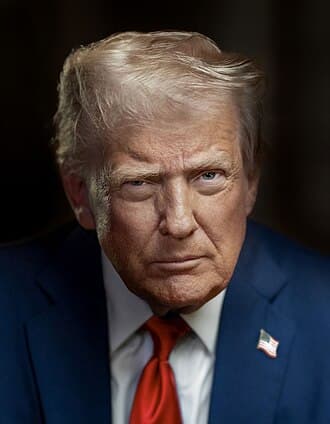
Two wound structures that cannot share the center
Both: early powerlessness converted into architectures of dominance
Structural collision - visibility as the specific conflict point
Alliance built on shared interest, unsustainable without one subordinate
When the ally becomes too prominent, the alliance is in structural danger
Two Wound Structures Entering the Room
Musk grew up in Pretoria, South Africa, in a household he has described with increasing candor as emotionally cold and sometimes violent. He has spoken about his father Errol Musk in terms that suggest profound and unresolved contempt: "He was such a terrible human being," he told biographer Walter Isaacson. "You can't imagine how terrible." He was severely bullied at school, once beaten badly enough to be hospitalized. He built everything afterward as a systematic construction of a world where he is never again the person without power. SpaceX, Tesla, Neuralink, the purchase of Twitter: each represents a domain in which he is not only powerful but definitionally central. The companies are not just businesses. They are architectures of non-vulnerability.
Trump grew up in Jamaica, Queens, son of Fred Trump Sr., a real estate developer who combined material provision with approval withheld. Mary Trump's 2020 account of the family describes a household in which performance was expected but genuine regard was metered carefully, in which Fred Sr.'s love was experienced by his children as conditional on output and status. Donald Trump has spent sixty years seeking the approval that was never fully given, through escalating arenas: real estate, casinos, television, the presidency. Each arena is larger than the last. The wound requires larger and larger containers.
Both structures produced architectures of dominance. Both require the person to be, structurally, the most important person in any room they enter. This is not a personality preference. It is a wound-management strategy. The moment either man is not the center, something that feels like danger activates.
The 2024 Alliance and What Each Man Brought
Musk publicly endorsed Trump in July 2024 following the assassination attempt in Butler, Pennsylvania. He had been moving toward the endorsement for months, increasingly critical of the Biden administration on his social media platform. The endorsement was followed by a significant financial commitment to Trump's campaign through America PAC, which Musk founded and which spent over $100 million in support of the campaign.
What Musk brought to the alliance: financial resources, a massive social media platform with roughly 200 million followers, a public persona associated with technological futurism and anti-establishment credibility, and a specific kind of attention that is qualitatively different from celebrity endorsement - Musk functions as a cultural force in a way that amplifies whatever he touches.
What Trump brought: access to political power, specifically the presidency he was seeking, and the possibility of regulatory environments favorable to Musk's companies. Tesla's autonomous vehicle ambitions required federal regulatory frameworks. SpaceX's government contracts are subject to political relationships. The calculus on Musk's side was not pure ideological alignment. It was, at least partly, strategic.
Musk appears to have read Trump as someone who could be managed through demonstrated usefulness. He expected that providing resources, visibility, and the credibility of his endorsement would translate into a genuine partnership of mutually acknowledged equals. This reading requires Trump to be a different kind of person than he is.
The DOGE Role and the Visibility Problem
Following Trump's November 2024 victory, Musk was appointed as a co-leader of what was named the Department of Government Efficiency, a public-private advisory body with the mandate of identifying and cutting federal spending. The appointment positioned Musk as a Washington figure with formal (if informal) government access.
The DOGE work generated enormous press coverage. Musk appeared at rallies, stood beside Trump at press conferences, gave interviews, posted constantly on X about the cuts being made and the bureaucracy being dismantled. He was, for several months in late 2024 and early 2025, arguably the second most covered figure in American public life.
"This is the specific visibility configuration that Trump cannot sustain. He can tolerate allies who are prominent in their own domains - corporate figures, media figures, international leaders - because their prominence is in a register different from his. He cannot tolerate an ally whose prominence registers as competitive. When coverage of the ally becomes indistinguishable in volume and tone from coverage of Trump himself, the ally has crossed a structural threshold. The alliance is now in danger not because the ally has done anything wrong, but because the wound cannot distinguish between the ally's prominence and a threat."
Trump's Pattern With Prominent Allies
The historical record is consistent. Steve Bannon was central to the 2016 campaign, appeared on the cover of Time as "The Great Manipulator," and was eventually pushed out in 2017 after a period of rivalry over who was the animating intelligence of the administration. John Kelly served as chief of staff with significant initial authority and was eventually undermined and forced out. Rex Tillerson, H.R. McMaster, James Mattis - each received initial signals of partnership and eventual removal or diminishment when the relationship became inconvenient or competitive.
The pattern has a consistent structure: proximity, utility, removal when the ally's prominence reads as competitive. Trump cannot provide co-centrality. There is only one center in his world, and it is him. The ally who gets too visible becomes, structurally, a threat regardless of their actual intentions.
This is not a personality flaw in the conventional sense. It is the wound operating as designed. The wound that requires the largest possible arena also requires that arena to be unambiguously his. An ally with a large presence is not a partner. It is a complication.
The Fracture
By mid-2025, the signals of fracture were visible in the public record. Trump had made comments in interviews that positioned DOGE as a Trump initiative that Musk had been helpful in executing - a framing that subordinated Musk rather than partnering with him. Musk's posting on X had begun to include criticism of specific Trump administration decisions and legislative priorities. The proximity had cooled into something more like maintained distance.
"I've been clear that I don't agree with everything," Musk said in a May 2025 interview. The statement is mild. The terrain fact that it represents - a public disagrement from someone whose entire contribution to the alliance had been uncritical support - marked the alliance's terminal condition.
Neither wound structure accepted subordination. Neither wound structure could accept co-centrality. The structural prediction, present from the beginning of the alliance, was fulfilled on the schedule that wound dynamics tend to follow: roughly eighteen months from maximum proximity to visible fracture.
What the Fracture Reveals
The fracture reveals, more than the alliance did, each man's wound architecture. Trump's response - the subtle diminishment, the reframing of DOGE as his project rather than theirs - is the response of someone who experienced the prominence of a close ally as a threat and dealt with it through the only tool available to his architecture: redefinition of hierarchy.
Musk's response - the continued public activity, the criticism, the maintenance of his platform's independence from Trump's favor - is the response of someone whose wound cannot accept being subordinated, who will sacrifice the alliance rather than accept a junior position. He built his entire life to never be the junior person again.
They are both doing exactly what their wounds require. The outcome was not contingent on decisions, affection, or alignment. It was written in the architecture.
References
- Isaacson, Walter. Elon Musk. Simon & Schuster, 2023. - Trump, Mary L. Too Much and Never Enough: How My Family Created the World's Most Dangerous Man. Simon & Schuster, 2020. - Blair, Gwenda. The Trumps: Three Generations of Builders and a Presidential Candidate. Simon & Schuster, 2000. - Swan, Jonathan. "Inside Trump's Head." Axios, various 2017-2021. - D'Antonio, Michael. The Truth About Trump. Thomas Dunne Books, 2015. - America PAC FEC filings, 2024. - Musk, Elon. Posts on X (Twitter), 2024-2025. - Various coverage in The New York Times, The Wall Street Journal, and Politico, November 2024-May 2025.
---
Interpretive opinion based on the public record. Not a clinical assessment or diagnosis of any individual.