Elon Musk
Control architecture as a response to early powerlessness. The man who builds systems of total influence while describing a childhood of total isolation.
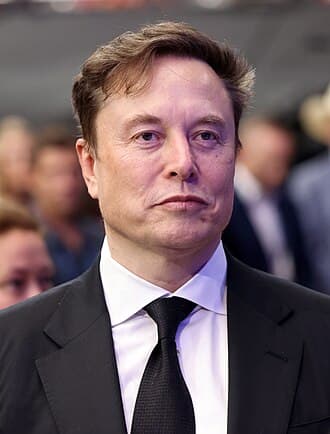
Control architecture as wound response
Early powerlessness / paternal rejection / profound isolation
Systems of total influence as compensation
Instrumental attachment
Identity fusion with mission
The Pretoria Wound
Musk was born in Pretoria, South Africa in 1971. He has described his childhood in public with the kind of specificity that makes a wound legible, and with a frequency that suggests it has not been resolved. In Walter Isaacson's 2023 biography, Musk describes an incident in which a group of boys threw him down a flight of stairs, then beat him severely enough that he required hospitalization. He missed weeks of school. The ringleader was someone he had considered a friend.
That last detail is load-bearing. The betrayal is not merely violence but misclassification: someone he had trusted turned out to be someone who would hurt him the moment a social coalition formed around doing so. The lesson installed in that stairwell was not simply that the world is unsafe, but that the category of friend is unreliable - that social membership does not confer safety, that the perceived ally is a latent threat whose loyalty is conditional on circumstances you do not control. The only durable solution that proposition generates is a position from which you hold more structural power than everyone around you. Not friendship. Architecture.
He told Isaacson: "I had a terrible upbringing. Just terrible. I shouldn't tell you this, but let me tell you." The preface is the data. The hedge "I shouldn't tell you this" performs reluctance while the sentence immediately delivers anyway. This is a characteristic move in his public speech: a frame that positions him as someone reluctantly disclosing, followed by immediate disclosure. It converts confession into controlled narrative. It maintains the appearance of vulnerability while preserving the authority to shape exactly what is revealed and when.
Notice what is almost never present in his public accounts of childhood suffering: grief. He describes the events with the analytical clarity of someone who processed them as tactical problems rather than emotional ones. The wound got converted into information. The information became a blueprint.
The Father
Errol Musk, Elon's father, has given numerous interviews describing his relationship with his son, his views on Elon's success, and his own character. The interviews are consistent in what they reveal: a man for whom withholding approval functions as a form of power, who dispenses cruelty in the form of observation rather than outright attack, and whose relationship to his extraordinarily accomplished son is organized primarily around demonstrating that he is not impressed.
In a 2023 interview with the Daily Mail, Errol said: "He was not a happy child. He's still not a happy man." This is offered not as a sympathetic observation but as a verdict. Elsewhere he has described his son as emotionally impaired, suggested that his success traces primarily to childhood instruction from Errol himself, and referred to Maye Musk in denigrating terms. He has spoken about fathering a child with his own stepdaughter and defended the relationship without apparent awareness of how it registers to outside observers.
A parent who cannot allow a child to exceed him will find the tools to prevent it, even after the child has exceeded him in every measurable category. Errol found those tools in the register of psychological authority. He cannot reduce Elon's net worth or company valuations. He can suggest that none of it makes Elon happy or adequate. He can imply that the success is partly his own. He can continue to grade.
The child of that environment learned a specific and accurate lesson: approval is a resource that powerful people withhold as a form of control. The lesson installed correctly reads the dynamic. Its tragic consequence is that the child who learned it accurately becomes an adult who replicates the structure, because the structure is the only architecture of relationship that was thoroughly taught. Loyalty tests at companies. Sudden terminations without stated reason. Affection that functions as a performance metric rather than a baseline condition. These are not aberrations of character. They are the faithful output of the original classroom.
Linguistic Fingerprint
Musk's characteristic public speech reveals structural patterns worth mapping. He uses hyperbolic escalation as a baseline rhetorical register: things are not concerning, they are existential; not large, but civilization-scale; not bad, but civilizational catastrophe. When challenged on factual grounds he pivots to the civilizational frame, which is not falsifiable at the same register as the original claim. The move neutralizes criticism by changing the playing field.
He is a heavy user of the first-person plural in self-description: "We need to colonize Mars." "We are the backup drive for consciousness." The "we" that includes all of humanity simultaneously erases the individual speaker and positions him as humanity's authorized representative, someone whose goals are coextensive with the species' survival. This is not ordinary corporate "we." It is a rhetorical move that makes disagreement with him equivalent to disagreeing with human civilization's continuation.
He compresses emotional processing into functional framing. When asked about painful experiences - the Pretoria beating, failed relationships, the removal from company CEOships - he describes them as "interesting," "informative," or "motivating." The compression is real and not performative in origin, but it forecloses the territory where actual integration would have to happen. What gets called "resilience" in profiles of him is more precisely the conversion of pain into operational data, which preserves the wound's structure while extracting its energy.
Key Insight: The man who built feedback loops for rockets, cars, and neural interfaces never built one for himself. The system that monitors everything has no instrument pointed inward.
What He Never Said
Musk has spoken extensively in public for thirty years. There is a specific absence in that record that functions as diagnostic as the presences.
He has never, in any public statement recoverable from the record, described a moment of genuine relational repair with another adult. He describes conflict, removal, betrayal, and his own persistence through those events. He does not describe a moment where he was wrong in a dispute with a person he valued, acknowledged it to that person, and had the relationship deepen as a result. That arc - rupture, acknowledgment, repair, deepened trust - is present in almost everyone's public account of their closest relationships. Its sustained absence in his is not a gap in the record. It is a feature of the territory.
Similarly: he has never described feeling genuinely seen by another adult in a non-instrumental context. His descriptions of relationships - including with his children, his partners, and his collaborators - are organized around what was accomplished, what was built, what was survived, or what was lost. The experience of being known rather than useful, and finding that valuable, does not appear in the record.
What he conspicuously never admits is that he needs people. The companies need people. The missions need people. He, as a subject distinct from his enterprises, is presented as the motive force who requires inputs - loyalty, execution, performance - but not as someone whose interior life is shaped by the quality of his connections. The architecture of self-sufficiency is exactly the architecture that the original wound required. The boy who was betrayed by the person he called a friend eventually built worlds in which he could never be in that position again: not by finding better friends, but by ensuring he never needed any.
The Company Sequence and the Escalation Logic
Zip2 (1995-1999). X.com, which merged into PayPal (1999-2002). SpaceX (2002-present). Tesla (2003; joined board 2004; CEO 2008-present). The Boring Company (2016). Neuralink (2016). Twitter/X (2022-present). xAI (2023). DOGE, Department of Government Efficiency, as an informal governmental role (2025).
This sequence is not the ordinary expansion of a successful entrepreneur's portfolio. It is an escalation pattern with a specific internal logic. Each new company involves a larger claim on reality than the previous. Electric cars. Reusable orbital rockets. Brain-computer interfaces. The acquisition and transformation of the world's primary forum for political speech. Artificial general intelligence. The restructuring of the United States federal government.
The escalation never reaches a natural ceiling, because the ceiling is not external. It is internal, and it keeps moving. Musk has described the colonization of Mars as an insurance policy for the survival of human consciousness. He has framed the development of AGI as something that must be done even if it risks human civilization, because not doing it risks it more. The stakes assigned to himself are not the stakes of a person who has achieved enough. They are the minimum stakes required to keep the engine running against the original proposition: that he is, at some fundamental level, the small boy in Pretoria who could not protect himself.
The hinge that was never crossed is legible in the record. In 2002, after the PayPal acquisition by eBay, Musk received approximately $180 million. He had enough money to live comfortably for the rest of his life. He had already succeeded by any reasonable external standard. The question that moment posed was: is the achievement enough, or does the achievement only prove that the achievement was not the point? He answered it by immediately pouring the PayPal money into SpaceX and Tesla, both ventures that nearly bankrupted him within six years. That was the hinge. He chose to remain in the engine rather than step outside it.
Key Insight: The colonization of Mars is not a business plan. It is the only destination large enough to stay ahead of the original wound.
The Cofounder Pattern
At Zip2, Musk clashed with cofounders Kimbal Musk and Greg Kouri over strategic direction and was removed as CEO before the company's sale. At X.com, he was removed as CEO while traveling on his honeymoon; the removal was executed by the board with Peter Thiel and others. He received a payout when the company sold to eBay, but the experience of being displaced from something he had built produced a reaction that would repeat across the following decades.
At Tesla, the original cofounders Martin Eberhard and Marc Tarpenning were eventually pushed to the margins as Musk took control. Eberhard was removed as CEO in 2007. Both later disputed Musk's claims about the founding narrative. Tesla settled the resulting dispute with all five founding members - Musk, Eberhard, Tarpenning, Ian Wright, and JB Straubel - acknowledged in the settlement. What is notable is not that there was a dispute but the specific nature of it: Musk could not tolerate a founding story in which he was one participant among several. The founding story had to be reorganized around him as primary origin.
The pattern across multiple companies is consistent: people who were present at the origin are eventually removed, diminished, or made to accept a revised account. This is not incidental organizational behavior. It is the wound operating at the level of institutional narrative. The person who was taught that trusted others will eventually hurt you and rewrite the story cannot tolerate a structure in which someone else holds a founding claim equal to his own. The cofounder who remains in good standing over time is the cofounder who accepts a subordinate role in the narrative, or who has a relationship to the founding that cannot be disputed. Kimbal Musk, who shares the original wound and cannot plausibly claim to be the real founder of SpaceX, has remained proximate.
Shadow Behavior: The Bully Who Was Bullied
Musk was the documented target of sustained physical and social violence in childhood. This history has been central to his public self-presentation and is clearly real. What is also documented, and less often placed in the same frame, is a pattern of behavior toward others that reproduces key structural features of the environment he describes escaping.
He has publicly mocked a disabled engineer using physical imitation. He has posted the phone numbers and travel information of journalists whose coverage he disliked. He has used his platform to amplify targeted harassment campaigns against private individuals. He fired employees via mass email with no individual notice. He has publicly humiliated executives at companies he controls, in front of those executives' reports. He described a whistleblower at Tesla as having a "brain the size of a walnut."
The structure of each of these incidents matches the structure of the Pretoria stairwell, with the positions reversed. A small group or institution with less structural power than Musk. Public humiliation, or removal, or mockery. The application of superior resources to someone who cannot respond in kind. He disowns this behavior when it is named directly, describing it as competitive, or honest, or simply the cost of running fast-moving organizations. The disavowal is the shadow mechanism at work. What cannot be acknowledged is the repetition of the scene with the roles exchanged.
The Twitter/X Acquisition
In April 2022, Musk offered to acquire Twitter for $44 billion. He attempted to exit the agreement after signing it, was sued by Twitter's board, and completed the acquisition in October 2022 under legal compulsion. He then immediately fired approximately 80% of the workforce, eliminated the content moderation infrastructure, restored hundreds of accounts previously banned for policy violations, restructured the platform's algorithmic amplification to favor his own account, and renamed the company X.
The financial outcome was severe. Advertisers departed. The platform's estimated market value dropped by roughly half within a year. The engineering workforce was reduced so aggressively that basic platform reliability degraded publicly.
The psychological question is not the business logic. It is this: someone paid $44 billion for something and immediately did to it the things most likely to destroy what gave it value. Twitter's value was network effects - the self-reinforcing presence of users whose continued presence attracted more users. Network effects depend on institutional trust. Institutional trust was the first thing he targeted. The wound around control does not reliably distinguish between changing something and breaking it. It knows only that the uncontrolled is unsafe and the controlled is survivable.
The deeper pattern is in what he created after acquiring control: a platform algorithmically optimized to distribute his own speech above that of all other users, regardless of engagement or relevance. He bought the amplifier and turned it up for himself. The small boy in Pretoria, who had no voice in the social structure that targeted him, eventually bought the largest amplifier available and set himself at its center.
Relationships and Children
Musk has twelve acknowledged children with four women. He has repeatedly stated publicly that population decline is among the most serious threats facing human civilization and has described having large numbers of children as aligned with that stated concern. The framing converts a personal behavior into a civilizational policy position, which is characteristic: the personal becomes meaningful by its alignment with the mission scale.
One of his daughters, Vivian Jenna Wilson, transitioned and legally changed her name. She has publicly stated she wants no relationship with her father. She said: "I don't support him. He's a very selfish person." He has not, in any recoverable public statement, engaged with her account of her own experience, acknowledged her stated reasons, or expressed anything resembling a concession about what she describes.
The relational data across his life is consistent with instrumental attachment - connection organized around what the person provides or represents, rather than the intrinsic fact of the person. This is not a character flaw in the ordinary sense. It is an architecture built from what the original environment taught: that people are safe only to the extent that their role in your structure is clear, that unconditional relational worth is not a real category, and that the closest thing to love available is a stable function. It is the lesson Errol Musk administered. It has been transmitted forward with precision.
The Hinge
In 2008, SpaceX had failed three orbital launches consecutively. Tesla was nearly insolvent. Musk was about to run out of money to continue funding both companies and was borrowing from friends to pay his rent. He split his last remaining reserve between the two companies, enough for one more launch attempt each.
The fourth launch succeeded. A NASA contract followed. Tesla raised an emergency round. Both companies survived.
This is the story he tells most often about himself, and it is a genuine account of extraordinary risk tolerance and commitment. What is also true is that the decision to split his last funds between two extinction-level bets rather than protect one or retreat from both is not the decision of someone operating from a stable foundation. It is the decision of someone for whom the possibility of survival without the mission is not a live option. The wound requires the stakes. The stakes require the wound. When Musk describes that 2008 moment, he describes it as the hardest of his life. He never describes considering withdrawal as a real alternative. The absence of that possibility from his account of the worst moment is the map's essential data.
The compressed truth of the structure: a boy who could not be physically safe built a position from which he cannot be institutionally reached, and mistook the position for the resolution.
References
- Isaacson, Walter. Elon Musk. Simon & Schuster, 2023. - Vance, Ashlee. Elon Musk: Tesla, SpaceX, and the Quest for a Fantastic Future. Ecco, 2015. - Musk, Elon. Interview with Joe Rogan. The Joe Rogan Experience #1169, September 2018. - Musk, Elon. TED interview with Chris Anderson, April 2022. - Errol Musk. Interview with Daily Mail, 2023. - Errol Musk. Various interviews, South African and international outlets, 2017-2023. - Eberhard, Martin, and Marc Tarpenning. Settlement documentation re: Tesla founding, 2009 (public record). - Mac, Ryan. "Inside the Chaos of Elon Musk's Twitter." The New York Times, 2022-2023. - Musk, Vivian Jenna Wilson. Public statements and legal filings, 2022 (public record). - Berger, Eric. Liftoff: Elon Musk and the Desperate Early Days That Launched SpaceX. William Morrow, 2021.
Interpretive opinion based on the public record. Not a clinical assessment or diagnosis of any individual.