Donald Trump
The wound of conditional approval produced in Jamaica Estates by Fred Trump Sr. is still running. It has been running through every deal, every campaign rally, and every executive order. The presidency did not change the terrain. The terrain used the presidency.
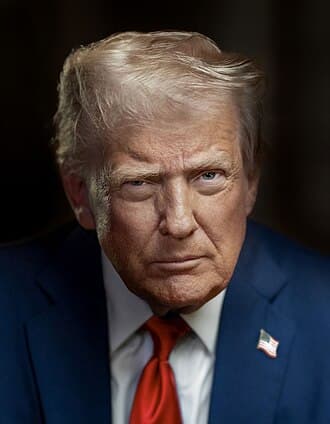
Approval wound as operating system
Conditional approval from Fred Trump Sr.
Terrain behaviors mistaken for strategy
Loyalty over competence - departure as betrayal
Outer-borough hunger for Manhattan recognition
Fred Trump: The Architecture of Conditional Worth
Fred Trump Sr. built a real estate empire in Queens and Brooklyn by being, in his own telling, a tough and unsentimental businessman. He transferred wealth to his children through mechanisms that the New York Times, in a 2018 investigation, found included methods that constituted tax fraud. He demanded performance from his children and measured them against standards he set and occasionally moved.
Mary Trump, a clinical psychologist and Fred Sr.'s granddaughter, published Too Much and Never Enough in 2020. Her analysis of the family system is specific: Fred Sr. could not tolerate weakness, emotional displays, or uncertainty. He rewarded aggression and self-promotion and punished vulnerability. The result was a family system in which approval was available but never secure.
Mary Trump's description of Fred Sr. is clinical rather than merely anecdotal. She identifies a pattern of conditional love that, in her analysis, produced in Donald "a fear of appearing weak, a need to be seen as a winner, and a compulsion to lie when reality did not match the required self-presentation." She had access to family documents and firsthand experience that most outside analysts do not. Her account is the most specific available.
The wound is not rejection. It is conditional acceptance: I am loved, but the condition could be withdrawn. That specific structure produces a particular kind of person, one for whom the approval alarm is always running, for whom no achievement fully quiets it.
Freddy Trump: The Cautionary Tale
Fred Trump Jr., known as Freddy, was Donald's older brother. He wanted to be an airline pilot. Fred Sr. did not consider this a serious ambition for a Trump. Freddy became a Trans World Airlines pilot anyway, and Fred Sr.'s contempt for the choice was undisguised.
Freddy developed alcoholism. He died of a heart attack in 1981 at forty-two. Donald Trump has spoken about Freddy's death in terms that are consistently framed as a lesson in the dangers of weakness. He has said that watching Freddy's decline is why he does not drink.
The dynamic between the brothers, from Donald's side, is a terrain record. Freddy chose what he loved over what his father demanded and was destroyed by the family's contempt for that choice. Donald chose what his father demanded. He was rewarded. The lesson the surviving brother took, or the lesson the family system delivered, was that softness kills and aggression survives. That lesson has been running in every documented behavior pattern since.
Queens to Manhattan: The Geography of Hunger
Fred Sr. built in Queens and Brooklyn. He was wealthy, but in New York City's status geography, outer-borough wealth occupies a specific and subordinate position relative to Manhattan. The people who mattered, who appeared in the society pages and the cultural life of the city, lived in Manhattan.
Donald Trump's real estate career is not simply about money or profit. It is about occupying the center of the city that treated his father's zip code as peripheral. His moves into Manhattan in the late 1970s and 1980s were not merely strategic. They were corrective. The Commodore Hotel redevelopment in Midtown, completed as the Grand Hyatt in 1980. Trump Tower on Fifth Avenue, completed in 1983, with his name in six-foot bronze letters at the entrance. The Plaza Hotel, purchased in 1988 for $407.5 million, a price that most analysts considered above market.
"I want to be known not as Donald Trump the New Yorker but as Donald Trump the international superstar," he told the journalist Timothy O'Brien in the early 2000s. The formulation is revealing: the appetite is not for money, which he already had, but for recognition at the largest possible scale. His real estate career is a terrain response before it is a business strategy.
The Approval Alarm: How It Runs
The behavioral signature across sixty years of public record is consistent in ways that strategic behavior rarely is. Unusual sensitivity to slights. Inability to let criticism pass without response. The need to reframe every loss as something other than a loss. Orientation toward the largest available audience.
His calls to journalists over decades are documented in multiple sources. Bob Woodward, Wayne Barrett, and Timothy O'Brien have each described receiving calls from Trump in which he solicited their opinions of him, asked whether they thought he was doing well, sought reassurance from the people most likely to scrutinize him. Barrett wrote that Trump would call journalists he barely knew to ask, essentially, "What do you think?" The approval alarm does not distinguish between friends and critics. It runs toward anyone who might provide the signal.
Aides during the presidency described similar patterns. Trump monitored cable news coverage of himself with unusual intensity, reacting in real time to praise and criticism. He described crowd sizes at rallies in terms that press accounts and aerial photographs repeatedly contradicted. When aides brought accurate figures, the accurate figures were rejected.
"These are not strategies. They are terrain behaviors, patterns the wound runs automatically, regardless of context or consequence. The consistency across sixty years and multiple roles is the most important data. Strategic behavior adapts to context. The approval alarm does not."
The Presidency: Where the Wound Was Most Exposed
The office of the presidency requires capacities that the wound described here structurally cannot provide. The capacity to absorb failure without reframing it as victory. The capacity to acknowledge error without experiencing it as annihilation. The capacity to share the frame with subordinates, allies, and adversaries without experiencing their prominence as a threat to your own.
The specific presidency-era behaviors that most directly index the wound include: the insistence that the 2017 inauguration crowd was the largest in history despite photographic evidence to the contrary; the characterization of virtually every departure from his administration as the departure of incompetent or disloyal people despite the uniformity of the pattern; and the refusal to concede the 2020 election, which was not a strategic position but a wound response to the specific unbearability of loss at the largest available stage.
His former chief of staff John Kelly told the press in 2023 that Trump had said, "I need the kind of generals that Hitler had, people who were totally loyal to me personally." Whether or not that precise formulation is accurate, it coheres with the terrain. The relational architecture the wound produces is loyalty above competence, presence above capability, and departure interpreted as betrayal.
The presidency did not change the terrain. The terrain used the presidency.
References
- Trump, Mary L. Too Much and Never Enough: How My Family Created the World's Most Dangerous Man. Simon & Schuster, 2020. - Blair, Gwenda. The Trumps: Three Generations of Builders and a Presidential Candidate. Simon & Schuster, 2000. - D'Antonio, Michael. The Truth About Trump. Thomas Dunne Books, 2015. - Johnston, David Cay. The Making of Donald Trump. Melville House, 2016. - Barrett, Wayne. Trump: The Deals and the Downfall. HarperCollins, 1992. - O'Brien, Timothy L. TrumpNation: The Art of Being The Donald. Warner Books, 2005. - Barstow, David, Susanne Craig, and Russ Buettner. "Trump Engaged in Suspect Tax Schemes as He Reaped Riches From His Father." The New York Times, October 2, 2018. - Wolff, Michael. Fire and Fury: Inside the Trump White House. Henry Holt, 2018.
---
Interpretive opinion based on the public record. Not a clinical assessment or diagnosis of any individual.