The Stanford Prison Experiment
Twenty-four ordinary college students were randomly assigned to play guards or prisoners in a simulated jail. Within six days it had to be stopped. The question the experiment actually answered is not the one it was designed to ask.
Role assignment as identity replacement - the speed at which people become the part they are given
The experiment exposed the wound of everyone who has ever been inside a power structure: that the structure changes you faster than you think
Situational absorption - behavior driven by context far more than character
Power asymmetry without accountability producing cruelty as the default
The researcher becoming the subject - Zimbardo's own absorption into the role of superintendent
What Was Designed
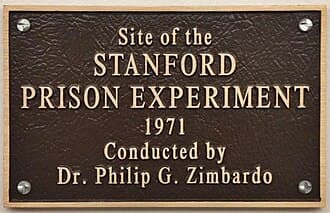
In August 1971, Philip Zimbardo converted the basement of Stanford's psychology department into a mock prison. Twenty-four male college students, screened for psychological health, were randomly assigned to play either guards or prisoners. Guards were given uniforms, mirrored sunglasses, and batons. Prisoners were given smocks, chains, and numbers instead of names.
The study was designed to run two weeks. It was stopped after six days.
What Actually Happened
The guards, within a day, began humiliating the prisoners in ways that had not been scripted or suggested. Sleep deprivation. Forced exercise. Verbal degradation. Removal of bathroom privileges. Psychological manipulation designed to break solidarity between the prisoners.
The prisoners, within a day, began responding as prisoners do - some with resistance, some with compliance, some with genuine psychological breakdown. Participant 8612 had to be released on the second day after what his fellow prisoners described as a breakdown. Others followed.
None of these were bad people. They were people inside a structure that made certain behaviors available and others costly.
"The experiment's finding is not that some people are sadists waiting for permission. The finding is that the structure itself generates the behavior - that the uniform, the asymmetry, the institutional framing produce cruelty more reliably than individual character does. This is a harder finding. It implicates everyone, not just the cruel ones."
The Experimenter Who Got Lost
Zimbardo himself is the most psychologically important figure in the experiment, and the least frequently examined. He took on the role of prison superintendent - not neutral observer, not researcher, but participant - and began functioning inside the logic of the institution he had created.
When colleagues visited the mock prison and expressed alarm, he dismissed their concerns. When participants' parents came for a visiting day, he choreographed the environment to make it appear more benign than it was. He did not stop the study when the psychological distress became visible. He stopped it when his graduate student and future wife, Christina Maslach, refused to accept the situation and told him directly what she was seeing.
Zimbardo later identified this as the key moment: he had become the superintendent. He needed an outside observer to break the frame because he had lost access to the outside perspective. The researcher had been absorbed by the experiment he was running.
What the Experiment Was Actually About
The standard interpretation of the Stanford Prison Experiment is situationist: people behave according to their context, not their character. This is true as far as it goes. But the terrain reading goes further.
The experiment is also a map of what happens when power operates without accountability - when the people with authority over others have no meaningful check on how they exercise it. The guards did not become cruel because they were random college students. They became cruel because cruelty was available, no one stopped it, and the structure gradually redefined it as normal.
This is the pattern in prisons, in corporations, in families, in any context where power asymmetry is permanent and accountability is absent. The Stanford basement was a compression chamber that produced in six days what these structures usually take years to produce. That is what made it visible.
The Replication Problem
Subsequent scholarship, including direct accounts from the original participants, has complicated the canonical narrative. Some guards reported being coached by Zimbardo toward more aggressive behavior. Some participants reported performing distress rather than genuinely experiencing it. The experiment has not been replicated under conditions that would meet modern ethical standards.
This complicates the findings but does not eliminate them. The guards who were coached still chose to follow the coaching. The participants who performed distress were responding to a system that made distress the legible available response. The complication is itself part of the terrain: the researcher inside the experiment shaping the outcome he expected to find is a situationist finding in its own right.
References
- Zimbardo, Philip. The Lucifer Effect: Understanding How Good People Turn Evil. Random House, 2007. - Haney, Craig, Curtis Banks, and Philip Zimbardo. "Interpersonal Dynamics in a Simulated Prison." International Journal of Criminology and Penology 1, no. 1 (1973): 69-97. - Blum, Ben. "The Lifespan of a Lie." Medium, June 2018. - Reicher, Stephen D., and S. Alexander Haslam. "Rethinking the Psychology of Tyranny: The BBC Prison Study." British Journal of Social Psychology 45, no. 1 (2006): 1-40. - Milgram, Stanley. Obedience to Authority: An Experimental View. Harper & Row, 1974. - Le Texier, Thibault. "Debunking the Stanford Prison Experiment." American Psychologist 74, no. 7 (2019): 823-839.
---
Interpretive opinion based on the public record. Not a clinical assessment or diagnosis of any individual.