Musk and Space
He says it is about survival of the species. That is not wrong. But the species-survival argument does not explain the urgency, the personal identification, or the fact that no amount of progress is ever enough. The map underneath the mission is about something smaller and older than humanity.
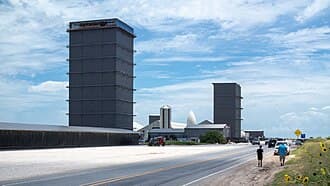
Escape as the organizing fantasy - space as the ultimate version of leaving a place that was not safe
A childhood defined by confinement, powerlessness, and a father who made the immediate environment feel inescapable
The species-level mission as the largest possible container for a wound that is personal
The self fused with the mission - criticism of SpaceX lands as an attack on the person
Urgency as regulation - the apocalyptic timeline keeps the internal engine running
The Official Explanation
Musk's stated reason for the space program is civilizational insurance: humanity needs to become multiplanetary because Earth is a single point of failure. Asteroid strikes, nuclear war, climate collapse, pandemic - any of these could end the species if we have not established a presence elsewhere. Mars is the backup drive.
This argument is logically coherent. It is also shared by a number of serious scientists and thinkers who do not found rocket companies or describe themselves as feeling physically ill at the thought of SpaceX failing. The argument explains why someone might intellectually endorse space colonization. It does not explain Musk.
The gap between the intellectual argument and the visceral urgency is where the map lives.
The Childhood the Mission Is Not Supposed to Be About
Musk grew up in Pretoria, South Africa, in an environment he has described as genuinely dangerous. He was bullied savagely - once beaten badly enough to be hospitalized. His father, Errol Musk, is a figure he has described as "evil" in multiple interviews, a man who subjected him to hours-long verbal attacks, withheld warmth as a form of control, and made the home environment feel as threatening as the school environment.
The relevant psychological fact is not the content of the abuse. It is the structure: a child in an environment from which there is no exit. Nowhere safe. The home is dangerous. The school is dangerous. The country is dangerous. The continent is dangerous. There is no place to go that is not, in some configuration, a version of the same problem.
"When a child cannot exit a threatening environment, the psyche does something specific: it generates the fantasy of the ultimate exit. Not just leaving the room. Not just leaving the school. Leaving in a way that could never be reversed, could never be reached back into, could never be threatened from behind. The child who survives an inescapable environment often builds their life around the dream of the escape that would finally be complete."
Space is the ultimate version of this. It is not just a different country. It is a different planet. It is the exit that no one who remained behind could follow.
Why Mars Specifically
Musk does not talk about the Moon as the destination. He talks about Mars - a place that is, under current technology, a one-way trip. You cannot easily come back from Mars. This is not a bug in the mission design. It is, psychologically, the point.
The fantasy is not vacation. The fantasy is irreversible relocation. A place so far that the original threatening environment becomes genuinely unreachable. The physics of Mars colonization - the cost, the distance, the permanent nature of settlement in the near term - map precisely onto the psychological structure of the escape fantasy at its most complete.
The Urgency That Never Resolves
SpaceX has, by any reasonable measure, succeeded beyond what most observers thought possible. Reusable rockets. Crew Dragon. Starship. The company has changed the economics of space access permanently. None of this has reduced Musk's urgency. If anything, success accelerates the timeline rather than providing relief.
This is the signature of a wound-driven mission: completion does not satisfy. Every milestone produces not a sense of arrival but a new, larger target. The goalposts do not move because Musk is dishonest about the mission. They move because the mission was never really about the milestones. It was about the internal state the mission manages.
The man who is running from something can never arrive anywhere. Every destination is just the next place from which the running continues. The rockets get better. The urgency stays constant. The two facts are not in contradiction. They are describing the same engine.
The Species as the Self
Musk speaks about humanity's extinction risk in a register that is personal rather than abstract. He has said he would feel physically ill if SpaceX failed. He has described the possibility of humanity never becoming multiplanetary as something he finds genuinely unbearable, not just unfortunate.
This is not how most people relate to abstract civilizational risk. The intensity is the signal. What Musk is describing when he talks about the species going extinct is not a distant philosophical problem. It is a projection of a personal terror onto the largest available canvas.
The species surviving by escaping Earth is Elon Musk surviving by escaping Pretoria, scaled to the size required to make the mission feel large enough to hold what is actually driving it. The wound required a mission commensurate with its scale. A child's suffering is not supposed to feel species-scale. But for the child inside the wound, it always does.
What This Does Not Diminish
None of this makes the rockets less real. The engineering is real. The achievement is real. The possibility that humanity does, eventually, need a second location is real.
The psychological map does not discredit the mission. It explains the fuel. Every genuine achievement in human history has been driven partly by forces the achiever could not fully see in themselves. The question is not whether Musk's wound is powering the mission. It clearly is. The question is what happens when the man carrying the wound finally runs out of planet to leave.
References
- Isaacson, Walter. Elon Musk. Simon & Schuster, 2023. - Vance, Ashlee. Elon Musk: Tesla, SpaceX, and the Quest for a Fantastic Future. Ecco, 2015. - Musk, Elon. "Making Humanity a Multi-Planetary Species." New Space 5, no. 2 (2017): 46-61. - Musk, Elon. Interview with Joe Rogan. The Joe Rogan Experience #1169, September 2018. - Musk, Elon. TED interview with Chris Anderson, April 2022. - Berger, Eric. Liftoff: Elon Musk and the Desperate Early Days That Launched SpaceX. William Morrow, 2021.
---
Interpretive opinion based on the public record. Not a clinical assessment or diagnosis of any individual.