Prince
He changed his name to a symbol no one could say, then spent years being called The Artist Formerly Known As Prince. The refusal to be named was the clearest statement he ever made about what the music industry does to a person.
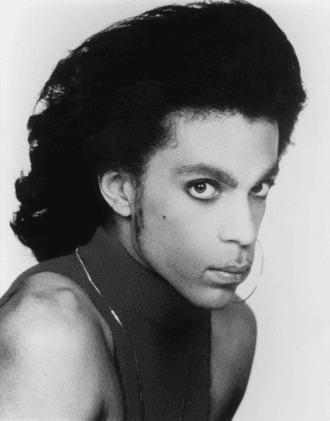
Control over creative output as the only reliable safety
Childhood instability and physical vulnerability (epilepsy, absent parents)
Continuous identity reinvention as both protection and genuine expression
Stage exhibitionism masking extreme private withdrawal
The body as final site of control, and final betrayal
The Kid from North Minneapolis
Prince Rogers Nelson was born in Minneapolis in 1958. His father John L. Nelson was a jazz musician who named his son after his stage name. His mother Mattie Shaw was a jazz singer. They separated when Prince was seven. He was shuttled between households, between his father, his mother, her new partner, and eventually a family named Anderson who took him in.
He was also epileptic as a child. He told his mother it was because of the angel he saw. There is no clinical weight to place on that explanation, but there is psychological weight. A child whose body seizes without warning, who cannot control when he loses consciousness, who carries a condition that marks him as different: that child learns early that the body is not safe, and that other people cannot be trusted to protect you from it.
Music was the first thing he could fully control.
The Symbol and the Slave
In 1993, Prince changed his name to an unpronounceable glyph, a combination of the symbols for male and female with an added horn-like element. He began appearing publicly with the word "slave" written on his cheek. The press mocked him.
The context: he was in a dispute with Warner Bros. over ownership of his master recordings and the pace of his release schedule. The label owned the name Prince. If they owned the name, they owned, in a meaningful sense, him. The symbol was not a publicity stunt. It was a legal and psychological maneuver. You cannot own a symbol that has no agreed pronunciation. You cannot summon a person who has no name.
The years of being called The Artist Formerly Known As were, from his perspective, exactly correct. That was what Warner Bros. had done to him.
The Stage as the Only Honest Space
Prince gave interviews reluctantly, briefly, and often evasively. He granted access to almost no one. He lived behind gates on a compound outside Minneapolis. He converted to Jehovah's Witnesses in 2001 and used its tenets, particularly around modesty and discretion, as additional architecture for withdrawal.
And then he walked onstage and became something entirely different.
"The stage was not performance for Prince in the way it is for most artists. It was the only space where the interior life, which he protected with extraordinary rigor in every other context, was permitted to be fully visible."
The paradox of extreme private reticence and extreme public exhibitionism is not unusual in people whose early lives taught them that ordinary social space is not safe. The stage is controlled. The audience cannot touch you. The performance sets the terms.
Reinvention as Architecture
Prince changed his sound, his visual aesthetic, his band configurations, his label arrangements, and his name itself across a career that spanned five decades. Critics often described this as restlessness. It was more likely survival behavior that had become characteristic. The child who learned to keep moving, to not be fixed in one place where the next blow could find him, becomes the artist who cannot be pinned.
No single Prince album fully resembles another. This is not inconsistency. It is the signature of someone for whom becoming a stable, predictable, classifiable object was the threat.
The Elevator at Paisley Park
On April 21, 2016, Prince was found unresponsive in an elevator at Paisley Park, his compound and recording studio in Chanhassen, Minnesota. He was fifty-seven. The cause of death was an accidental fentanyl overdose. He had been taking opioids for chronic hip pain, a condition he had concealed from nearly everyone around him. His religious beliefs prohibited surgery, so the pain went unaddressed medically and managed, at the end, chemically.
He died alone in the elevator of the building where he had spent most of his adult life, a building he controlled so completely that it contained a private vault of recordings estimated at thousands of unreleased songs. The man who maintained total control over his creative output had no one present to call for help. That distance, which he had built with such deliberate care over so many decades, held until the end.
References
- Thorne, Matt. Prince. Faber and Faber, 2012. - Nilsen, Per. Dance Music Sex Romance: Prince, the First Decade. Firefly, 1999. - Nelson, Prince Rogers. The Beautiful Ones (memoir, unfinished). Spiegel and Grau, 2019. - Levy, Alan. "Prince: The Private Superstar." Rolling Stone, April 1985. - Piepenburg, Erik. Obituary. The New York Times, April 21, 2016. - Paisley Park Enterprises, incorporation and ownership records (public record). - Carver County Medical Examiner's report, June 2016 (public record).
---
Interpretive opinion based on the public record. Not a clinical assessment or diagnosis of any individual.