Marilyn Monroe
She spent her life trying to be seen as a person and kept being seen as an image. The image was built to solve a specific problem - a childhood so devoid of stable witnesses that she could not be sure she was real to anyone. The solution worked. It also made the original problem permanent.
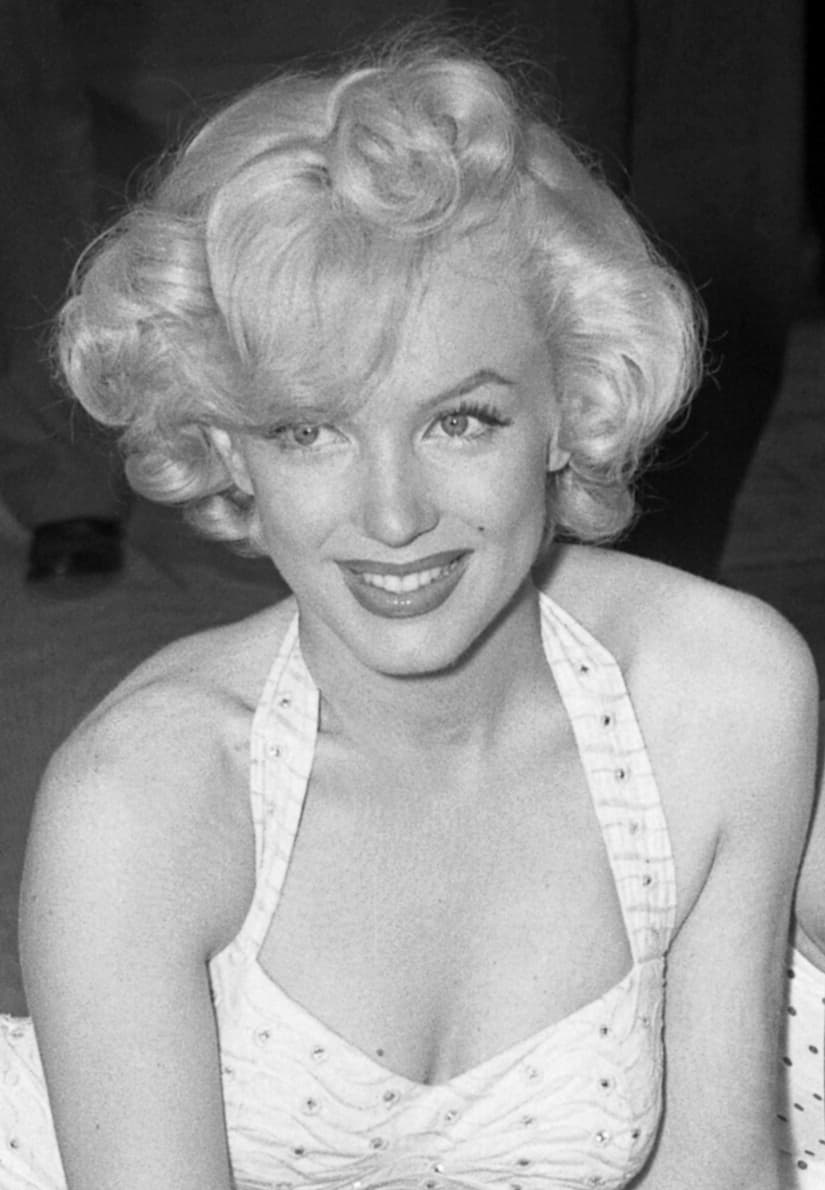
Complete identity replacement as survival architecture - Norma Jean Baker and Marilyn Monroe as two separate psychological entities
Institutionalized childhood, absent attachment figures, and the specific injury of being loved for usefulness rather than presence
The image calibrated entirely to male desire as the form love took in every early relationship
Seeking authoritative male containers for the real self; the container always fails to hold what it is asked to hold
Intellectual ambition as evidence of the self beneath the performance - the person who could not be seen
Norma Jean Baker
She was born Norma Jeane Mortenson in Los Angeles in 1926. Her mother, Gladys Baker, worked in a film processing lab and struggled with severe mental illness that produced hospitalizations throughout her daughter's childhood. Her father was absent and legally unacknowledged. From infancy, Norma Jeane was placed with foster families, neighbors, and eventually - when Gladys was hospitalized with a diagnosis that the era categorized as paranoid schizophrenia - in the Los Angeles Orphans Home Society. She was not an orphan in the technical sense. She had a mother who was alive and, on some occasions, present. The wound is more specific than orphanhood, and more damaging.
The specific injury of unpredictable attachment is well-documented in developmental research. The child who is sometimes seen and sometimes not seen by the primary caregiver develops something more unstable than the model formed in either consistent presence or consistent absence: a vigilant, searching orientation toward others, organized around the question of whether she registers, whether she is real to the person looking at her, whether presence is safe to believe in. The mother who returned and then disappeared again, the foster homes that were temporary by design, the institution that was not an orphanage but felt like one - each of these reinforced the same lesson at the level of the body, before it could be processed as thought: you are not reliably kept.
The foundational wound was not abandonment but inconsistency - the mother who appeared and disappeared according to a logic Norma Jean could not influence or predict. This produced an orienting question that she carried for the rest of her life: am I being seen, or is an image of me being seen? Are you here, or will you leave? Can I trust the witness, or will the witness disappear?
At sixteen, she married Jim Dougherty, a neighbor's son, partly to avoid returning to the orphanage when her guardian could no longer care for her. The marriage was framed publicly throughout her life as a practical exit, a kind neighbor's solution. What it also was: the first iteration of the pattern that would organize her adult life - seeking a container for a self that had never been reliably held, using the tools most available to a young woman in 1942, which were the tools of female desirability. The strategy was already formed before she had the distance to see it as a strategy.
The Construction
Her modeling career began when a photographer visiting a wartime munitions factory noticed her. By 1946 she had signed with Twentieth Century Fox and changed her name to Marilyn Monroe. The name change is worth examining at length, because it was not simply a stage name. It was a complete replacement of one identity with another, assembled with genuine craft and deliberate calibration, designed to produce a specific and powerful effect on the people in her vicinity.
The effect Marilyn Monroe was built to produce was: unignorable visibility. Norma Jeane Baker, who had spent her childhood being invisible, passed between households like a problem without a permanent address, built a persona whose entire structural function was to make invisibility impossible. No room could contain Marilyn Monroe without noticing her. The walk was studied and developed. The voice was developed - the breathy compression of it, the way it made listeners lean in as if receiving a confidence. The hair, the clothes, the specific management of eye contact: none of it accidental, all of it aimed at one target, which was the elimination of the condition that had been most threatening in childhood. To be overlooked was death. Marilyn Monroe could not be overlooked.
This is the wound at its most creative: the child who was not seen became the woman who structurally could not be unseen. The persona was the wound turned into architecture, and the architecture worked. It worked completely.
The tragedy is also structural. The visibility Marilyn Monroe produced was visibility of the image, not of the person. The men who pursued her, the directors who cast her, the photographers who made her iconic - they were seeing Marilyn, not Norma Jean. The persona was working precisely as designed, and the design made the original problem permanent. The more successfully she performed the image, the more thoroughly Norma Jean remained invisible inside it. The solution contained its own defeat: every success of the image was a confirmation that the person behind it was not what was wanted.
She understood this, at least intermittently. It surfaces in the public record with unusual directness. She said to journalist W.J. Weatherby: "I knew I belonged to the public and to the world, not because I was talented or even beautiful, but because I had never belonged to anything or anyone else." The sentence is precise about the wound - belonging to the world as the only alternative to belonging to no one - and reveals the cost of the solution without naming it as a cost.
What She Never Said
The public record of Marilyn Monroe interviews, statements, and documented private conversations contains significant absences that are as diagnostic as what is present. She spoke frequently about wanting to be taken seriously as an actress, about wanting to be seen as a person rather than a symbol, about the longing for genuine connection. What she almost never addressed directly was the gap between the persona she had built and the self she was protecting inside it - and more specifically, whether that gap could ever close.
She did not, in any substantial public statement, articulate what she actually wanted from the relationships with powerful men that organized her adult life. The marriages and attachments are discussed in terms of what went wrong, what the men failed to provide, what she was looking for. What she was looking for in precise terms - the specific form of witnessing she needed, the specific quality of containment she was seeking - remained almost entirely unarticulated. She could describe the hunger. She could not name what would satisfy it, because naming it would require acknowledging that the strategy she was using could not deliver what she needed, and that acknowledgment was not yet available.
She also almost never spoke about anger. The public emotional register was vulnerability, warmth, wit, sadness, desire. The anger that would be structurally appropriate to someone who had been institutionalized, passed between families, and loved primarily for her utility rather than her presence - that anger is almost nowhere in the documented record. It surfaces occasionally in accounts of her behavior on film sets, where she was famously late, famously unprepared in ways that cost productions considerable time and money. The lateness reads as passive aggression once you have located the anger that had nowhere direct to go. It was the most available form of power in a context where she felt structurally powerless, and it disrupted the expectations of the people who depended on her without requiring her to name it as refusal.
The Form Love Took
The image was calibrated entirely to male desire. This was not an accident of taste or training. It was a direct expression of what love had looked like in every early relational experience available to her.
Male attention had arrived before she had the architecture to understand it. Several accounts document adult men in foster care contexts and early adolescence expressing interest in her while she had no stable adult advocate to interpret or deflect what was occurring. The lesson that arrived from experience before it arrived from reflection was that male attention was available and that a particular kind of female presentation was what generated it. Love arrived as a transaction with specific terms. The image was built on the terms of the transaction.
This is not a moral observation. It is a terrain reading of how the wound shaped the strategy. The image that made Marilyn Monroe famous was built from the only blueprint for being loved that early experience reliably provided. She was not cynical about it - the hunger for genuine witness underneath the performance was real and documented throughout her life. The image was the strategy. The longing was genuine. The tragedy is that the strategy and the longing were working against each other, because the strategy produced a specific kind of male attention that could not, by design, see through to the longing underneath it.
Key Insight: The persona built to generate male attention was the most sophisticated response available to the original wound, assembled from the only materials the wound had provided. It solved the problem of invisibility. It could not solve the problem of being seen.
The linguistic fingerprint of her public statements about relationships is revealing. She consistently described what she wanted in terms of what she did not want - not to be treated like a dumb blonde, not to be seen as just a symbol, not to be used. The negative constructions outnumber the positive ones in any extended discussion of what she was seeking. She could define the wound by its absence more precisely than she could define what its healing would feel like. This is the language of someone who has been deprived of a thing for so long that the deprivation is more legible than the thing itself.
The Three Containers
The three marriages follow a legible pattern, and the pattern is not about the men. It is about the specific form of containment she was seeking and what happened when each container reached its structural limit.
Joe DiMaggio provided a different kind of visibility: the most famous baseball player in America, a man of cultural weight and physical presence, who wanted her specifically and exclusively. The marriage lasted nine months. DiMaggio's vision of a wife was organized around privacy, domesticity, and exclusive possession. He wanted the woman he had seen to belong to him and not to the world. This was precisely opposite to the architecture of the image - Marilyn Monroe was built for public visibility, and her public visibility was the condition of her sense of existing. To be DiMaggio's wife was to become invisible again, this time deliberately and at the request of the person who was supposed to witness her. The container was not too small in general. It was too small in the specific way that reproduced the original injury.
Arthur Miller offered something structurally different: intellectual legitimation. The most serious playwright in America, associated with moral seriousness and cultural weight, in a relationship with the dumb blonde of cultural imagination. The marriage was a counter-argument embedded in a relationship - evidence that the person inside the image had interior life worth a serious man's sustained attention. The strategy was legible and not cynical. She genuinely engaged with Miller's world, genuinely studied, genuinely tried to be the person the marriage suggested she was.
Miller's private journals, which she read during the marriage, contained assessments of her psychological fragility that were clinical and cold - the notes of a writer observing a subject rather than a husband present with a wife. She knew he saw the fragility more clearly than the person. The container held the image and the fragility and not what was underneath both. The marriage ended in 1961.
The pattern in the three containers is not a pattern of bad luck or poor judgment. It is a pattern of seeking, in increasingly authoritative male figures, the stable witnessing that was absent in the first attachment. The search was genuine. The strategy could not succeed because the thing being sought cannot be found through the image that is doing the seeking. The image attracted powerful men. Powerful men, organized around their own needs and structures, could not provide what the image was trying to obtain for the person it was protecting.
The Self Beneath the Performance
She read Dostoevsky, Whitman, Carl Sandburg, and Freud. She carried books to film sets and read between takes. She enrolled in classes with Lee Strasberg at the Actors Studio in New York and was described by Strasberg as one of the most talented students he had encountered - a characterization he maintained for the rest of his life, not as a courtesy to her memory but as a professional assessment.
These facts are often treated as charming anomalies that complicate the dumb blonde image - evidence that she was "more than" people assumed. The terrain reading treats them differently. They are evidence of a self that the image systematically obscured, not as a side note but as the primary thing about her that was never given adequate witness. Norma Jean Baker was intelligent, curious, serious about her craft, genuinely interested in ideas. The intellectual ambition was not a corrective to the image. It was the most direct available evidence of who she actually was.
The Actors Studio work is particularly legible. The Strasberg method requires the actor to access genuine emotion by connecting to real personal experience - to actually feel rather than to perform feeling. This is the opposite of the strategy Marilyn Monroe had been executing since 1946: the Actors Studio asked her to close the gap between the image and the person, to stop performing and start being. The reason she was good at it - genuinely good, by the assessment of serious practitioners - is that the person she had been protecting was present and capable, once the conditions existed to bring her forward.
She entered analysis with Ralph Greenson and maintained the therapeutic relationship for years. The work of analysis is partly the work of finding the self beneath the strategies that developed to manage an early environment. What she said in those sessions is not entirely in the public record. What is in the public record is a plea she made to Greenson that has survived in accounts from those who knew him: Please don't make me a joke.
The sentence is precise. Not "please take me seriously" - a request that could come from anywhere - but the specific fear of becoming a joke, a comedic object, something that people laugh at rather than see. It is the fear of the child who was passed between houses and was not kept. It is the fear that the image, which was built to solve the problem, has become a joke that confirms the problem. It is the fear that not even the analyst - the person whose professional function is to witness without judgment - will be able to see through to the person.
“Please don't make me a joke.”
Marilyn Monroe, to therapist Ralph Greenson, as reported in multiple biographical accounts
The Shadow
The public image of Marilyn Monroe was warmth, availability, vulnerability, and desire. The shadow of that image - the disowned material that leaked through - was visible in specific patterns that the public record documents without always naming as shadow.
The chronic lateness on film sets was one expression. The dependence on acting coaches and analysts for basic functional decisions was another - a way of keeping someone always in the position of the authoritative witness whose attention confirmed her reality, while simultaneously making herself ungovernable to the institutional structures that employed her. She was not passive. The image was passive. The person was not.
The shadow is also visible in the marriages: the way she consistently chose containers that would fail, and the specific manner in which she contributed to their failure. DiMaggio's possessiveness was visible before the marriage. Miller's coldness was documented in private material she had access to during the marriage. The choices were not random. The wound required the container to fail, because the container's failure confirmed the belief that had been installed in childhood - that she was not the kind of person who gets reliably kept. The belief was painful. It was also, by that point, load-bearing. A belief installed in infancy organizes the subsequent decades. Disproving it requires a confrontation with the original injury that the image had been designed to make unnecessary.
The Hinge
In the spring of 1956, after marrying Arthur Miller and beginning the Actors Studio work in earnest, there was a brief period in which the architecture of her life was oriented toward the genuine self rather than the image. The Miller marriage, whatever its eventual failures, initially provided a form of legitimation she had not previously had access to. The Actors Studio work provided a container for the talent that existed underneath the performance. Paula Strasberg, who became her acting coach, provided a form of sustained professional attention that was not contingent on the image performing correctly.
This is the hinge. Not the specific moment the Miller marriage ended. Not the first hospitalization. The period in 1956 and 1957 when the alternative architecture - the one organized around Norma Jean rather than Marilyn - was briefly available and legible. The choice at the hinge was not dramatic: it was the accumulation of small daily decisions about which self to route through, which need to prioritize, which strategy to trust. The image strategy was familiar, successful, and deeply conditioned. The genuine self strategy was new, uncertain, and required sustaining the discomfort of being seen without the protection of the persona.
The image strategy won, as it almost always does when it has been refined across a decade and a half of successful deployment. But the hinge is visible in retrospect because of what the next five years produced: increasing pharmaceutical dependence, increasing instability on film sets, increasing difficulty functioning in the structural conditions that the image required. The Actors Studio work had opened the gap between the image and the person wide enough that the image could no longer function as seamlessly as it had. She could not close the gap. She could not resolve it. The result was a system under strain that had no available solution.
The End of the Strategy
She died in August 1962, age thirty-six, in her home in Brentwood. Acute barbiturate poisoning. The manner of death remains officially undetermined between suicide and accidental overdose. The investigation has been complicated by the involvement of the Kennedy administration and what appear to be removed records. The pharmaceutical dependence had been building for years - sleeping pills, sedatives, the chemical management of anxiety in a nervous system that had been on high alert since infancy.
The barbiturate dependence was the pharmacological equivalent of the same problem that the surgical anesthesia represented for Michael Jackson, though the architecture of the wound was different. A person with no reliable floor under the self - no stable interior ground that does not depend on external witnessing - cannot stop performing even to sleep. The pills were the only available off-switch for a system that did not know how to go dark without external intervention. The body that had been performing since she had the capacity to perform could not stop on its own terms.
What she left behind was the image, and the books on her nightstand, and the Actors Studio work, and the plea to Greenson, and the gap between them. The terrain reading of her life is the reading of that gap: how wide it was, how long she carried it, how hard she tried to close it with the tools available to her, and how completely the strategy that was supposed to address the original wound ended up making the original wound permanent.
“I knew I belonged to the public and to the world, not because I was talented or even beautiful, but because I had never belonged to anything or anyone else.”
Marilyn Monroe, in conversation with journalist W.J. Weatherby, as reported in *Conversations with Marilyn*, 1976
References
- Spoto, Donald. Marilyn Monroe: The Biography. HarperCollins, 1993. - Churchwell, Sarah. The Many Lives of Marilyn Monroe. Metropolitan Books, 2004. - Leaming, Barbara. Marilyn Monroe. Crown Publishers, 1998. - Strasberg, Susan. Marilyn and Me. Warner Books, 1992. - Miller, Arthur. Timebends: A Life. Grove Press, 1987. - Weatherby, W.J. Conversations with Marilyn. Mason/Charter, 1976. - Bowlby, John. Attachment and Loss, Vol. 1: Attachment. Basic Books, 1969. - Steinem, Gloria. Marilyn: Norma Jeane. Henry Holt, 1986. - Los Angeles County Coroner. Official Report of Death, Case No. 81128. August 5, 1962. - Kohut, Heinz. The Restoration of the Self. International Universities Press, 1977.
---
Interpretive opinion based on the public record. Not a clinical assessment or diagnosis of any individual.