Hemingway & Fitzgerald
A literary friendship organized around mutual need that neither could acknowledge. The way one person's diminishment of another can be a form of love, a form of fear, and a betrayal simultaneously.
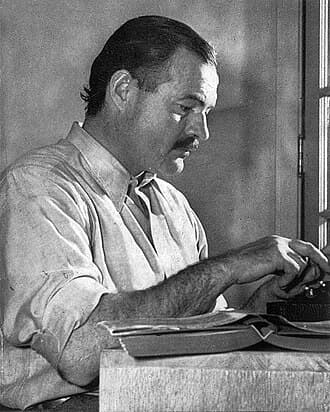
Competitive admiration with asymmetric vulnerability
Masculine inadequacy anxiety, sensitivity experienced as threat
Cruelty as displaced love and self-protection
Mentorship that curdled into contempt
Posthumous settling of accounts through memoir
The Meeting in Paris
Ernest Hemingway and F. Scott Fitzgerald met at the Dingo Bar in Paris in the spring of 1925. Fitzgerald was already famous: The Great Gatsby had just been published, and This Side of Paradise had made him a celebrity five years earlier. Hemingway, three years younger, had published stories and the in-crowd pamphlet in our time, but was largely unknown outside the expatriate literary world.
Fitzgerald initiated the friendship with genuine enthusiasm. He read Hemingway's work and recognized something in it immediately. He wrote to his editor Maxwell Perkins at Charles Scribner's Sons recommending Hemingway with the kind of specific, detailed advocacy that only someone who had actually understood the work could produce. The letter was not a casual social endorsement. It was a careful argument for why Scribner's needed this writer.
The recommendation was consequential. Perkins signed Hemingway, and the professional relationship that followed produced The Sun Also Rises (1926), A Farewell to Arms (1929), and eventually the Nobel Prize. Fitzgerald's advocacy was, in the most literal sense, one of the conditions that made Hemingway's canonical career possible.
What Hemingway did with this debt is the subject of the friendship's long, painful arc.
What Each Man Needed From the Other
The friendship was never symmetrical, but its asymmetries changed over time.
In 1925, Fitzgerald needed Hemingway's validation more than he needed his help. He was already commercially successful. What he wanted was the literary esteem that he felt his popular success had complicated: to be taken seriously by the writers he most admired, to be seen as something more than a chronicler of parties and wealthy unhappiness. Hemingway, with his stripped prose and his hard-masculine posture, represented a different kind of literary authority, one that Fitzgerald both envied and could not quite believe in for himself.
Hemingway needed Fitzgerald's practical help, which Fitzgerald provided freely. But Hemingway also needed something from Fitzgerald that he would never have named: the companionship of someone who understood what literary ambition at this level felt like. The Paris expatriate community was full of writers, but few of them were operating at the intensity that both Hemingway and Fitzgerald brought to their work. Their mutual recognition of each other as serious was itself a form of intimacy.
“You're the best damn writer in America today. But I'll be the best after you're done.”
Ernest Hemingway, to Fitzgerald, attributed in various accounts
The competition was explicit and was held in something like affection, at least early on. Both men understood that literary ambition requires someone to measure yourself against, and they had, in some sense, chosen each other.
The Zelda Problem and the Diagnosis of Weakness
Hemingway's account of Zelda Fitzgerald, published in A Moveable Feast (1964), is one of the more vicious passages in twentieth-century literary memoir. He describes her as "jealous of Scott's work, frightened of his talent, and slightly insane." He suggests that she deliberately sabotaged Fitzgerald's productivity because she could not tolerate his attention going anywhere but to her.
The Zelda account served Hemingway's narrative purposes precisely: it provided an explanation for Fitzgerald's decline that located the cause entirely outside Scott and that aligned with Hemingway's existing framework for understanding the world, in which women were either good for men or destructive to them, and in which a man who allowed a woman to derail him had a fundamental problem with his own masculinity.
But the account is also a deflection. The more uncomfortable truth, visible in the letters and the timeline, is that Fitzgerald's decline had multiple sources, several of which had nothing to do with Zelda: his genuine alcoholism (which preceded Zelda's breakdown), his perfectionism that produced enormous gaps between Gatsby and Tender Is the Night, and the simple fact that commercial success had complicated his relationship to his own work in ways that Zelda could not have created and did not create alone.
What Hemingway could not tolerate in Fitzgerald was his openness about his own fragility. Fitzgerald wrote and spoke about his failures, his anxieties, his sense of inadequacy. He was not stoic about his vulnerabilities. To Hemingway, for whom the performance of hardness was constitutive of the self, this was not honesty. It was weakness. And weakness was the thing he could not forgive.
The Asymmetric Decline
The 1930s unmade Fitzgerald more visibly than they unmade Hemingway. Zelda's breakdown in 1930, followed by a series of hospitalizations that consumed enormous financial and emotional resources; Tender Is the Night (1934) received mixed critical reviews after years of difficult production; Fitzgerald's own deterioration from alcoholism, visible enough that it became common knowledge in Hollywood, where he worked as a screenwriter in the late 1930s.
Hemingway, meanwhile, published For Whom the Bell Tolls in 1940 and was celebrated. The asymmetry of their trajectories created a specific dynamic: Hemingway's continued success required him to account for Fitzgerald's decline in a way that did not implicate his own luck, his own circumstances, or the possibility that Fitzgerald's sensitivity might have been a genuine literary quality rather than a character defect.
The solution Hemingway reached was contempt. He wrote a letter to Perkins in 1934 describing Fitzgerald's new work in terms of disappointment and implied failure. He told mutual acquaintances that Scott was finished. He did this while maintaining a surface correspondence with Fitzgerald that retained the language of friendship.
“I found him lying on the floor of his room. Very pale. Not too well. He had dined the night before on champagne for breakfast, champagne for lunch, and champagne for dinner.”
Hemingway, on Fitzgerald, in a letter to Gertrude Stein, 1925
A Moveable Feast as Posthumous Revenge
A Moveable Feast was published in 1964, three years after Hemingway's death and twenty-three years after Fitzgerald's. The memoir presents itself as a fond recollection of Paris in the 1920s, but its treatment of Fitzgerald functions as a final accounting: the portrait of a gifted man destroyed by a difficult wife, by weakness, by the inability to hold himself together.
The Fitzgerald who emerges from A Moveable Feast is pitiable in a way that Hemingway almost certainly intended. He asks Hemingway embarrassing questions (the famous passage about whether his body is adequate is one of the more excruciating scenes in the book). He drinks too much. He cannot manage himself on a simple road trip. The portrait systematically converts Fitzgerald's genuine virtues, his emotional openness, his sensitivity to social texture, his willingness to be vulnerable, into evidence of deficiency.
The posthumous timing meant that Fitzgerald could not respond. This is not incidental. Hemingway had the final word in a conversation that had been ongoing for nearly forty years, and he used it to settle accounts in a way that no living friendship could survive.
The literary scholars who have examined the manuscript note that the book underwent significant revision, and that some of the harshest passages about Fitzgerald appear to have been added or intensified in the final stages of composition. This does not resolve the question of what Hemingway intended, but it suggests that the cruelty was deliberate rather than casual.
What the Friendship Actually Was
The most accurate description of what Hemingway and Fitzgerald had is probably not friendship in the ordinary sense, but something for which we do not have a clean word: a relationship organized around mutual recognition, need, and competition, in which the recognition and the competition were so entangled that neither person could separate them.
Fitzgerald loved Hemingway's talent with something close to generosity. The championing of Hemingway to Perkins, the careful attention to the early work, the genuine pleasure Fitzgerald took in Hemingway's success (before the success became too complete and too sustained) were not performances. They were the behavior of someone for whom literature mattered more than ego, at least some of the time.
Hemingway loved Fitzgerald's talent in a way he could not acknowledge without threatening the psychological architecture that held him together. Acknowledging Fitzgerald's gifts fully would have required acknowledging Fitzgerald's sensitivity as a source of those gifts, and that acknowledgment would have destabilized the hard-masculine framework through which Hemingway understood himself and the world.
The cruelty was the price of the love that could not be expressed directly. This is not a redemption of the cruelty. It is an explanation of its structure, which is different.