JFK & Jackie Kennedy
Two people who produced one of the most successful joint performances in American political history, and how little that performance had to do with their interior lives, or with each other.
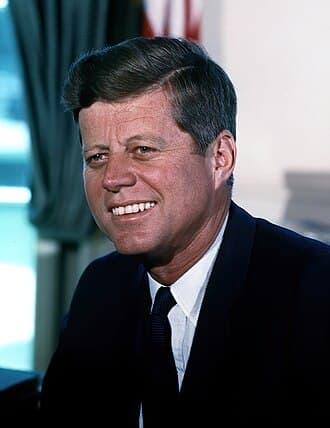
Image as the relationship's primary product
JFK's compulsive infidelity as intimacy avoidance; Jackie's performance of composed grace while privately containing abandonment and loneliness; the marriage as architecture more than connection
Two people managing parallel loneliness inside a publicly mythologized union, Camelot as the most successful joint performance in American political history
Adjacent rather than intimate; each carrying wounds the other could not reach; the image requiring a proximity the relationship did not actually contain
Jackie's grief after the assassination, the most publicly performed mourning in American history, composed with a self-containment that was itself a kind of violence against her interior
Camelot
The word was Jackie's. Theodore White's famous Life magazine interview, conducted in the week after the assassination, was where Jackie Kennedy introduced the Camelot frame, the image of JFK listening to the cast recording of the Lerner and Loewe musical before bed, the White House as a place of culture and beauty and promise cut short. She placed the image there deliberately. She understood, with a clarity that is itself worth attending to, that the narrative of her husband's presidency would be formed in the weeks immediately following his death, and she wanted to shape it.
Camelot was a success as cultural construction. It provided a framework, idealized, mythic, beautiful, within which the Kennedy presidency could be remembered, and within which her own role could be understood as the graceful center of a court. The image served multiple purposes simultaneously: it honored a dead husband, it established a legacy, and it gave Jackie Kennedy an identity that was distinct from the chaos of the actual marriage.
The deliberateness of the construction is, psychologically, one of the most interesting things about her. A woman who had just watched her husband's head come apart in a moving car, who had spent the flight back to Washington holding herself together in a blood-soaked dress, who had insisted on standing next to Lyndon Johnson for the swearing-in because the image mattered, that woman was simultaneously deep in private devastation and operating with complete strategic clarity about the public narrative. The capacity to split those two things is remarkable. It is also, possibly, a measure of how practiced she had become at the split.
JFK's Infidelity as Psychology
Kennedy's affairs were not occasional lapses. They were continuous, compulsive, and, given the risks involved, structurally important to him in a way that goes beyond simple desire. The partners included Marilyn Monroe, the actress; Judith Exner, who was simultaneously connected to organized crime; White House interns; a woman who may have been an East German spy. The infidelity continued through his presidency, conducted with minimal care for the obvious security and political risks.
The compulsive quality of the behavior is the diagnostic indicator. Serial infidelity of this character is less often about desire for variety than about the function infidelity serves in the internal economy of the person practicing it. For Kennedy, the structure of the affairs suggests intimacy avoidance: the brief, disposable encounter that produces the proximity and warmth of sex without requiring the sustained vulnerability of genuine relational connection. You can be close to someone for an afternoon in a way that does not require you to be known by them.
The person who cannot be faithful is often not a person with too much desire. They are a person with too much fear of what genuine intimacy would require.
What Kennedy was protecting himself from is not fully knowable from the outside. What is visible is the pattern: a man surrounded by people, never fully present with any of them; a man who produced, in the people around him, the experience of being specially seen, while maintaining the internal distance that ensured no one actually got in.
“I don't think there are any men who are faithful to their wives.”
Jacqueline Kennedy, private correspondence
Jackie's Interior
The public Jackie Kennedy is one of the most carefully constructed images in American history, the composed face, the low voice, the impeccable self-presentation. What this image cost is retrievable, partly, from what she said in private correspondence and in guarded interviews. She described loneliness. She described the specific loneliness of being married to someone who was not fully present. She described the humiliation of the affairs, not just the fact of them but the public quality of them, the way Washington knew, the way she was expected to manage her response in a way that protected the political image.
Jackie came from a family with its own history of female endurance around male infidelity. Her father, Black Jack Bouvier, was a spectacular philanderer. She grew up watching her mother manage the same architecture she would later inhabit: the composed exterior, the privately devastating interior, the performance of equanimity as a survival mechanism.
This is not a coincidence. The relational patterns we learn in childhood are the templates we tend to replicate, not because we want to, but because they are the architecture of what feels familiar. Jackie Kennedy knew, at some level, how to be in the marriage she was in. That knowledge was not a gift.
The Assassination and After
The pink Chanel suit has become one of the most written-about garments in American history. Jackie Kennedy wore it on November 22, 1963. She was still wearing it, dried blood on the skirt, when Lyndon Johnson was sworn in on Air Force One. She refused to change. When an aide suggested she might want to, she said: "Let them see what they've done."
The statement is complicated. It is partly political, the "they" implicating Dallas, the right wing, the culture of violence. It is also, possibly, something else: an insistence that the horror be visible, that it not be managed away, that the composed exterior not perform the function it had always performed and simply make the unbearable look bearable. The suit was, for once, a refusal of the performance rather than its continuation.
But the public mourning that followed, the four days of precisely choreographed grief, the black veil, the two children at the funeral, the flame at Arlington, was itself a performance, and a brilliant one. Jackie Kennedy directed the Kennedy funeral the way she had directed the Camelot mythology: with a complete understanding of what the images would mean and a determination to control what they said. The grief was real. The management of its public form was also real. These things existed simultaneously in the same person.
What They Produced Together
Camelot was not a marriage. It was a cultural object, a mythology about a couple that the couple produced jointly, that was more durable and more influential than the actual relationship that generated it. The marriage itself contained loneliness, infidelity, management, grief, genuine moments of connection, and the work of two people who were each, in their own way, performing for the room.
What they produced together, the image, the myth, the thousand-day presidency remembered through the frame Jackie built for it, outlasted both of them and continues to function as a reference point for American idealism and American loss simultaneously. That is either a remarkable achievement or a measure of how thoroughly the performance replaced the relationship. Probably both.
Jackie Kennedy went on. She married Aristotle Onassis, made a life, worked as a book editor, raised children who turned out well, protected her privacy with considerable skill. The years after Kennedy suggest a woman who had capacities that the marriage did not call upon, an interiority that the architecture of Camelot had no room for. She died in 1994. She was sixty-four.
---
Interpretive opinion based on the public record. Not a clinical assessment or diagnosis of any individual.