Sylvia Plath & Ted Hughes
Two people whose psychological wounds amplified each other's until the amplification became unsurvivable. The tragedy of creative symbiosis masking fundamental incompatibility.
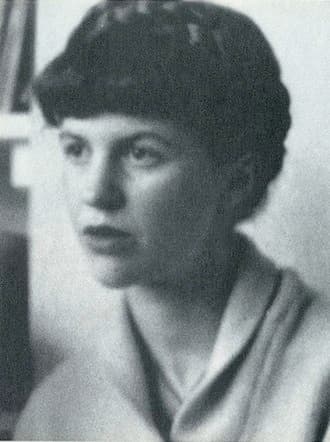
Father-loss wound meets emotional unavailability
Paternal absence, depression, annihilation fear
Creative symbiosis as substitute for safety
Merger hunger colliding with compartmentalization
Art as both container and accelerant of crisis
The Wound Beneath the Marriage
Sylvia Plath's father, Otto Plath, died of complications from diabetes when Sylvia was eight years old. He had refused to see a doctor for years, a refusal that reads, in retrospect, as a slow-motion abandonment. The effect on his daughter was structural. She did not simply grieve; she reorganized her entire psychological architecture around the loss, and then around the rage at the loss, and then around the impossible project of recovering what had been taken. Her 1962 poem "Daddy" is not a gentle elegy. It is a document of psychic reckoning with a wound that had spent two decades metastasizing.
Ted Hughes grew up in the West Riding of Yorkshire, shaped by a quieter but equally formative set of conditions: a family that communicated through silences and stoicism, a relationship to nature and instinct that was almost pre-verbal, and an emotional register that had no ready language for interior states. He was not cold in the way that wounded people sometimes describe coldness in others. He was unavailable in a more fundamental sense: genuinely unable to make his interior world accessible to another person's claims.
When these two people met at a Cambridge party in February 1956, the attraction was immediate and almost violent in its force. Plath described the meeting in her journal with a combination of desire and foreboding that would turn out to be more accurate than she could have known at the time. Hughes was imposing, physically and intellectually. She bit his cheek; he took her hair and earrings. The encounter has been mythologized almost beyond recognition, but what it actually demonstrates is two wound structures finding each other with the precision of magnets.
The Marriage as Creative Engine
What the Plath-Hughes marriage produced, artistically, is extraordinary. Hughes recognized Plath's talent early and supported it with genuine conviction. He typed manuscripts, read drafts, secured her first publications. She, in turn, provided a relational intensity that catalyzed his own work. They were each other's most rigorous readers during the years when the marriage functioned.
The Bell Jar, Plath's only novel, was completed in 1961 while the couple lived in London with their two young children. It is a roman a clef about a young woman's psychiatric breakdown in the early 1950s, but it is also a precise map of what Plath understood about her own psychology: the split between the self that performed competence and the self that was drowning. The novel's protagonist, Esther Greenwood, cannot reconcile the demands being made on her by the culture with the reality of her interior life.
"I took a deep breath and listened to the old brag of my heart: I am, I am, I am."
That line, from The Bell Jar, is not triumphant. It is stubborn. It is the survival instinct refusing to yield even when everything else has broken down. The distance between that voice and the voice of "Daddy" or "Lady Lazarus" is the distance between containment and release, and the release was made possible, in large part, by the marriage's disintegration.
Hughes's Compartmentalization
Assia Wevill entered the picture in 1961. The affair Hughes began with her revealed something about his psychology that the marriage had kept partially obscured: his capacity to hold completely separate realities without apparent distress. He did not conduct his affair as someone tormented by conflict. He conducted it as someone who experienced the two situations as genuinely parallel rather than contradictory.
This is not a moral assessment. It is a terrain observation. Compartmentalization at this level, the ability to inhabit one emotional reality while maintaining a separate one without the seams showing, is a specific psychological formation. It develops, typically, in childhoods where disclosure of internal states was unsafe or simply without precedent. The person who learns to compartmentalize learns it as survival. What they do not learn is the cost it extracts from the people who cannot do it.
Plath could not compartmentalize. Her wound structure ran in the opposite direction: everything connected to everything, every loss resonating with the original loss, every abandonment repeating the first one. When Hughes left, he was, in the deep grammar of her psychology, her father leaving again. The rational self knew the difference. The wounded self did not, or could not act on what it knew.
The Bee Poems and the Ariel Manuscript
After the separation in the fall of 1962, Plath produced the poems that would be collected posthumously as Ariel. She wrote them in the early mornings, before the children woke, in the coldest English winter in decades. The bee poems, a sequence of five, drew on the beekeeping she and Hughes had done together in Devon, but they transformed that shared material into something entirely her own: a meditation on female inheritance, on power, on survival, and on the possibility of transformation.
"Stings" is the most explicit:
“I am in control. / Here is my honey-machine, / It will work without thinking, / Opening, in spring, like an industrious virgin”
Sylvia Plath, "Stings," 1962
The sequence moves from captivity to something like flight, and the movement is real. But it is important not to aestheticize what was happening alongside the writing. Plath was severely depressed, isolated, caring for two small children in an unheated flat, and in contact with her psychiatrist but not receiving the level of care her condition required. The extraordinary productivity of those final months was not a sign of recovery. It was the form that her final crisis took.
What Hughes Carried After
Ted Hughes lived for thirty-five years after Plath's death in February 1963. He did not publish Birthday Letters, his direct account of the marriage and its aftermath, until 1998, the year he died. The delay is its own kind of document.
For decades he was largely silent about Plath publicly, while feminist scholars, readers, and poets constructed a mythology in which he bore primary responsibility for her death. His silence, which was almost certainly a form of self-protection consistent with his psychological formation, read to her defenders as guilt or callousness. Some of them vandalized her gravestone repeatedly, scratching off the "Hughes" from her name.
Birthday Letters, when it finally came, revealed someone who had been conducting an interior dialogue with the marriage and its loss for thirty-five years without a public witness. The poems are not exculpatory. They are reckoning. They show a man who understood, belatedly and with considerable anguish, the nature of what had happened between them.
“The morning I was born, the morning after / You were going to die, I was just going to live”
Ted Hughes, *Birthday Letters*, 1998
Hughes's own capacity for emotional unavailability is visible throughout the collection, but so is the grief. He did not know how to be what she needed. This is not a defense. It is the specific tragedy of the situation: two people whose wound structures were not compatible, who could not provide for each other what the other most required, and who produced, in the catastrophic friction of that incompatibility, some of the most important poetry of the twentieth century.
The Mythology and What It Obscures
The cultural processing of Plath and Hughes has tended toward two poles: she as victim, he as destroyer; or the two together as romantic tragedy in the tradition of Keats and Shelley. Both framings miss the actual terrain.
Plath was not a passive victim. She was a brilliant, demanding, depressed, ambitious, and deeply wounded person who had been suicidal before she met Hughes and who required a level of care and stability that no single relationship, however good, could have provided. Hughes was not a destroyer. He was a man whose psychological formation made him incapable of the sustained emotional presence that Plath's wound structure required.
The tragedy is not that one person failed the other. It is that the specific configuration of their wounds made the outcome, if not inevitable, then structurally overdetermined. The creative symbiosis was real. The incompatibility was real. Both of these things are true simultaneously, and neither cancels the other.
What remains is the work. The Bell Jar, Ariel, Birthday Letters, Crow, the bee poems: a body of literature produced in and through a relationship that neither person could fully survive.