Van Gogh & Gauguin
Nine weeks in Arles that ended in an ear and a breakdown. What happens when two extreme nervous systems attempt the brotherhood that neither had ever found.
Desperate need for connection meets constitutive disconnection
Rejection, abandonment, the unmet longing for brotherhood
Idealized merger collapsing into crisis
Total emotional need versus romantic detachment
Mutual artistic recognition undone by incompatible nervous systems
The Dream of the Yellow House
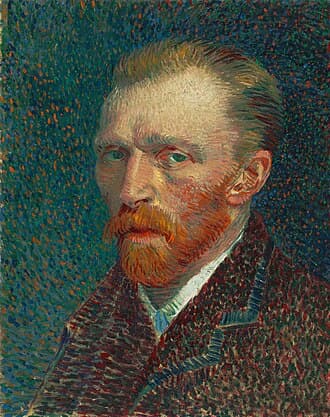
Vincent van Gogh moved to Arles in February 1888. He was thirty-four years old, had been painting seriously for less than a decade, and had sold almost nothing. What he wanted in Arles was not primarily solitude. He wanted a community, a studio, a brotherhood of artists who would work together and sustain each other in the way that religious communities sustained their members, the analogy was his own, repeated in letters to his brother Theo.
He rented four rooms in a building he called the Yellow House and began transforming them into something habitable, painting rooms, buying furniture, creating the physical conditions for a shared life that did not yet have participants. He wrote to Paul Gauguin, who was in financial difficulty in Brittany, and proposed that Gauguin come to Arles. Theo van Gogh, who served as a kind of financial supporter for both men, agreed to send Gauguin a monthly stipend in exchange for paintings.
The invitation was freighted with a level of emotional investment that Gauguin almost certainly did not register. Van Gogh had been corresponding with Gauguin for months and had developed, through that correspondence, a picture of the relationship that existed primarily in his own imagination. He had painted the bedroom at Arles and written to Gauguin about it in terms that were almost domestic in their warmth. He had painted sunflowers for Gauguin's room. He had prepared.
Gauguin arrived on October 23, 1888. He found Van Gogh's disorder and intensity immediately grating. He wrote to his friend Emile Bernard within days that the situation was more complicated than he had anticipated.
Two Incompatible Nervous Systems
The incompatibility between Van Gogh and Gauguin was not a matter of artistic philosophy, though they did disagree about method and approach. It was a matter of nervous systems.
Van Gogh was emotionally porous in the extreme. He felt the world at high amplitude, was easily overwhelmed by interpersonal tension, and processed his experience through a constant outward communication: the letters to Theo, the paintings, the conversations that his companions often found exhausting. He had been, throughout his adult life, a person who needed more connection than his circumstances could provide and who registered the gap between what he needed and what was available as acute, ongoing pain.
Gauguin was constitutionally different. He had organized his self-concept around radical independence, the romantic artist who owed nothing to convention, to domestic life, to the social bonds that constrained lesser people. He had left his wife and five children in Copenhagen without apparent anguish. He would later leave France for Tahiti, and eventually for the Marquesas Islands, deaths of children registered in his journals without the emotional tone that such losses usually produce.
“I am not an artist who produces for the market or the salon. I paint for myself.”
Paul Gauguin, letter to his wife Mette, 1888
This is not presented as a criticism of Gauguin's character but as a description of his psychological formation. The capacity for deep attachment, the capacity to remain present to another person's suffering, the capacity to feel responsible to a relationship: these require a particular kind of interior architecture. Gauguin's did not include them, or did not include them in the form that Van Gogh's situation required. This was not a choice he was making. It was who he was.
What Van Gogh needed, therefore, was constitutionally unavailable from the one person he had organized his entire Arles project around.
The Nine Weeks
The documentary record of the nine weeks between Gauguin's arrival on October 23 and the crisis of December 23 is a combination of the letters both men wrote and the accounts Gauguin gave afterward, which are not fully reliable.
Both men worked hard during this period. The artistic output was significant on both sides. They painted together, disagreed about approach (Van Gogh worked from direct observation; Gauguin worked from memory and imagination, and thought Van Gogh's method inferior), and argued about the arguments. Van Gogh's letters to Theo during this period show someone straining to maintain the relationship that had become the container for his largest hopes, while recognizing that the container was developing cracks.
Gauguin's letters show someone who had decided the situation was untenable and was planning his exit but had not yet told Van Gogh. This is the specific cruelty of the period, not that Gauguin was unkind in his daily interactions (the record on this is mixed) but that he had already made his decision while Van Gogh was still operating on the assumption that what they had was real and ongoing.
“Between the two of us, one is a volcano and the other is boiling too, but inwardly.”
Paul Gauguin, letter to Emile Bernard, November 1888
December 23, 1888
What happened on the evening of December 23 is disputed in its particulars and unambiguous in its outcome.
Gauguin had informed Van Gogh that he intended to leave Arles and return to Paris. The confrontation that followed involved a razor. Van Gogh, in the aftermath, cut off the lower portion of his own left ear. He wrapped it and brought it to a woman at a local brothel and asked her to keep it carefully. He was found the following morning by police in his home, bleeding but alive. He was hospitalized at the Hotel-Dieu hospital in Arles.
Gauguin left Arles immediately and never returned. He wrote to Theo and then wrote his own account of the events, in which he positioned himself as calm and Van Gogh as unhinged and threatening. The account served Gauguin's self-image as romantic individualist, someone who had been caught in a situation created by another person's instability.
The question of whether Gauguin bears some responsibility for precipitating the crisis is not the most important question the episode raises. The more important question is what the episode reveals about what Van Gogh was experiencing and what the nine weeks had meant to him. The self-harm following the announcement of Gauguin's departure was not random. It was the behavior of someone for whom the loss of this connection was not distinguishable, at the level of the nervous system, from catastrophe.
What Van Gogh Needed and What Was Available
Van Gogh spent the remaining two years of his life cycling between the hospital at Arles, the Saint-Paul-de-Mausole asylum in Saint-Remy, and finally Auvers-sur-Oise, where he shot himself in July 1890 and died two days later.
He continued to paint throughout this period, producing some of his most recognizable work: Starry Night, multiple versions of the wheat fields, the self-portraits painted during and after the hospitalization. The productivity is not evidence of stability. It is evidence of what painting was for him: not aesthetic production but a form of staying alive, of making contact with the world when direct human contact was not available.
What he had needed in Arles was not a collaborator but a companion, someone who would remain present, who would witness rather than flee, who could tolerate the intensity of his need without converting it into a problem to be managed. This is not a small thing to need. It is, in fact, one of the things that most people require and that many people never find.
Gauguin could not provide it because his psychological formation made sustained presence to another person's need impossible. This does not make Gauguin the villain of the story. It makes him the wrong person for the specific role Van Gogh required.
The tragedy of the nine weeks is not simply that they ended badly. It is that Van Gogh had correctly identified what he needed and had tried to build the conditions for it with the resources available to him, and the person he chose was constitutionally incapable of being what he needed. The gap between what was required and what was possible was structural, and the structure could not hold.