Diana's Panorama Interview
A woman who had been managed, packaged, and silenced by an institution that needed her image but not her interior - speaking directly to 23 million people, without permission, in the most watched television interview in British history. The institution never recovered.
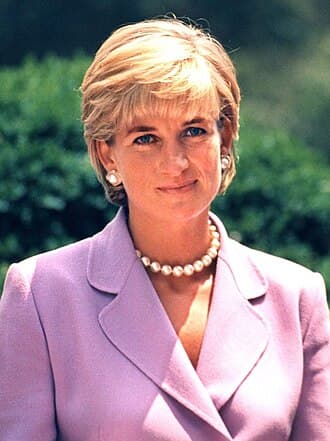
The managed subject seizing the narrative apparatus
Systematic erasure within an institution that depended on her while denying her interiority
Vulnerability as power - using disclosure as the tool the institution had no defense against
Public as ally against private institution - the direct address as end-run around gatekeepers
Eating disorders, self-harm, and suicidal ideation as the cost of performing a role that had no room for the person inside it
The Institution She Entered
Diana Spencer married Prince Charles in 1981 at twenty years old. She had no meaningful preparation for what she was entering - not the specific demands of royal public life, not the management apparatus that would control her image, not the relationship she was actually in rather than the one the ceremony suggested.
What the institution needed from her was her image: the young, beautiful, photogenic face that the monarchy had not had for decades, the woman who could fill a frame and produce an emotional response in a crowd. What it did not need, and actively managed against, was her as a person - with opinions, with pain, with a perspective on her own experience.
The institution got both. It spent fourteen years trying to separate them.
What She Disclosed
In the November 1995 Panorama interview, Diana said, among other things: that her marriage had been irretrievably broken since 1986; that she had struggled with bulimia and self-harm; that she had felt suicidal; that Charles was not suited to be king; and that she wanted to be "a queen in people's hearts" rather than the formal role.
Each of these statements was a violation of the institution's operating rules. Taken together, they constituted a declaration of independence.
"The interview was not a breakdown. It was a strategy. The woman who sat across from Martin Bashir had thought carefully about what she was doing. The tears were real. The calculation was also real. Both things were true, and the combination - genuine emotion delivered with precision - was exactly what the institution could not defend against."
The Vulnerability That Was Also a Weapon
Royal institutions operate on the principle of opacity. They do not disclose. They do not explain. They do not invite the public into the interior of the family. The power of the monarchy is partly the power of distance - the mystique produced by managed unavailability.
Diana's interview annihilated that distance. She brought the public inside the walls and showed them what the interior actually looked like. The institution could not respond without confirming or denying, and both responses gave her what she needed: proof that the public conversation was now about her version of events rather than theirs.
The bulimia and self-harm disclosures are the most psychologically precise part of the terrain. Eating disorders in particular are often understood as a way of exerting control over the body when control over the environment has been lost. A woman whose image was owned and managed by an institution - whose body was public property in the most literal sense - expressing her distress through control of her own intake and surface is not a coincidence.
What Happened After
The Palace moved quickly. Within a year, Charles and Diana's divorce was finalized. Diana was stripped of her HRH title. The institution tried to manage the separation in the way it had managed everything else: through process, through formality, through the assertion of control.
It did not work. Diana retained her public. She retained her access to the frame. She retained, until her death in August 1997, the capacity to produce exactly the kind of emotional response in a crowd that the monarchy had originally needed her for - but now on her own terms.
The interview was the pivot point. It did not free her from the institution. But it demonstrated that the institution's most powerful tool - the management of her image - had been turned around and was now in her hands.
References
- Diana, Princess of Wales. Interview with Martin Bashir. Panorama, BBC One, November 20, 1995. - Morton, Andrew. Diana: Her True Story - In Her Own Words. Simon & Schuster, 1997. - Brown, Tina. The Diana Chronicles. Doubleday, 2007. - Dyson, Lord. The Dyson Report: An Investigation into How Martin Bashir Secured the Panorama Interview with Princess Diana. BBC, May 2021. - Smith, Sally Bedell. Diana in Search of Herself: Portrait of a Troubled Princess. Times Books, 1999.
---
Interpretive opinion based on the public record. Not a clinical assessment or diagnosis of any individual.