Watergate
The institutional betrayal that permanently restructured American trust. Not the break-in but the cover-up, and not the cover-up but the revelation that the man at the center of American power had been operating from paranoia and contempt the entire time.
Paranoia institutionalized at the highest level
Outsider wound transmuted into presidential contempt
Cover-up as the crime that revealed the character
Enemies list as the relational architecture of a besieged self
Permanent restructuring of American political cynicism
Not the Break-In
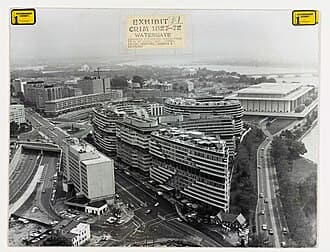
The Watergate break-in occurred on the night of June 17, 1972. Five men working for the Committee to Re-elect the President were arrested inside the Democratic National Committee headquarters at the Watergate complex in Washington, D.C. They were there to photograph documents and repair a wiretap that had been placed on the phone of DNC Chairman Larry O'Brien during an earlier break-in in late May.
The break-in itself was not what destroyed Nixon's presidency. He won re-election in November 1972 by one of the largest margins in American electoral history, carrying 49 states and 60.7 percent of the popular vote. The country voted for him, overwhelmingly, while the story was already being reported by Bob Woodward and Carl Bernstein in the Washington Post.
What destroyed Nixon was the cover-up, and not even the cover-up in its mechanical details but what the cover-up revealed about the character and operating assumptions of the man who ran it. The cover-up required Nixon to deploy the CIA to obstruct the FBI investigation, to pay hush money to the arrested operatives, to lie directly to the American public, and to arrange the firing of special prosecutor Archibald Cox when Cox got too close. Every step of the cover-up exposed more of the underlying reality: that Nixon had been operating from a framework of paranoid contempt for his opponents, for institutions, for the legal constraints on his power, from the beginning.
The Psychology of the Enemies List
The Enemies List was compiled by the Nixon White House staff beginning in 1971 and expanded throughout Nixon's first term. It contained eventually hundreds of names: journalists, politicians, academics, entertainers, lawyers, and others the administration considered hostile. The list was not purely symbolic. The intent, stated explicitly in internal White House memoranda, was to use the instruments of government, the IRS, federal agencies, law enforcement, to cause difficulty for the people named.
John Dean, Nixon's White House Counsel, wrote a memo in 1971 that has become one of the defining documents of the Watergate era: "This memorandum addresses the matter of how we can maximize the fact of our incumbency in dealing with persons known to be active in their opposition to our Administration... We should begin to use the available federal machinery to screw our political enemies."
The language is worth sitting with. "Screw our political enemies" is not the language of a political operation conducting opposition research or sharpening its competitive edge. It is the language of a psychology organized around threat and retaliation, around the belief that the world is divided into those who are with you and those who are against you, and that the appropriate response to those against you is the full deployment of whatever power you hold.
“Always remember, others may hate you. But those who hate you don't win unless you hate them. And then you destroy yourself.”
Richard Nixon, farewell address to White House staff, August 9, 1974
The farewell address is one of the more psychologically revealing documents of his career. The insight it contains, that hatred destroys the person who carries it, was available to him. He stated it. He had been unable to apply it to himself for decades.
The Tapes
Nixon had installed a secret recording system in the White House in 1971. The system recorded conversations in the Oval Office, the Cabinet Room, and on presidential phone lines automatically, without the knowledge of most of the people speaking. Nixon's stated reason for installing the system was historical documentation; presidential recordings had been made since Roosevelt. The actual effect was to create a permanent record of conversations in which Nixon was unguarded.
The existence of the tapes became known in July 1973 during the Senate Watergate Committee hearings, when aide Alexander Butterfield disclosed the system in response to a direct question. The revelation immediately transformed the investigation. If the tapes existed, they contained the evidence of what Nixon had known and when.
The legal and political battle over access to the tapes consumed the next thirteen months. Nixon resisted, claiming executive privilege. The Supreme Court ruled unanimously in United States v. Nixon (1974) that the tapes must be produced. Several weeks later, the "smoking gun" tape was released: a recording from June 23, 1972, six days after the break-in, in which Nixon and Chief of Staff H.R. Haldeman discussed using the CIA to obstruct the FBI's investigation. The tape established that Nixon had been part of the cover-up from its earliest stages.
The 18.5-minute gap in a tape from June 20, 1972, which Nixon's secretary Rose Mary Woods claimed to have accidentally erased, was never satisfactorily explained. Technical analysis found that the erasure involved at least five separate manual erasures. What was on the tape has never been recovered. The gap is its own kind of document: evidence that evidence was destroyed.
The Saturday Night Massacre
On October 20, 1973, Nixon ordered Attorney General Elliot Richardson to fire Special Prosecutor Archibald Cox, who had refused to accept a compromise arrangement regarding the tapes. Richardson refused and resigned. Deputy Attorney General William Ruckelshaus was then ordered to fire Cox. He also refused and resigned. Solicitor General Robert Bork carried out the firing.
The triple resignation and firing, which became known immediately as the Saturday Night Massacre, produced a response that the cover-up had not yet generated: genuine public outrage that crossed political lines. The House Judiciary Committee began formal impeachment proceedings shortly afterward.
The Saturday Night Massacre revealed the limit of the operating assumption that had guided the cover-up: that institutional loyalty to the president would hold. Richardson and Ruckelshaus chose institutional integrity over presidential command. This was not what Nixon had anticipated. His model of loyalty was organized around personal obligation; he did not fully account for the possibility that some people's loyalty to institutions would be stronger than their loyalty to him.
Deep Throat
Bob Woodward's primary source in the Washington Post investigation was a person known as Deep Throat, identified only as a senior government official. Woodward met with Deep Throat in a parking garage in Rosslyn, Virginia, and signaled meeting requests through a flowerpot on his balcony. The arrangement was dramatically rendered in Alan Pakula's 1976 film All the President's Men, and Deep Throat became one of the most famous anonymous sources in American journalism.
The source was revealed in 2005 as Mark Felt, the Associate Director of the FBI, the second-highest position in the bureau. Felt had been passed over for the directorship after J. Edgar Hoover's death in 1972 and had become convinced that the Nixon White House was obstructing the FBI's Watergate investigation. His motives combined genuine institutional concern with personal grievance. Both were real.
“I was a man who honestly believed the system would work, the press would not be ignored, and that we would get through it.”
Mark Felt, after his identity was revealed, 2005
Deep Throat's identity matters for what it reveals about the mechanism of accountability. The investigation that brought Nixon down was not primarily the result of formal institutional processes, though those eventually played a role. It was the result of someone inside the administration who decided to talk to journalists, combined with two journalists who decided to follow the story wherever it led, combined with editors and a publisher who decided to run it. The accountability machinery worked, but it worked through informal and individual choices, not through the formal system functioning as designed.
The Resignation and the Permanent Aftermath
Nixon resigned on August 9, 1974, becoming the first and only American president to resign from the office. Gerald Ford, who had been appointed Vice President after Spiro Agnew's resignation on unrelated corruption charges in 1973, succeeded him and issued a full pardon in September 1974.
The pardon removed the possibility of criminal accountability but did not remove the historical record. What Watergate left behind in the culture is a permanent restructuring of the baseline level of trust that Americans extend to their political institutions and to the people who lead them.
Before Watergate, the dominant American political mythology included the assumption that the presidency, whatever its occupants' failures, was constrained by institutional integrity and by the president's own understanding that certain lines could not be crossed. Watergate destroyed that assumption. It revealed that a president could and did deploy the full machinery of the federal government against his political opponents, that he could organize an extended conspiracy to obstruct justice, and that the system would only respond if specific individuals within it chose to resist.
The suffix has become a cultural shorthand: Iran-Contra-gate, Monicagate, Deflategate, applied to scandals with no relation to the original. The suffix signals: this is an institutional betrayal, someone abused power, the pattern is recognizable. The pattern became recognizable because Watergate made it visible. What the suffix records is not merely a scandal but the cultural internalization of the lesson that authority is capable of this.