Jim Carrey
Jim Carrey is one of the most psychologically transparent public figures alive, a man who has narrated his own interior with unusual precision -- and whose two greatest films are both about people who cannot stop performing a self they did not choose.
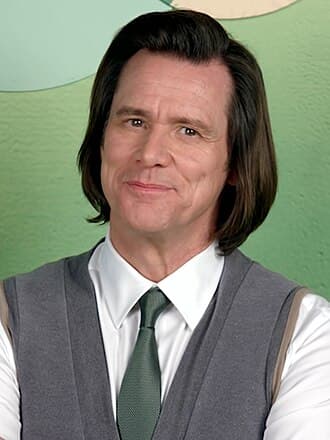
Comedy as survival mechanism, initially deployed at home to manage a depressed mother
The overnight fall: father lost his job as an accountant when Jim was 12, family moved into a van, Jim dropped out of school to work in a factory
Performance as the only reliable way to generate safety; the face as a tool, never a resting place
Generous and intense; relationships tend to mirror the oscillation between manic connection and depressive withdrawal
Philosophical ego dissolution as terrain response: the self that caused the suffering dismantled as a solution to the suffering
The Night the Floor Disappeared
Jim Carrey has described the specific sequence clearly, in multiple interviews across multiple decades, with the consistency that suggests something genuinely remembered rather than performed. His father Percy was an accountant, the stable professional, the man who was good at his work. When Jim was twelve, Percy lost his job. The family had no adequate safety net. They moved into a Volkswagen van and lived in it. They eventually moved onto a relative's property and lived in a tent. Jim dropped out of school to work eight-hour shifts at a tire factory to help support the family.
This is not poverty as background condition. This is the overnight removal of everything a child understood as permanent. The floor was there, and then it was gone, and then Jim Carrey was twelve years old working an adult shift while his father looked for work. The psychological imprint of that specific sequence -- stability to nothing, with no warning -- is the organizing fact of his interior landscape.
Comedy as Technology
Before his father lost the job, Carrey had already discovered that he could make people laugh. He has described performing for his mother, Kathleen, who suffered from severe depression and chronic illness. "She was in a lot of pain," he told James Lipton in a 2004 interview on Inside the Actors Studio. He learned to generate relief in her through performance, to use his face and body to interrupt her suffering, to be the thing she needed.
This is comedy not as art form but as survival technology. The child who can make his depressed mother laugh is performing a function with real stakes: he is managing her affect in order to manage his own safety. The gift, deployed under those conditions, becomes something more than a talent. It becomes the mechanism through which the world is made livable.
By the time the family moved into the van, Carrey had a refined instrument and a clear understanding of what it was for.
The Check
At some point in his early years in Los Angeles, before any significant success, Jim Carrey wrote himself a check for ten million dollars, dated it ten years in the future, noted the memo line as "for acting services rendered," and carried it in his wallet. He told his father about it. Percy Carrey died in 1994, shortly before Jim received a check for that amount for Dumb and Dumber. Jim placed the check in the coffin.
The story is widely known and worth examining not as an inspirational anecdote but as a psychological artifact. The check was not a delusion. It was an act of will directed at a specific gap: between the self that currently existed and the self that the wound demanded he become. The child who had watched his father fail needed to produce evidence, to himself and to his father, that the fall had been temporary and would be reversed. The check was a document given by the self that would survive to the self that was trying to.
The Films as Autobiography
Carrey appeared in many films, but two stand apart as maps of his actual interior.
The Truman Show (1998, directed by Peter Weir) follows a man who has lived his entire life in a constructed reality without knowing it, performing his life for an audience he cannot see. The film's central anxiety is the moment when the performance is recognized as performance -- when Truman's life is revealed to him as a set. "In case I don't see ya: good morning, good afternoon, and good night," Truman says to the camera he has finally located. It is a farewell to the performing self.
Eternal Sunshine of the Spotless Mind (2004, written by Charlie Kaufman) follows a man who chooses to have his memories of a painful relationship erased, then changes his mind during the procedure and tries to preserve them. The film is about the cost of trying to eliminate your own history.
Both films are about people trapped in constructed realities and the violence required to escape them. Carrey was not assigned these roles. He pursued them, particularly Eternal Sunshine, which he reportedly campaigned for against resistance from the studio.
"I think everybody should get rich and famous and do everything they ever dreamed of so they can see that it's not the answer." -- Jim Carrey
The Depression and What It Produced
Carrey has spoken openly about extended periods of clinical depression, including episodes during the peak of his commercial success. He has described the depression not as a failure of the performing self but as a feature of it: the crash that follows the performance when the performance is the only source of safety and the performance ends.
"I was on Prozac for a long time," he told the London Evening Standard in 2004. "It may have helped me out of a jam for a little bit, but people stay on it forever. I had to get off at a certain point because I realized that, you know, everything's just OK." The formulation is telling: the aim was not happiness but the capacity to tolerate ordinariness, which the wound had made nearly impossible.
The Philosophical Turn
Carrey's later public persona is organized around a fairly specific philosophical framework, drawn primarily from Eckhart Tolle's teachings on ego dissolution and the present moment. In his 2014 commencement address at Maharishi University of Management, he delivered what has become his most circulated speech, describing his father as a man who chose security over his dream of being a comedian, lost the security anyway, and thereby taught Jim that "you can fail at what you don't want, so you might as well take a chance on doing what you love."
The philosophical turn is not a departure from the wound. It is a terrain response to it. The self that learned to perform in order to survive eventually found the performing exhausting and the survival inadequate. The ego dissolution framework offers a different solution to the same problem: instead of performing a self that is adequate, dissolve the self that required performance in the first place.
His painting, which he has pursued seriously for over a decade and exhibited publicly, operates similarly. It is a form of expression that does not require an audience to validate it in real time, that does not depend on laughter, that exists whether or not anyone is watching.
References
- Carrey, Jim. Interview with James Lipton. Inside the Actors Studio, Bravo, 2004. - Carrey, Jim. Commencement address, Maharishi University of Management, 2014. - Dougherty, Steve. "The Many Faces of Jim Carrey." People, January 1994. - Jim Carrey: I Needed Color. Documentary directed by David Bushell, 2017. - Carrey, Jim, and Dana Vachon. Memoirs and Misinformation. Knopf, 2020.
---
Interpretive opinion based on the public record. Not a clinical assessment or diagnosis of any individual.