Jordan Peterson
Jordan Peterson built his public career on Jung's insight that the unexamined interior runs the exterior without permission. He has spent twenty years teaching this to other people. The question the terrain asks is the one he has not answered publicly: what is running Jordan Peterson's interior that his own framework would, if applied, make visible?
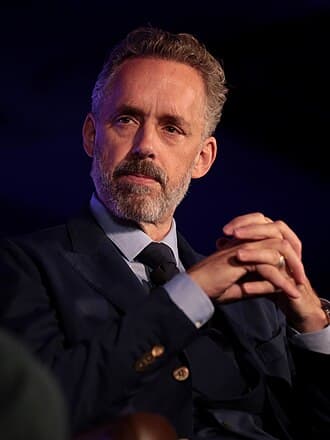
The healer whose framework is accurate and whose application of it to himself is incomplete
Not fully legible from the public record - which is itself a terrain finding for a man whose framework centers on the cost of the unexamined
The father archetype performed publicly as both role and defense - the stern wise man as persona over a more vulnerable interior
Hierarchical by default, warmest in the mentor relationship, most defended in the peer relationship
The physical collapse as the body delivering a message the framework had been deflecting - illness as the wound that could not be theorized away
The Framework
Jordan Peterson's intellectual project is Jungian psychology applied to how men should live. The core of the framework is this: unconscious material runs behavior from outside awareness, and the examined life, the life in which a person confronts what they have been avoiding, is the precondition for meaningful existence. This is not a new idea. It is Jung, filtered through Dostoevsky and the Old Testament and Peterson's clinical experience, delivered at a scale Jung never achieved.
The framework is largely correct. The clinical literature supports the central claims. The cultural response to the work suggests it was touching something real in its audience. None of this is in dispute.
What the terrain asks is the question his own framework demands: what is the unexamined interior that is running Jordan Peterson's behavior from outside his awareness?
The Father Archetype
Peterson performs a specific psychological role in his public presence: the stern, caring father who holds people to a standard because he believes they can meet it. Clean your room. Take responsibility. Tell the truth. The content is not wrong. The delivery is the thing to examine.
The father archetype, in Jungian terms, is a role that can be inhabited authentically or performed as defense. Inhabited authentically, it involves genuine authority earned through genuine development. Performed as defense, it involves the assumption of a role that provides structure and dignity without requiring the person inside the role to expose what the role is protecting.
Peterson's public persona is so consistently the father that the question of who is inside it becomes worth asking. The warmth is real. The intelligence is real. But the role provides something psychologically useful to the person performing it: it positions him as the one who has already done the work, rather than the one still in the middle of it.
"A person who teaches others to confront their shadow has made a choice about where they stand in relation to the shadow confrontation. They can be the guide who has gone ahead. They can be the guide who is going alongside. They can be the guide who is, in some territory, still avoiding what they are directing others toward. The persona of the guide makes the third option difficult to see."
The Physical Collapse
In 2019, Peterson began a rapid deterioration in health. He became dependent on clonazepam, a benzodiazepine, initially prescribed for anxiety. He has described the dependency, the failed withdrawal attempts, the subsequent pneumonia, and the period of treatment in Russia where he underwent medically induced sleep over approximately eight days to address the withdrawal.
His daughter Mikhaila documented much of this publicly and was the primary person managing his care during the worst of it. Peterson has spoken about this period with more vulnerability than is characteristic of his public presentation.
The terrain reading of this collapse is not that Peterson is a hypocrite. It is that the body delivered a message the framework had not processed. A man whose intellectual project is about the cost of avoiding the difficult thing developed a dependency on a substance that, among its effects, reduces anxiety. The framework identifies anxiety as meaningful signal. The substance reduces the signal. The body's eventual insistence was the wound bypassing the theory.
Mikhaila
The relationship with his daughter Mikhaila Peterson inverts the father archetype he performs publicly. Mikhaila has been, during the most difficult period of her father's life, the parent in the relationship. She has managed his medical decisions, spoken on his behalf, been his primary advocate and caretaker.
This inversion is worth noting because it reveals something about the man underneath the archetype: he was reachable. The father who does not show vulnerability in public was, in private extremity, able to be cared for. The capacity for dependency that the public persona does not make room for was present in the private person.
This is not a criticism. It is a finding. The gap between the public persona and the private person in extremity is always the most informative terrain.
What the Framework Cannot Reach
Peterson's framework has a structural limitation that he has not addressed publicly: it is more comfortable with the sins of omission than the sins of commission. Clean your room, take responsibility, tell the truth: these are instructions for the person who is failing to act. They are less useful for the person who is acting in ways that the framework is being used to justify.
The framework also has a specific relationship with emotion that is worth examining. Peterson is visibly emotional in many public appearances, most often moved to tears when discussing the suffering of young men or the beauty of certain ideas. This emotionality reads as genuine. But it is reliably oriented toward certain kinds of content and reliably absent from others. The anger, for instance, is rarely examined on camera in the way the grief is. The framework that centers shadow integration has been applied publicly in ways that illuminate certain aspects of Peterson's interior and leave others in the dark.
This is not failure. It is the common limitation of any framework when the person holding it also lives inside it. The map is accurate. The mapper is still inside the territory.
References
- Peterson, Jordan B. 12 Rules for Life: An Antidote to Chaos. Random House Canada, 2018. - Peterson, Jordan B. Maps of Meaning: The Architecture of Belief. Routledge, 1999. - Peterson, Jordan B. Beyond Order: 12 More Rules for Life. Portfolio, 2021. - Peterson, Mikhaila. Don't Eat That podcast and public documentation of Jordan Peterson's health crisis, 2019-2020. - Jung, C.G. The Archetypes and the Collective Unconscious. Collected Works, Vol. 9i. Princeton University Press, 1959. - Doidge, Norman. Foreword to 12 Rules for Life. Random House Canada, 2018.
---
Interpretive opinion based on the public record. Not a clinical assessment or diagnosis of any individual.