Musk & Altman
They co-founded OpenAI together. Now one is suing the other. The lawsuit is not the interesting part. The interesting part is why the rupture has the specific flavor it does - why it feels personal in a way that the stated reasons cannot fully account for. The geometry between these two men explains what the legal filings cannot.
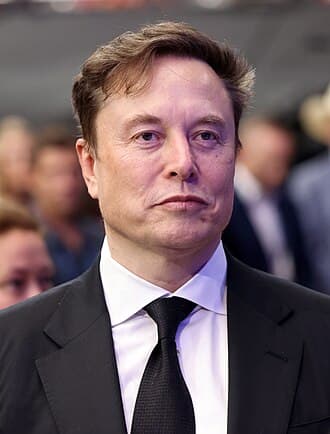
Two control architectures that were briefly aligned by a shared object and then made incompatible by how each needed to own it
Musk: the loss of a creation he seeded but could not govern. Altman: the presence of a founder figure who wants paternal authority without paternal responsibility
The founding father who left versus the adopted son who stayed - and neither can forgive the other for the role they chose
Asymmetric claim: Musk claims moral authority through origin, Altman claims operational authority through stewardship. Neither recognizes the other's claim as legitimate
The nonprofit-to-profit conversion as the rupture's surface - but the rupture predates the conversion
What They Built Together
In December 2015, Elon Musk, Sam Altman, and a group of prominent technologists announced the founding of OpenAI - a nonprofit artificial intelligence research laboratory. Musk was the most visible name and the largest early donor, contributing roughly $100 million over its first years. Altman was named co-chair alongside Musk, and later became CEO.
The stated mission was to develop artificial general intelligence safely and ensure it benefited all of humanity rather than concentrating in the hands of a single corporation. The mission was genuinely shared. Both men believed the threat was real and the response was necessary.
What was not shared - and could not have been, because neither man would have been able to articulate it at the time - was what each needed the organization to be for them psychologically.
What Musk Needed OpenAI to Be
Musk's relationship to OpenAI follows the same pattern as his relationship to every organization he touches: he needed it to be an extension of his control architecture. Not because he is selfish - the mission was genuine - but because the way Musk relates to any project he seeds is through ownership, direction, and the assumption that the thing he started will remain inside his psychological boundary.
When Musk left the OpenAI board in 2018, the stated reason was potential conflicts of interest with Tesla's own AI work. The unstated dynamic was different: he had been unable to take the level of operational control he wanted, and departure was preferable to occupying a position where his influence was limited.
This is a recognizable pattern. The man who cannot be a partial participant in anything. The founder who experiences shared governance as dilution rather than collaboration. The person for whom being one voice among several is functionally indistinguishable from having no voice.
"Musk did not leave OpenAI because of a conflict of interest. He left because he could not be the thing he needs to be inside any organization: the person through whom all decisions flow. The conflict of interest was real. It was also convenient. It provided a rational frame for a departure that was driven by something less rational and more structural."
What Altman Needed OpenAI to Be
Altman's relationship to OpenAI is different in texture but equally load-bearing. For Altman, OpenAI was the vehicle through which he moved from being a prominent Silicon Valley figure to being the person at the center of what may be the most consequential technology in human history.
Altman's psychology, as readable from the public record, is organized around a specific form of containment: he presents an open, accessible surface while maintaining a closely held interior. He builds loyalty systems. He creates the conditions under which people choose him, repeatedly, over alternatives - including over the board that fired him in November 2023.
What Altman needed OpenAI to be was his. Not in the financial sense, though the for-profit restructuring moved in that direction. In the structural sense: the organization where his position was secure, where his judgment was the operating judgment, where the founder who seeded the project did not retain veto power over how it was run.
The Geometry of the Rupture
The Musk-Altman rupture is not a disagreement about AI safety, though both men frame it that way. It is a specific psychological geometry: the founding father who departed versus the steward who remained, and the question of who owns the thing they made together.
Musk's position is that of the father who created something, left, and returned to find that the child had been raised by someone else in ways he did not authorize. The nonprofit became a capped-profit company. The technology was commercialized. Partnerships were formed with Microsoft. The mission, in Musk's reading, was betrayed.
Altman's position is that of the person who did the actual work of building the organization after the founder left. He raised the money. He hired the researchers. He navigated the board crisis. He kept the thing alive and made it functional. And now the person who left is claiming moral authority over something he chose to walk away from.
Both positions contain real grievances. Neither position can accommodate the other. This is the definition of a relational terrain that has become unworkable.
The Mirror Neither Can See
The most psychologically precise observation about the Musk-Altman dynamic is how much they mirror each other in ways neither would acknowledge.
Both are control-oriented. Both build loyalty systems around themselves. Both relate to their organizations as extensions of their identity rather than as entities separate from them. Both frame their personal interests as civilizational imperatives. Both are genuinely motivated by the mission and genuinely unable to separate the mission from their need to be the person directing it.
The intensity of their conflict is proportional to the degree of mirroring. People who are genuinely different from each other can disagree without the disagreement becoming existential. People who are structurally similar but occupying competing positions in the same territory produce exactly the kind of friction that Musk and Altman are producing: personal, escalating, and impossible to resolve through the stated terms of the dispute.
"What Musk cannot forgive in Altman is that Altman did what Musk would have done in the same position: consolidated control and built the thing his way. What Altman cannot forgive in Musk is that Musk claims the authority of a founder without having borne the cost of staying. The mirror is exact. Neither man can see it."
The Lawsuit as Symptom
Musk filed suit against OpenAI and Altman in early 2024, alleging breach of the original nonprofit mission. The legal arguments focus on the for-profit restructuring and the Microsoft partnership. These are legitimate legal questions. They are not the actual source of the conflict.
The lawsuit is the mechanism through which a relational wound - the wound of the founder who lost his creation, the wound of the steward who will not cede authority to a ghost founder - gets processed through the only channel both men trust: institutional power. Musk cannot say "you took my thing." Altman cannot say "you left and lost the right to complain." The lawsuit says both of these things in language that does not require either man to be vulnerable.
This is a common pattern in high-profile ruptures. The legal proceeding becomes the container for emotional content that cannot be expressed directly. The courtroom becomes the therapy room for people who would never enter a therapy room. The depositions become the conversations they could not have.
Why This Specific Dynamic Matters
The Musk-Altman conflict matters beyond the two men because it is occurring at the center of the most consequential technology development in decades, and the specific flavor of the conflict - personal, structural, rooted in competing ownership claims rather than genuine philosophical disagreement - means that the resolution will be determined by the psychology of the participants rather than by the merits of the arguments.
This is always what happens when relational terrain goes unexamined. The wound drives the decisions. The decisions shape the technology. The technology shapes the world. The world inherits the wound.
Musk and Altman are both building AI systems that will affect billions of people. The specific geometry of their rupture - the founding father wound, the steward wound, the mirroring neither can see, the mission used as proxy for personal need - is not a footnote to the technology race. It is the psychological infrastructure inside which the race is being run.
The Relational Terrain
What a relational map sees that individual maps cannot is the space between. The Musk map reads control architecture. The Altman map reads containment architecture. Placed side by side, they look like two different structures. Placed in relation, they are the same structure, competing for the same ground.
The collaboration was possible because both architectures pointed in the same direction for a brief period: both men wanted to build the thing, and both believed their specific form of control was what the thing required. The collaboration became impossible when the thing got large enough that only one form of control could operate at a time.
This is the relational finding: the rupture was not caused by disagreement. It was caused by success. The organization became too important for both control architectures to coexist inside it. Someone had to leave. Musk left first. The lawsuit is the attempt to re-enter a room that closed behind him.
References
- Musk, Elon, et al. "Introducing OpenAI." OpenAI blog, December 11, 2015. - Musk v. Altman et al. Superior Court of California, County of San Francisco. Filed February 29, 2024. - Isaacson, Walter. Elon Musk. Simon & Schuster, 2023. (Chapters on OpenAI founding and Musk's departure.) - Metz, Cade. "Elon Musk's Unmatched Power in Washington." The New York Times, November 2024. - Metz, Cade. "How Sam Altman Survived the Board's Revolt at OpenAI." The New York Times, December 2023. - Altman, Sam. Interview with Lex Fridman. Lex Fridman Podcast #367, March 2023. - OpenAI board statement on Altman dismissal, November 17, 2023. - OpenAI employee letter demanding Altman reinstatement, November 2023. - Musk, Elon. Interview with Joe Rogan. The Joe Rogan Experience #1169, September 2018. (Discussion of OpenAI founding.) - Musk, Elon. Posts on X/Twitter regarding OpenAI and Altman, 2023-2024. - Tiku, Nitasha. "The OpenAI Power Struggle." The Washington Post, November 2023.
---
Interpretive opinion based on the public record. Not a clinical assessment or diagnosis of any individual.